Matcha’s Moment: Can the Tea Industry Sustain One of Its Fastest-Growing Categories?
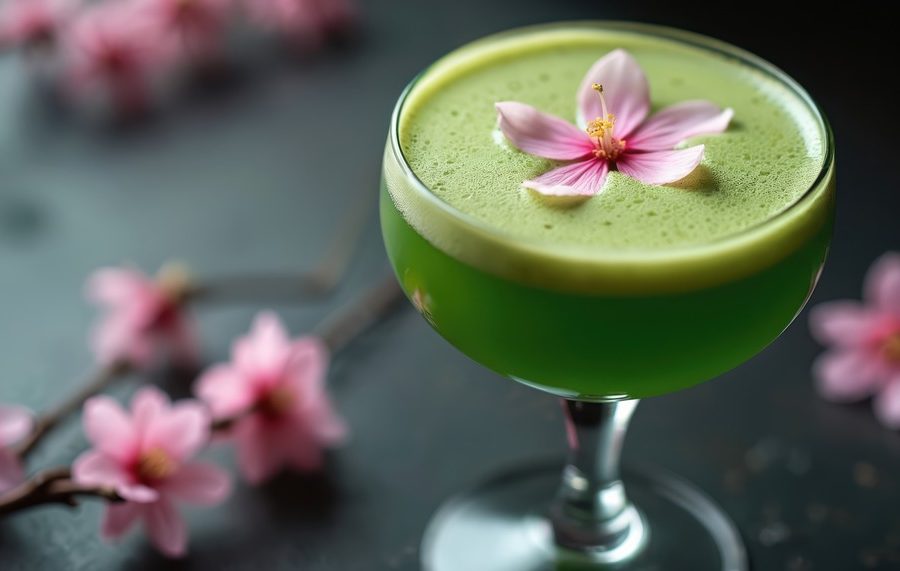
Image credit: Pete-stock.adobe. com
Matcha has become one of the beverage industry’s most remarkable success stories. Once a niche product associated primarily with Japanese tea ceremonies, specialty tea shops and connoisseurs, the finely milled green tea powder now appears everywhere from coffeehouse menus and ready-to-drink (RTD) beverages to desserts, wellness products, skincare, and even airline meals.
Indeed, the numbers tell the story. Japan’s green tea exports climbed from 20.4 billion Japanese yen (about USD $140 million) in 2021 to approximately 72 billion yen (circa $500 million) in 2025, according to Japan’s Ministry of Finance trade statistics and cited by the International Matcha Association (IMA). In the United States, Datassential – an F&B market intelligence company – reported that matcha now appears on 5.5 percent of restaurant menus, up 20 percent over the past year and 74 percent over four years, while matcha lattes as menu items have increased 89 percent over four years. Both rank in the 100th percentile for future growth potential.
Yet as demand accelerates, the global industry faces a difficult reality: Supply is struggling to keep pace. Producers, brands, retailers, and industry groups increasingly agree that matcha’s future will depend not only on expanding production, but also on protecting quality, supporting growers and establishing clearer standards.
Demand Moves Beyond Trend Status
Overall, industry observers believe matcha has crossed a critical threshold from trend to commonplace. “Matcha has moved from a niche specialty ingredient to a mainstream beverage and food category across North America, Europe and parts of Asia almost simultaneously,” said Shabnam Weber, president of the Tea and Herbal Association of Canada and The Tea Association of the USA.
Dr Sharon Hall, chief executive of the UK Tea & Infusions Association, described global matcha demand as “exceptional growth,” fuelled by wellness, functional beverages and social media exposure.
Theo Friedman, associate director of project management at The Culinary Edge – a food and beverage consultancy – agreed, pointing out that consumers want beverages that deliver wellness benefits. “Consumers are increasingly looking for products that do more for them, favouring beverages that offer functional benefits like sustained energy and focus, rather than just caffeine alone,” he said. “The demand for function is closely tied to the broader health and wellness mindset shaping the [matcha] category.”
That wellness momentum is also visible in the foodservice sector. Tristan Höver, global insight manager for hot drinks at global market intelligence firm, Euromonitor International, noted that matcha’s growth has been strong in cafés. “Younger consumers see matcha as a smoother, more premium alternative to coffee and energy drinks, while cafés and social media have turned it into a highly visible lifestyle drink,” he said.
Major café operators have responded accordingly. Starbucks, which has had matcha on the menu for more than two decades, noted its year-round lineup of matcha beverages has tripled since 2023, with matcha now served in most of its global markets.
At Better Buzz Coffee Roasters, a San Diego, California-based coffeehouse chain, matcha has become one of the company’s strongest categories. “Our matcha latte is a perennial favourite, but honestly, every time we introduce a new seasonal build featuring matcha, it sells,” said vp of product and innovation Deanne Allegro.
For long-time tea industry veterans, the category’s rise has been extraordinary. Rona Tison, tea ambassador and executive advisor for Japan-based green tea and matcha supplier, ITO EN, remembers when matcha was difficult to sell. Today, it’s a different story. “When a major airline is using it in a matcha sauce, you know it’s become mainstream,” she said, recalling a recent flight where the entrée featured matcha. “Today we’re selling our matcha on Walmart.com. I mean, this is mainstream,” Tison added.
Kunikazu Mochitani, co-founder of Oakland, Calif-based The Matcha Factory, believes matcha has achieved something few tea categories ever accomplish. “Matcha’s popularity is no longer a passing trend,” he said. “It means matcha has become recognised as a global flavour in its own right, on par with chocolate or vanilla as a flavour that’s now part of the mainstream lineup.”
Matcha Supply Constraints Are Impossible to Ignore
While matcha demand has expanded rapidly around the world, production remains constrained by agricultural realities.
“It’s serious, and it’s not a short-term blip,” said Weber about the supply-demand challenge. “Several major Japanese producers and exporters have publicly acknowledged they cannot fulfil new contracts, and some have paused onboarding new international buyers entirely. This is one of the more acute supply shocks the specialty tea world has seen.”
The challenges, though, begin at the farm level. Producing tencha – the shade-grown tea used to make matcha – requires specialised cultivation techniques, dedicated shading infrastructure, skilled labour and processing equipment, so production cannot simply be scaled overnight.
“The imbalance is quite serious,” said Eijiro Tsukada, founder of San Mateo, Calif-based Cuzen Matcha, which offers technology for at-home and commercial matcha making. “Demand for matcha is growing rapidly around the world, while production capacity in Japan cannot be expanded overnight.”
John Snell of tea consultancy, NMTeaB, pointed to several limitations, making the current supply-demand imbalance a dire issue. “There are some incalculable limitations on Japanese production at this time, based on land, labour and climate restrictions,” he said. “In the short to medium term, Japan has and will continue to react positively to fill the demand, but there are external factors that may curtail their ambitions.”
Climate change is adding further complexity. Yunn Lim, senior analyst for foodservice at Mintel, noted that rising temperatures, shorter winters and shifting growing seasons are creating uncertainty around future yields in Japan’s major tea-producing regions. “These environmental pressures reduce yield and make future supply increasingly uncertain amid growing global demand,” she said.
The processing side presents another bottleneck. Jason Walker, marketing director for Firsd Tea, the US subsidiary of Zhejiang Tea Group, China’s largest tea exporter, estimated the contrast between traditional and industrial milling methods. “If you want premium or ultra high-quality matcha, you’re talking about using a stone mill, and a stone mill can mill 30 grams of matcha per hour,” he said. “Then you can go up to what’s called a ball mill, and a ball mill can do 18 kilos per hour. So, you can go from 30 grams an hour to up to 18 kilos per hour now. And then the next step after that is called a jet mill. And a jet mill can do 100 kilos per hour. So, investing in the proper equipment to meet demand has been a challenge as well.”
Meanwhile, raw material costs continue climbing. Mochitani said tencha prices have more than tripled compared with levels,creating pressure throughout the supply chain. “Tripling in two years is abnormal by any measure of inflation,” he said. “Since this is an agricultural product, supply can’t be increased overnight.”
The Farmer Succession Crisis
Perhaps the most significant long-term threat is demographic. In fact, across interviews, experts repeatedly identified Japan’s aging tea farmer population as one of the industry’s greatest challenges with matcha.
Mochitani described an industry where many producers are now over 70 years old and where younger generations frequently pursue careers outside agriculture, making succession increasingly difficult. “Many of these farmers’ sons have gone on to work other jobs,” he shared. “You can’t just ask them, ‘Why don’t you start producing matcha — it’s profitable now?’ and expect that to work.”
Snell warned that valuable cultivation knowledge risks disappearing as experienced farmers retire. “These older farmers are retiring and taking with them valuable knowledge for quality manufacturing,” he said.
Weber echoed the sentiment. “This is one of the most serious long-term threats to supply, arguably more serious than land constraints,” she said, noting that specialised tencha-growing knowledge is often passed down informally between generations.
Hall explained that the industry’s future depends on making tea production a viable career path for younger generations. “Supporting training, innovation, and profitability will be important.”
Several experts pointed to apprenticeship programs, government support and agricultural succession initiatives as essential components of future supply security.
A Global Supply Base Emerges
As Japanese production works to satisfy demand, other countries are increasingly stepping in.
China already supplies a meaningful share of the world’s matcha and is expected to play an expanding role. “China wants to be a reliable and volume supplier for matcha to the world,” explained Walker, adding that “China is not looking to necessarily outplace Japan in terms of ultra-premium quality.”
Snell believes China, Vietnam and South Korea will continue increasing production because matcha offers attractive margins relative to traditional tea categories.
Tsukada noted that production outside Japan may already rival Japanese output in volume terms. Yet, most experts envision a future in which Japan maintains leadership in premium matcha while other origins support growing demand for ingredient applications, RTD beverages and mainstream foodservice products.
“Japan will continue to be the home of matcha and of terroir and artisanal highly valued production,” said Snell, who predicts the emergence of “a two-tier market” similar to the wine industry, where products may share a category name but differ significantly in quality and value.
Höver expects a clearer split between Japanese quality leadership and international volume supply. “The highest quality will remain with Japan because of tradition, quality and image,” he said. “China is emerging as the largest volume producer, especially for cafés, RTDs and chocolate, non-Japanese matcha can work.”
The Growing Standards Debate
As industry players look to expand matcha production globally, another issue has moved to the forefront: definitions and labelling.
Many industry stakeholders argue that consumer understanding of matcha has improved dramatically. Weber said consumers increasingly recognise differences in origin, cultivar and production methods, while Mochitani believes more consumers now appreciate traditional matcha preparation and higher-quality products. Yet, confusion remains widespread.
“Concepts like ceremonial versus culinary — inside the industry, those terms are very undefined,” Walker said.
Tsukada shared concerns about the widespread use of the term “ceremonial grade,” noting that no official definition exists in Japan.
Weber similarly said the term lacks legal definition in most markets. “The risk is that as mass-market demand grows, lower-grade product gets marketed with premium language.”
Those concerns have become a major focus for the newly formed International Matcha Association. Established in April 2026 and headquartered in Tokyo, the nonprofit was created to address widening supply-demand gaps, mislabeling concerns and the absence of internationally shared standards.
IMA issued guidance on matcha labelling and classification, warning that products with differing production methods, raw materials and intended uses are increasingly being marketed under the same “matcha” designation.
The organisation’s most significant initiative to date will be the International Matcha Congress 2026, scheduled for 12 November in Tokyo. The event is expected to bring together industry leaders to address supply challenges, quality standards and long-term sustainability, but no additional details are currently available.
“Growth without shared standards will, in time, erode the trust of the market itself,” said Iwamoto in a press release about the event.
The Geneva, Switzerland-based International Organization for Standardization (ISO) has matcha standards that outline plant source, cultivation, processing and sensory criteria. It is meant to be a benchmark for global trading and not necessarily a compliance checklist.
Building a Sustainable Future
While opinions differ on how quickly supply can expand, experts agree on the next steps.
Mechanisation, precision agriculture, climate-resilient cultivation and processing innovation were repeatedly identified as important tools for improving productivity. Experts interviewed all highlighted technology’s potential to ease labour shortages and improve efficiency, while also stressing the need to support growers and preserve quality.
“The industry must invest in growers, invest in education, and resist the temptation to chase short-term volume at the expense of long-term quality,” said Maria Uspenski, founder and CEO of Colorado-based The Tea Spot. “The greatest opportunity in front of us is not simply growing the category. It’s growing it responsibly.”
Snell explained that protecting matcha’s identity is critical. “The industry must preserve the definitions of matcha processing, combat fraudulently labelled product… and educate the consumer as to the various qualities available.”
Weber commented that transparent standards are key, noting that the industry must “establish and promote clearer grading and labelling standards so ‘ceremonial grade’ means something consistent, [but] this may already be too late.”
Tsukada emphasised that the industry is at a crossroads, essentially making this matcha’s moment. “The global rise of matcha represents a once-in-a-century opportunity for the Japanese tea industry,” he said. “The challenge now is to ensure that this extraordinary demand becomes the foundation for a sustainable industry, rather than simply another passing boom.”
Whether that opportunity becomes a sustainable foundation for long-term growth – or simply another boom cycle – will depend on the decisions being made today across farms, factories, boardrooms, and in industry organisations and meetings around the world.
Aaron Kiel is an award-winning journalist with more than 20 years of experience covering the beverage, tea, coffee, hospitality, and technology sectors. He also works as a PR and communications consultant. Visit akprgroup.com for more information.
Topics
farming global market matcha sustainable agriculture
PeopleAaron Kiel Deanne Allegro Dr Sharon Hall Eijiro Tsukada Jason Walker John Snell Kunikazu Mochitani Maria Uspenski Rona Tison Shabnam Weber Theo Friedman Tristan Höver Yunn Lim
OrganisationsBetter Buzz Coffee Roasters Datassential Firsd Tea International Matcha Association International Organization for Standardization ITO EN Mintel NMteaB Oakland Coffee San Mateo starbucks Tea and Herbal Association of Canada The Tea Association of the USA. The Tea Spot
Regions