The ICO reports that supply concerns and market dynamics fuel the July coffee price rally
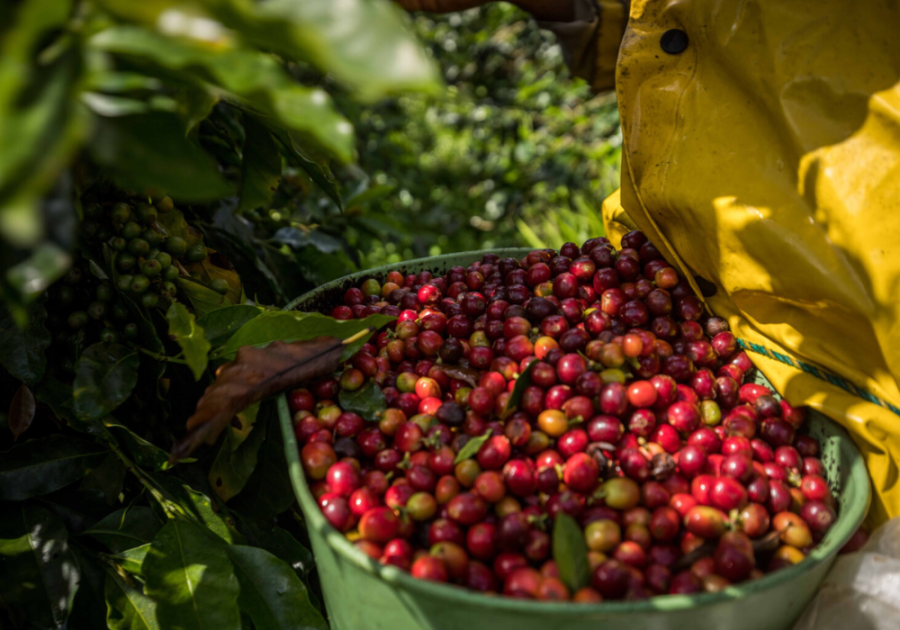
Image credit: Those Coffee People
The International Coffee Organization (ICO) revealed that July was marked by exceptionally large daily price movements in its July 2026 Green Coffee Report, which was released on 28 August.
The ICO Composite Indicator Price (I-CIP) averaged 287.26 US cents/lb in July 2026, a 15.4% increase from June 2026, with Arabica prices increasing faster than Robusta prices. The widening price gap was reflected in higher differentials and a 36.4% expansion in the arbitrage between the New York and London futures markets. Volatility also rose sharply, with exceptional daily I-CIP increases of 8.2% and 9.3% on 6 and 9 July, respectively.
The average prices of the Colombian Milds and Robustas increased by 18.1% and 9.1%, respectively, in July 2026 compared with June 2026, averaging 383.39 and 184.78 US cents/lb.
The prices of the Other Milds and Brazilian Naturals also increased by 16.5% and 17.9%, respectively, to 358.65 and 320.69 US cents/lb. The price surge reflected weather-related concerns in Brazil, a strengthening El Niño outlook and tightening immediately deliverable Arabica supplies, with US-certified stocks falling by 30.0% to their lowest level since January 2024.
Substantial increases in ICE margin requirements, which affected financing needs, market participation and liquidity, may have also contributed to the sharp short-term price movements.
In June 2026, global green bean exports totalled 10.48 million bags, up 0.8% from10.4 million bags in June 2025. Two of the four coffee groups recorded declines, with the following dynamics:
• Green bean exports of the Robustas decreased by 2.1% to 3.97 million bags in June 2026, down from 4.05 million bags in June 2025.
• Exports of the Colombian Milds increased by 1.2% to 1.09 million bags in June 2026 from 1.08 million bags in June 2025.
• Shipments of the Other Milds decreased by 1.3% to 2.66 million bags in June 2026 from 2.7 million bags in the same period in 2025.
• Green bean exports of the Brazilian Naturals increased by 7.1% to 2.76 million bags in June 2026 from 2.57 million bags in June 2025.
Despite the increase in total Arabica exports in June, the Arabicas’ share of the total green bean exports for the first nine months of coffee year 2025/26 fell to 60.4% from 63.7% over the prior-year period.
Global exports of all forms of coffee increased by 0.3% to 11.88 million bags in June 2026 as compared with 11.84 million bags in June 2025. Exports declined in three of the four regions, with South America recording the only increase.
Exports of all forms of coffee in June 2026:
• In Asia & Oceania fell 2.4% to 3.632 million bags from 3.72 million bags in June 2025;
• In Africa decreased by 13.5% to 1.79 million bags from 2.07 million bags in June 2025;
• In South America jumped 17.3% to 4.8 million bags from 4.09 million bags in June 2025;
• In the Caribbean, Mexico & Central America dropped 15.3% to 1.66 million bags versus 1.97 million bags in June 2025.
According to the ICO, July was marked by exceptionally large daily price movements. On 6 July, the I-CIP rose by 8.2% from the previous trading session to 301.98 US cents/lb, marking the largest day-on-day increase since 22 July 2021.
After declining over the following two sessions, it increased by a further 9.3% on 9 July — the largest day on-day increase since 15 November 2004 — reaching a monthly high of 309.80 US cents/lb, as well as a seven-month high. Together, these figures represent the largest daily increases observed in 21 years. Movements in the New York Arabica futures market were even more pronounced. As a composite indicator based on several physical-market price series, the I-CIP generally exhibits less pronounced movements than individual futures contracts.
Fundamental factors help to explain the underlying price pressure, while positioning and market liquidity help to explain why prices moved so abruptly. Regarding the latter, the factors behind these significant day-to-day price changes included systematic and momentum-driven buying, reinforced by short covering amid concerns over declining ICE-certified stocks and increasingly thin liquidity following increases in ICE margin requirements.
In response to heightened market risk, per the ICO report, ICE Futures US increased the outright-margin requirements for Coffee “C” futures repeatedly in early July. The applied margin rate for the September 2026 contract rose from USD $5,685 before July to $14,715 on 6 July and $21,116 on 9 July. It was subsequently reduced to $14,606 on 24 July but remained well above its pre-July level. These adjustments may have affected financing requirements, market participation and liquidity, thereby contributing to subsequent volatility.
Weather factors: El Niño weather pattern and rainfall in Brazil
July’s price movements were influenced by heightened uncertainty surrounding the physical market. Unusually wet conditions in parts of Brazil disrupted harvesting and drying operations and increased concerns about coffee quality, as reported in the June 2026 edition of the ICO’s Coffee Market Report. The impact continued to be felt in July.
On 17 July, Safras & Mercado, a Brazilian agribusiness consultancy specialising in agricultural commodity analysis, crop forecasts and market intelligence, reported that Brazil’s 2026/27 coffee harvest was 64% complete as of 15 July, compared with 77% a year earlier and a five-year average of 70%. Wet conditions had slowed harvesting and drying operations and increased concerns about quality. Uneven maturation, associated with multiple flowering cycles, also made harvesting slower and more costly, as cherries at different stages of ripeness required more selective picking and sorting. These near-term availability and quality concerns supported the market’s risk premium, despite expectations of a large Brazilian crop.
Separately, the strengthening El Niño outlook added uncertainty to the prospective global supply situation. On 9 July, coinciding with the 9.3% surge in the I-CIP, the US Climate Prediction Center reported a 97% probability that El Niño would persist through early spring 2027 and an 81% probability of a very strong event during October–December 2026, potentially ranking among the most intense events recorded since 1950. This outlook pointed to an increased risk of regional rainfall and temperature anomalies that could affect coffee production in Asia and South America in late 2026 and in 2027.
Soluble & roasted coffee
Total exports of soluble coffee decreased by 1.3% to 1.35 million bags in June 2026 from 1.36 million bags in June 2025. Vietnam, Brazil and India were the largest exporters of soluble coffee in June 2026, having shipped 0.29 million, 0.21 million and 0.13 million bags, respectively.
Exports of roasted beans were down 32.3% in June 2026, reaching 0.05 million bags, compared to 0.07 million bags in June 2025.
For the full ICO July 2026 Green Coffee Report, visit: ico.org/documents.
Topics
arabica Climate change impacts on coffee production coffee prices coffee production Green Coffee Exports roasted coffee robusta soluble coffee
OrganisationsInternational Coffee Exchange (ICE) International Coffee Organization (ICO)
RegionsAfrica Asia Brazil Central America Colombia London Mexico New York South America Vietnam