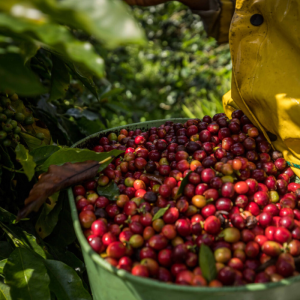
Ethiopia Adopts a Comprehensive Coffee Tree Rejuvenation Strategy
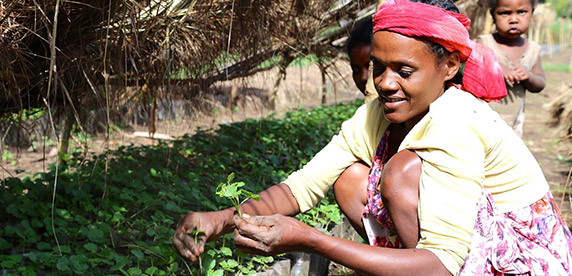
Credit: Nespresso
Ethiopia’s coffee production and export volumes have remained on the growth path in recent years as the country makes headway in its coffee sector reforms, driven by a successful farm rejuvenation programme and government-driven economic progress.
The country, which is Africa’s biggest coffee producer, with 760,000 hectares under the crop, is in the middle of the implementation of an ambitious 15-year coffee industry growth plan that places the rejuvenation of millions of ageing coffee trees at the centre of the sector transformation plan.
The growth plan, or the Comprehensive Ethiopian Coffee Strategy (2019-2023) sets out lofty targets. They include increasing overall coffee output to 1.26 million metric tonnes, growing export earnings to USD $4.6 billion and
farmer incomes of up to USD $3.5 billion, a feat to be achieved through improving the quality and quantity of yields per hectare, among other
policy reforms.
And for Ethiopia, one of the world’s leading Arabica coffee producers, achieving the ambitious production and export goals, would require both government and private sector industry players to address one of the main hurdles in the country’s coffee sector, which is the aging coffee trees, across coffee growing
regions of Oromia, Sidama, South-West Ethiopia, South Ethiopia and Central Ethiopia.
According to TechnoServe, a global non-profit organisation focused on poverty alleviation through supporting competitive business ventures including agriculture, Ethiopia’s coffee yields are relatively low despite the landlocked
country being the world’s third largest exporter by volume.
“Ethiopian coffee growers harvest 40 percent less per hectare than their counterparts in Uganda and just one-third of what farmers in Colombia produce (and) one reason for low productivity is the ageing stock of coffee trees in the country, as the plants tend to produce less coffee over time,” TechnoServe reports.
More than two million smallholder coffee growers in Ethiopia grapple with the challenge of declining yields per hectare with dwindling earnings. This has forced many of them to resort to clearance of forests to expand their
land under coffee cultivation in the belief they will earn more. This has led to the problem of deforestation in many coffee growing areas in Ethiopia with concerns the trend is contributing to more carbon emissions from the country’s coffee production.
However, since 2022, production has been on the surge. During this period TecnoServe, in partnership with some coffee companies with an interest in sourcing Ethiopian coffee and the Ethiopian Coffee and Tea Authority (ECTA), a
government coffee and tea industry regulator, launched a coffee tree rejuvenation programme.
Production has increased from 9.13 million bags (60kg) in 2023/2024 year to 10.63 million bags, with projections the output would rise to 11.560 million bags in the 2025/2026 marketing year, according to a June 2025 report on Ethiopia coffee industry by the US Department of Agriculture (USDA).
Moreover, the national average yields are expected to rise from 0.75 metric tonnes to around 0.90 metric tonnes per hectare according to the USDA report.
“One of the most influential drivers of increased coffee production in Ethiopia is the national campaign to rejuvenate ageing coffee trees, implemented over the past four years,” the USDA noted. The USDA report indicates there an increasing number of Ethiopian coffee farmers who are embracing stumping, the cutting back of ageing trees to stimulate new, vigorous growth. The Ethiopian Coffee and Tea Authority (ECTA) says the acceptance of the sustainable practice “is now delivering tangible improvements in both yield and coffee quality, with studies showing stumped coffee trees can produce two to three times higher yields within three years.”
ECTA estimates more than 450.000 hectares of land “have been rejuvenated and replanted with improved, higher-yielding coffee varieties” in the last three years. “These rejuvenated coffee trees and improved varieties began bearing
fruit in marketing year 2024/25, contributing to enhanced yields and bean quality,” it added.
The rejuvenation of Ethiopia’s ageing coffee trees has come along with increasing farmer utilisation of “improved seedlings, better agronomic practices, and benefiting from institutional and technical support provided
by ECTA, national research institutions, and development partners.”
Coincidentally, strong global prices and successful policy reforms in the coffee sector have triggered a spike in Ethiopia’s coffee export volumes to 7.8 million bags, as more producers and exporters enjoy an expanded direct access to
international markets supported by the easing of foreign exchange constraints. At least 60 percent of the Ethiopian coffee is exported while 40 percent is consumed locally, making it one of the leading coffee consuming countries in
Africa, driven partly by local culture.
Rejuvenation Rather Than Expansion
At the launch of the 15 year Comprehensive Ethiopian Coffee Strategy, the country’s coffee production was estimated at more than 440,000 metric tonnes, with 95 percent of the produce coming from smallholder producers who grow their coffee in varied environments, including forest, semi-forest, garden, and plantation. Productivity was estimated at 690 kgs per hectare, which was below the global average of 800 kgs per hectare.
Stakeholders in Ethiopia’s coffee sector such as TecnoServe and Dutch multinational coffee and tea company, JDE Peet’s, launched initiatives to
promote the crop’s sustainability and improve the sector’s competitiveness. This was done through a fresh push to increase yields per hectare and hence mobilise more national coffee output, without necessarily expanding acreage
under the crop.
Of course acreage under coffee in Ethiopia has expanded from 730,000 hectares in 2023/2024 and is currently estimated at 760,000 hectares.
Instead of encouraging expansion of this acreage, TecnoServe and JDE Peet’s, in partnership with USDA, Kew, ECTA and Jimma Agricultural Research Center, a governmental research institution, launched the REgrow Yirga project in January 2022, focusing on the rejuvenation of coffee trees in smallholder farms.
The project requires an estimated USD $472 per hectare to implement, including $343 to cover the income the smallholder farmers will forego during the farm rejuvenation transition period and $129 for farmer education on critical practices such as renovation and rehabilitation. It is expected to boost chances of realising the objectives outlined in the Comprehensive Ethiopian Coffee Strategy.
Transformation Plans
Ethiopia, which is banking on its coffee sector growth plan to transform itself into the world’s second-largest coffee producer and exporter, currently trails Uganda and Colombia in total yields per hectare due to the ageing stock of its
coffee trees. Ethiopian coffee growers are said to harvest 40 percent less per hectare when compared to their counterparts in Uganda and just one-third
of what farmers in Colombia harvest.
In fact, the Uganda Coffee Development Authority (UCDA), a state-owned entity that regulates, promotes, and develops the landlocked country’s coffee industry, says in the last three years to 2025, an estimated 13.8 million unproductive trees were stumped by 36,800 farmers in key coffee growing regions.
At least 50 percent of the coffee trees in Uganda, are more than eight years old according to the UCDA “which is a significant hindrance to yield improvement.”
Sucafina, one of the coffee companies involved in coffee tree rejuvenation in East Africa, including Uganda and Rwanda, said “ageing coffee trees are a key factor in low yields, hence low returns from coffee, across East Africa.” In
a recent statement, Sucafina added, “although most rejuvenation methods take three years to see full results, these initial trials indicate yield increases ranging from 100 percent to 200 percent.”
According to the USDA, Ethiopia’s annual coffee output for 2025/26 is likely to grow by nine percent to 11.6 million 60kg bags, nearly 694,000 metric tonnes compared to last year. “This growth is driven by a combination
of favourable weather conditions, limited incidence of coffee plant diseases, better price returns, and a range of national initiatives and policy reforms that have enhanced productivity and expanded cultivation,” the USDA reported.
The USDA said key national programs such as coffee stumping have had positive impact on coffee production coupled with other initiatives such as “expanding access to improved seedlings, better agronomic practices,
and enabling policy environments, which have supported both yield improvements and expansion of area harvested.”
The increasing focus on smallholder coffee producers by the Ethiopian government, and the growing interest in the country’s Arabica coffee
by international coffee traders, are expected to keep agronomical practices such as coffee tree rejuvenation as a key driver of industry’s future
performance.
- Shem Oirere is a freelance business journalist based in Nairobi, Kenya. He has spent more than 25 years covering various sectors of Africa’s economy. He holds a BA in International Relations and Diplomacy from the University of South Africa and earned a higher degree in journalism from the London School of Journalism and is also a member of the Association of Business Executives (ABE).