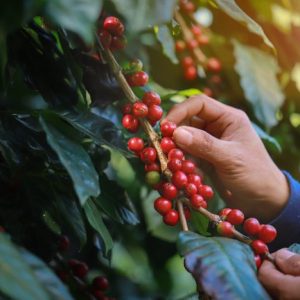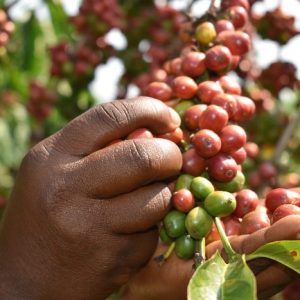
Arabica prices drifted downward in May as expectations of ample supply strengthened
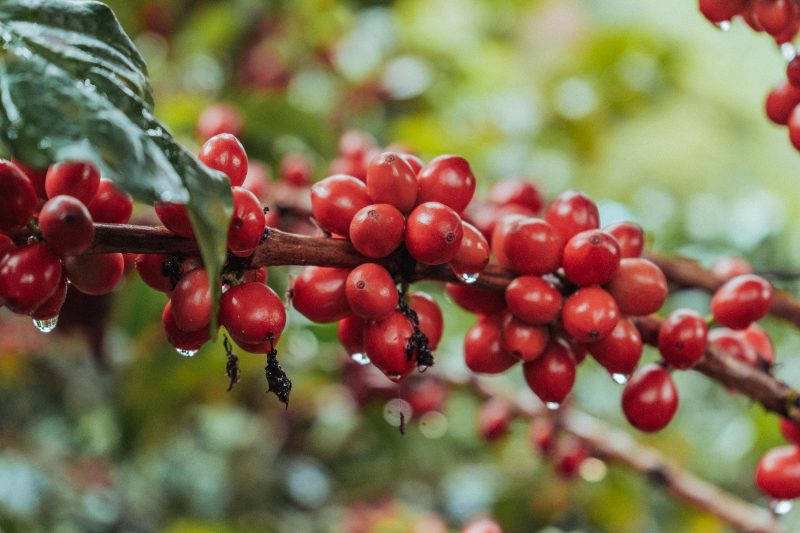
Image credit: Raw Materials Coffee
The International Coffee Organization (ICO) announced in its latest report that prices in May 2026 slipped from April 2026, as the market continued to react to news of an improved supply outlook. This was reinforced by CONAB’s reaffirmation of a record outlook for Brazil’s production in crop year 2026/27. Global green exports in April also decreased.
The ICO Composite Indicator Price (I-CIP) averaged 256.05 US cents/lb in May 2026, a 3.8% decrease from April 2026.
The prices of the Colombian Milds’ and Other Milds both contracted, by 3.3% and 4.8% in May 2026 compared to April 2026, averaging 323.45 and 315.42 US cents/lb, respectively. The Brazilian Naturals’ prices fell 6.4% to 293.73 US cents/lb in May 2026. In the same month, the Robustas increased by 1.1% to 166.51 US cents/lb. The prices on the London Intercontinental Commodity Exchange (ICE) for the Robusta market increased by 0.8% to 151.79 US cents/lb in May 2026, while those on the New York ICE market for the Arabicas fell by 5.8% to 268.18 US cents/lb.
Negative price pressure was felt on the I-CIP as:
• Mid-month, the National Supply Company of Brazil (Companhia Nacional de Abastecimento – CONAB) released its second crop survey, in which the forecast total 2026/27 production increased by about 0.5 million bags to a record 66.7 million bags, with Arabica production raised by 1.67 million bags to 45.8 million (+28% y/y). However, the Robusta production projection was cut by about 1.2 million bags to 20.9 million (still an increase compared to last year, +0.8% y/y). In addition, CONAB’s second report showed an increase in the area under coffee production, up by 3.9% to 2.34 million hectares (ha), with yields rising to 34.4 bags/ha. Nevertheless, CONAB noted that carry-over stocks remained low and highlighted continued growth in global demand, tempering some of the market’s bearish sentiment.
• Overall, in May, market participants increasingly anticipated a potentially significant global surplus in coffee year 2026/27, placing negative pressure on prices.
• Supply-side factors continued to dominate the market sentiment, reinforced by harvest pressure from Brazil and a financial market in persistent backwardation. Roasters continued to pay premiums to secure Q3/Q4 physical supplies amid ongoing disruptions to the Red Sea transit, which have kept a significant share of the global container traffic on longer routes around the Cape of Good Hope.
Notwithstanding these developments, several factors provided some support with regard to the I-CIP in May:
• ICE-certified inventories were the month’s main bullish counterweight, as they reached multi-month lows.
• El Niño could delay Brazil’s September–October 2026 flowering rains in some regions. The National Oceanic and Atmospheric Administration (NOAA) assigned an 82% probability to the emergence of El Niño between May and July, with a 67% chance of a “Super El Niño”.
This slightly supported prices in the latter part of the month. However, El Niño can have both positive and negative effects on coffee production in Brazil, depending on the region, the intensity of the event, and the timing within the coffee crop cycle. Unlike some countries where El Niño is almost always detrimental, the impact in Brazil is more complex.
The Colombian Milds–Other Milds differential increased from 3.34 to 8.03 US cents/lb between April and May 2026. The Colombian Milds–Brazilian Naturals differential widened by 42.9% to 29.72 US cents/lb, whilst the Colombian Milds–Robustas differential decreased by 7.6% from April to May 2026 to 156.94 US cents/lb. Meanwhile, the Other Milds–Brazilian Naturals and Other Milds–Robustas differentials moved by 24.2% and -10.6% to 21.69 and 148.91 US cents/lb, respectively. The Brazilian Naturals–Robustas differential contracted by 14.7% to 127.21 US cents/lb in May 2026.
The arbitrage between the London and New York futures markets contracted 13.1% to 116.39 US cents/lb in May 2026.
The intra-day volatility of the I-CIP decreased by 0.2 percentage points compared to April 2026, averaging 8.8% in May 2026. The volatility of the Colombian Milds and Other Milds followed an opposite trend, increasing to 8.9% and decreasing to 8.7%, respectively.
Meanwhile, the Brazilian Naturals’ volatility decreased by 0.1 percentage point, month-on-month, to 9.6% in May 2026. The Robustas’ volatility also decreased, falling to 10.0%. At the New York and London futures markets, the volatilities were at 10.1% and 10.1%, up by 0.1 and down by 0.9 percentage points, respectively, in May 2026 compared to April 2026.
The London certified stocks of Robusta coffee decreased by 0.1% from April to May 2026, closing the month at 0.64 million bags. US certified stocks of Arabica coffee also fell, dropping down to 0.48 million bags, a 13.5% decrease versus April 2026.
Exports by Coffee Group – Green Beans
In April 2026, global green bean exports totalled 10.51 million bags, down 1.9% as compared with 10.71 million bags in April 2025. All coffee groups recorded declines, with the exception of the Robustas. Nevertheless, the April performance should be viewed in the context of the broader season. Over the first seven months of coffee year 2025/26 (October 2025 to April 2026), only the Colombian Milds and Brazilian Naturals recorded cumulative export declines relative to the same period a year earlier, while the Other Milds and Robustas maintained positive growth.
Green bean exports of the Robustas were up 11.2% to 4.5 million bags in April 2026 from 4.05 million bags in April 2025. The expansion was primarily driven by Brazil, whose exports increased 379.7% to 0.5 million bags. The increase was supported by Viet Nam, whose exports were up 10.4% to 2.8 million bags from 2.54 million in April 2025. The upturn in Brazil was due to a mismatch in the timing of the start of the current and previous Robusta harvests, with the former having begun in late-March, while the latter started in late-April.
According to the Brazilian Coffee Exporters’ Council (Conselho dos Exportadores de Café do Brasil – Cecafé), exports in April 2026 benefitted from the arrival of new supply from the 2026/27 harvests, which were combined with some remaining coffee from the previous harvest. In Vietnam, the increase appears to have been driven by supply from new harvests.
Exports of the Colombian Milds decreased by 14.0% to 0.78 million bags in April 2026 from 0.9 million bags in April 2025. This marked the sixth consecutive month of negative growth following 23 months of expansion within a 25-month period (November 2023 to November 2025). Colombia’s exports, which account for the majority of the group, fell by 14.4% to 0.61 million bags as compared with 0.72 million bags in April 2025.
Shipments of the Other Milds decreased by 1.1% to 2.31 million bags in April 2026 from 2.34 million bags in the same period in 2025. Ethiopia and Guatemala were the main contributors to the decline, with their combined exports falling by 26.1% to 0.48 million bags from 0.65 million bags in April 2025, a net loss of 0.17 million bags. Additional reductions came from Costa Rica and Papua New Guinea, with a combined 0.04-million-bag reduction in their exports. Offsetting part of this decline was Honduras, whose exports were up 23.0% to 0.68 million bags from 0.55 million bags in April 2025. Mexico and Uganda also contributed positively, with their shipments up 19.8% and 24.8%, respectively.
Exports of the Other Milds from Honduras continued to benefit from the mismatch in the harvest timing between the current and previous coffee years (see Exports by region – all forms of coffee for additional insight).
Green bean exports of the Brazilian Naturals decreased by 14.8% to 2.92 million bags in April 2026 from 3.42 million bags in April 2025. The Brazilian Naturals recorded their 14th consecutive month of negative growth in April 2026, driven primarily by Brazil, whose exports fell 15.7% to 2.26 million bags from 2.68 million bags a year earlier. In addition, Ethiopia and Indonesia also experienced sharp downturns, with their joint exports down by 17.9%.
Total Arabica exports decreased to 6.0 million bags in April 2026, down 9.8% from 6.66 million bags in April 2025. As a result, the Arabicas’ share of the total green bean exports for the first seven months of coffee year 2025/26 fell to 60.4% from 64.2% over the same period a year ago.
Exports by Region – All Forms of Coffee
Global exports of all forms of coffee decreased by 0.9% to 12.05 million bags in April 2026 as compared with 12.17 million bags in April 2025. The dynamics across the four regions were mixed: exports from Africa and South America decreased, while shipments from Asia & Oceania and the Caribbean, Central America & Mexico increased. These regional dynamics observed in April largely mirrored those recorded over the first seven months of coffee year 2025/26 (October 2025 to April 2026).
Exports of all forms of coffee from Asia & Oceania were up 7.3% to 4.64 million bags in April 2026 from 4.33 million bags in April 2025. The region’s upturn was led by Viet Nam, whose exports increased 12.1% to 3.41 million bags, up from 3.04 million bags a year earlier. This represents the country’s largest-ever April export volume on record. The increases in both absolute and relative volume of exports reflect the strong harvest in coffee year 2025/26.
Market assessments for the 2025/26 coffee year output have pointed to growth of over 10%, at more than 31 million bags, although, at the time of writing, no official production estimate has yet been released. Nevertheless, these positive market expectations appear to have largely been borne out by export performance during the first seven months of the coffee year, which, at 20.35 million bags, represents the highest level ever recorded for the period. The full impact of Vietnam’s upturn on the region was partly offset by Indonesia, whose exports decreased by an estimated 31.7% to 0.38 million bags from 0.56 million bags in April 2025.
Exports of all forms of coffee from Africa decreased by 22.1% in April 2026 to 1.54 million bags from 1.98 million bags in April 2025. The contraction was largely driven by Ethiopia and Uganda, whose combined exports fell to an estimated 1.2 million bags from 1.5 million bags in April 2025, a downturn of 19.9%. Mechanically, the double-digit decline in Ethiopia can be explained by a base effect, as April 2025 recorded an outlier level of 0.81 million bags, which is 212% above the April average for 2020-2024. In April 2025, the Ethiopian exports appeared to have benefitted from the dual impact of front-loading new supply from the 2024/25 coffee year harvest and the drawdown of stocks at a higher volume, as the origin’s exporters took advantage of the high international coffee price level. The average I-CIP for January to April 2025 was 337.43 US cents/lb, as compared with 190.43 US cents/lb over the same period in 2024. Despite the year-on-year decline, it should be noted that the April 2026 exports constituted Ethiopia’s second-largest April export volume on record.
South America’s exports of all forms of coffee decreased by 1.2% to 3.99 million bags in April 2026, from 4.04 million bags in April 2025. South America recorded its 18th consecutive month of negative growth in April 2026, following a 16-month streak of positive expansion. The downturn was largely driven by Colombia, whose exports fell 13.4% to 0.7 million bags in April 2026 from 0.81 million bags in April 2025. This marked Colombia’s fifth consecutive month of downturn in the current coffee year. The trend is closely linked to domestic production, which is down 26.2% or 2.46 million bags to 6.92 million for October 2025 to April 2026 from 9.38 million over the same period. However, production was only down 0.9% year-on year in April. Market participants have suggested that exporters of Colombian coffee are not fully engaged in the market due to the current bearish sentiment and expectations of future price developments.
Exports of all forms of coffee from the Caribbean, Mexico & Central America increased by 3.3% to 1.88 million bags in April 2026, compared with 1.82 million bags in April 2025. This marked the fifth consecutive month of positive growth for the Caribbean, Mexico & Central America. The region’s latest growth was mainly driven by Honduras, whose exports rose by 23.0% to 0.68 million bags from 0.55 million bags in April 2025. The impetus of the origin’s double-digit growth still appears to be driven by the mismatch in the timing of the starts of the 2024/25 and 2025/26 coffee year harvests in Honduras, with the former delayed by two months.
Most of the Caribbean, Mexico & Central America region, including Honduras, was subject to widespread drought from April to mid-June 2024, accompanied by intense heat waves in May 2024, which were reported to have negatively impacted flowering for the 2024/25 harvest. This was followed by excessive rainfall from July 2024, including Tropical Storm Sara in November 2024, which delayed the maturation process and pushed the start of the 2024/25 coffee year harvest to December 2024, two months later than the typical October start date. Partly offsetting Honduras’ strong performance were Costa Rica and Guatemala, in particular, whose combined exports were down 20.6% to 0.41 million bags from 0.52 million bags in April 2025.
Exports of Coffee by Form
Green beans were the largest form of coffee exported, accounting for 86.32% of total exports in the first seven months of coffee year 2025/26, while soluble and roasted coffee represented 13.14% and 0.54%, respectively.
Total exports of soluble coffee increased by 6.5% to 1.48 million bags in April 2026 from 1.39 million bags in April 2025. Vietnam, Brazil and India were the largest exporters of soluble coffee in April 2026, having shipped 0.49 million, 0.38 million and 0.25 million bags, respectively.
Exports of roasted beans were down 7.3% in April 2026, reaching 0.06 million bags, compared to 0.07 million bags in April 2025.
For the full ICO May 2026 report, visit ico.org.
Topics
arabica coffee prices Green Coffee Exports Roasted Coffee Exports robusta Soluble Coffee Exports
OrganisationsCONAB International Coffee Organization (ICO)
RegionsAfrica Asia & Oceania Brazil Central America Colombia Costa Rica Ethiopia Guatemala Honduras Indonesia London Mexico New York South America Uganda Vietnam