
RTD Coffee gains ground in European markets
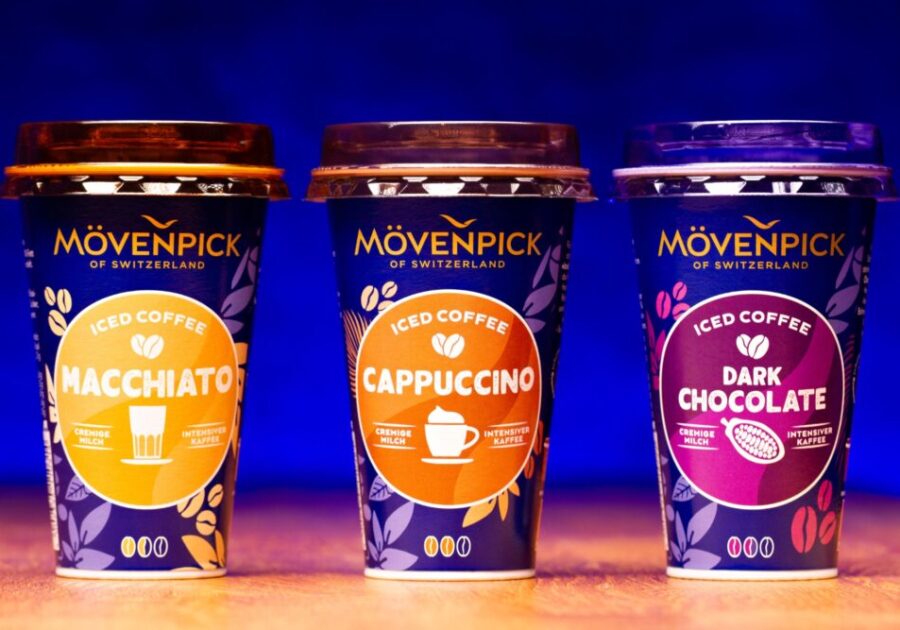
Credit: Mövenpick
Ready-to-drink coffee is poised to become a major force in the European beverage industry in the years to come as the demand for it among local customers is steadily growing due to its convenience and healthy image.
Despite Europe being one of the world’s largest coffee markets, its ready-to-drink coffee segment is still in the early stages of development with the annual growth rates being generally lower those in North America and some Asian countries, particularly Japan.
Still, the ever-growing purchasing power of millennials and Gen Z, and their switch away from sugary, sweetened beverages towards those containing healthy or natural ingredients, creates conditions for stronger growth of the ready-to-drink (RTD) coffee market in Europe.
The RTD coffee sector is already one of the fastest-growing coffee segments in many European countries, while some independent analysts expect the market will reach €6 billion by the end of 2025.
According to a well-known Austrian analyst in the field of coffee, Martin Woelfl, Europeans are increasingly recognising the appeal of RTD coffee, and this growing awareness is driven by improved availability in retail and e-commerce. He said the emergence of specialty coffee shops and the development of modern coffee culture has also played a significant role in changing coffee drinkers’ expectations.
As for e-commerce, its growth in Europe in recent years has made it easier than ever for consumers to access a variety of RTD coffee products, from traditional cold brews to innovative coffee drinks like nitro lattes or carbonated coffee beverages.
France Embraces Iced Coffee
Among the major European nations, perhaps the biggest growth in demand for RTD coffee has been in France, which is known for its rich coffee culture. According to local media reports, France is currently experiencing a boom in iced coffee consumption. Per Mintel data, in 2017 only 3 per cent of French adults purchased this type of product in France – recently these figures have significantly increased.
Although consumption of iced coffee is relatively low in France (along with other European nations especially compared to the United States and some South Asian states), according to Mintel, around a third of coffee consumers in France are said to be interested in this type of cold drink with the biggest demand coming from 16-24 year olds. The growth of these figures is ongoing.
In France, given that coffee is traditionally considered a gourmet pleasure, most coffee brands operating in the domestic market are exploiting this gourmet image to increase the consumption of cold brew and iced coffee. To attract French consumers, marketers offer gourmet recipes for cold brew coffee given that 16-24 year old consumers tend to appreciate the taste of coffee with milk or coffee flavoured with spices or sweet aromas more than their elders.
Additionally, French cuisine has long featured dairy products, and RTD coffee brands take advantage of this trend to increase their appeal. Many French coffee brands, as well as some global players, operating domestically, have begun to more actively use various ingredients such as whipped cream, to create recipes for typically French gourmet coffees. Some local analysts noted that the butter coffee trend is not yet widespread in France, but it may find followers in this market where consumers are particularly inclined to invent new uses for butter, which may include RTD coffee offerings.
RTD Demand is Strong is Germany
There is also high demand for RTD coffee in Germany, although stronger growth is prevented by the ever-rising prices for it. For example, the leading local coffee company, Tchibo, recently raised prices for most of its range. Starting in mid-February, consumers had to start paying between depending on the type, the Hamburg-based company announced earlier this year. There is a possibility of new prices hikes that could be approved by Tchibo and other major leading local players operating in the RTD coffee segment as the level of inflation in the country remains high. Analysts note that for price sensitive German consumers, price hikes may become a solid argument for limiting coffee purchases, including RTD varieties, until prices stabilise.
Still, according to earlier statements from Holger Preibisch, managing director of the German Coffee Association, which were made in an interview with the German business paper, Tagesschau, the current dynamics in the sector are good. At the same time, he said that in contrast to traditional instant coffee, which grew by around two per cent this year, the RTD and coffee mixture segment demonstrated a higher sales growth in the German market in recent years (up to six per cent annually).
The current good prospects of the segment attract the interest of both major leading players as well as small and medium-sized domestic manufacturers, many of which have significantly expanded their ranges with the launch of cold brew and other RTD coffee varieties. An example is Berlin-based Andraschko Kaffeemanufaktur, which recently launched its first RTD cold brew coffee in disposable glass. It is cold-extracted coffee is made from brewed over method. It contains no additives or sugar.
“We wanted to develop a product that’s uncomplicated, tastes great, and meets our quality standards even when on the go,” said Willy Andraschko, founder of Andraschko Kaffeemanufaktur.
Multinationals Eagerly Eye Europe
The European – especially German – RTD coffee sector has caught the interest of major multinationals. One of them is Starbucks, which hopes to further develop the RTD coffee segment in the country. An official spokesman for the company commented, “We absolutely see the European RTD coffee market as a promising area for further growth. The category is evolving rapidly, with consumers seeking premium, functional and sustainable options. Starbucks’ brand strength, combined with our ability to innovate, positions us well to lead and expand in this space.”
He added that Starbucks expects the demand for RTD coffee in Europe to continue growing over the coming years, with several factors supporting this outlook:
• Lifestyle Shifts: Consumers are increasingly looking for convenient, on-the-go options that don’t compromise on quality or taste.
• Health & Wellness Trends: Functional beverages, including protein and plant-based options, are gaining traction – creating space for differentiated RTD coffee offerings.
• Premiumisation & Brand Trust: Starbucks is well-positioned to benefit from the premiumisation trend, as consumers gravitate toward trusted brands that deliver consistent quality.
Meanwhile, the RTD coffee category shows good dynamics this year in Italy – another European nation with a strong coffee-drinking culture. According to the local IL Sole business paper, in 2024 the category generated a turnover of €40 million, while its growth rates are higher than those of the RTD alcohol segment. Presently, within the entire Italian RTD coffee segment, the biggest demand is for iced coffee, where sales are actively growing. This is also due to the ability of local players to pay attention to the latest market trends such as pairing coffee with botanicals, including fresh fruit and citrus extracts. As a rule, the biggest demand for such drinks is observed among younger consumers in Italy.
In terms of geographical structure, the demand for RTD coffee is higher in the economically developed Northern Italy, where local coffee drinkers (in which purchasing power is significantly higher those people living in Southern Italy) prefer RTD coffee with subtle blends, a slightly acidic flavour and a low caffeine concentration. In Southern Italy, the demand for RTD coffee is generally lower as these consumers usually prefer a coffee with a rounded and bold flavour, characterised by a dark colour and a creamy texture.
Most independent analysts predict bright prospects for the European RTD coffee market, expecting its further growth in years to come. Selin Erdem, a senior research analyst at market research firm Euromonitor International, said the RTD coffee market in Europe is experiencing a notable surge, with the biggest being observed in its Western regions. “In 2024, it was the fastest-growing soft drink category in the region (by volume), expanding by 9.4 per cent in value and 8.3 per cent in volume, reaching €2.1 billion and 377 million litres, respectively. This growth reflects a broader shift in consumer preferences toward convenience, functionality and innovation in beverage choices,” he said.
Erdem also added that younger consumers – particularly millennials and Gen Z – are driving demand, favouring cold coffee formats that align with their fast-paced lifestyles and interest in health and wellness. He believes that RTD coffee is increasingly seen not just as a caffeine fix but as a multi-functional beverage, often enhanced with protein, vitamins or plant-based ingredients. The rise of oat, almond and soy milk variants is particularly notable, reflecting the region’s growing appetite for dairy alternatives.
Still, despite good prospects for further increases, analysts and marketers said the existing challenges prevent more robust growth.
The analysts shared that one of the most significant challenges is the blurring of category lines, as RTD coffee increasingly overlaps with energy drinks, protein shakes, and wellness beverages, all of which compete for similar consumption occasions and consumer needs.
This intensifying competition makes it harder for RTD coffee to stand out, especially when rival categories often benefit from stronger brand recognition and marketing investment.