Changing Times: Women in Tea and Coffee are Making Monumental Strides

Credit: Yumi Nakatsugawa
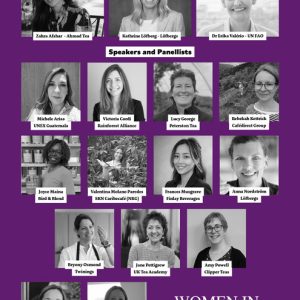
Women play important roles throughout the tea and coffee supply chains – from ‘bean and leaf to cup’. Coffee and tea are dynamic, global industries that offer exciting careers through many different types of jobs in all sectors that support both industries – this was the motivation behind Tea & Coffee Trade Journal’s inaugural Women in Tea & Coffee Conference. The event offers women a chance to learn more about opportunities in both the tea and coffee industries on the manufacturing/ consuming side from women currently in key positions with coffee and tea brands, allied service companies, as well as coffee and tea associations/organisations. Anne-Marie Hardie spoke to several of the many women who will be participating in the WiTC Conference, about their experiences and the business climate for women in both the tea and coffee industries.
The Women in Tea and Coffee Conference, taking place on 2 May 2025 in London, was developed by Tea & Coffee Trade Journal to strengthen connections and ignite conversations among women about women in tea and coffee. It further aims to advance women’s careers within the coffee or the tea industry through knowledge and networking opportunities in a collaborative setting so women looking to forge a career in either industry or those women perhaps looking to ‘make a change’ can both learn how to navigate the best career path from women who have risen up the ranks in various roles in both industries.
“Women have long been the backbone of the tea value chain – from field to factory to boardroom – and it has been encouraging to see more spaces opening up for their voices to be heard,” said Dr Sharon Hall, chief executive of the UK Tea and Infusions Association.
The role of women in both industries is evolving, with more individuals being seen in decision making positions, helping shape and shift the industries. Although movement is happening, the leadership roles remain largely male-dominated.
Dilara Celik, partnerships and communications manager at 4C Services, a company with several women in key roles, immediately noticed the lack of women at coffee conferences and major events. “I remember when I went to my first event, I was sent by 4C to the member assembly of the German Coffee Association,” she said. I entered the hotel lobby and saw it was about 80 percent men, and I thought, where am I? Is this the right place?”
Acknowledging the male/female disparity, Shabnam Weber, president of the Tea and Herbal Association of Canada said, “The reality is that this is a male-dominated industry; I’ve been to conferences, and historically, the room is filled with men.” She shared an experience during a buying trip where all the individuals werewomen, except for one man, the brother of a woman tea buyer. “Every single place we went to, every single estate, all of the managers, estate owners, etc, made a beeline straight for him and every single time he had to say, I’m literally the only person here who’s not a buyer,” said Weber.
On a positive note, several sectors of both industries have been incredibly welcoming and supportive of women, providing safe spaces for their voices to be heard. “Already during these first months of the year, I had the opportunity to meet a lot of women – the majority younger than me – who represent the coffee industry or entered the coffee industry during the last years in different roles: logistics, sustainability, farmers, trainers, roasters, coffee shop owners and I have the impression that they are all very well trained, dedicated and confident about what they do,” said Anke Erichsen, International Women’s Coffee Alliance (IWCA) global board member and a partner in UBE Erichsen Beteiligungs GmbH, a family-operated company that is a partner of Wave Investments. “This is very promising for the future of women in coffee. Connecting with each other, building a network and supporting each other is a great way forward and, of course, talking about the successes.”
Keely Wade, marketing manager at private label coffee roaster Lincoln & York, shared this sentiment, stating that the coffee industry has been highly supportive and friendly. “It feels like a big gathering of friendly, like-minded people with a shared love for the product we are all supplying,” said Wade. “It is a testament to how coffee can bring people together, even competing brands and businesses operating in the same space. The passion for the work we do in this industry is palpable, and I am really proud to be a part of it.”
Weber and Hall shared similar experiences about the tea industry, emphasising that the space is an extremely close knit, supportive community. “It’s a very familial industry. If you connect with the others in the industry, they very much want to connect with you; everybody wants to share their story,” said Weber. “For anybody getting into it, I would say embrace that piece because it makes the industry special.” Weber added that she hopes to continue seeing more women enter the industry and provide their perspectives on the challenges and opportunities within tea.
“For me, being a woman in the tea industry has been a journey marked by growth and meaningful collaboration,” said Hall. “I have been supported by both women and men who recognise the value of diverse perspectives and inclusive leadership. Their support has reinforced my commitment to fostering inclusive networks, mentoring others, and advocating for a more equitable industry for everyone.”
Fostering Communities to Drive Awareness and Develop Connections
The International Women’s Coffee Alliance (IWCA) was founded over 20 years ago with the vision to support women coffee growers in the Central America region. Today, there are 34 chapters of the IWCA, including five additional ones in formation and 16,000 members worldwide. Different topics and priorities are chosen for each national chapter, with empowerment through market access, financial training, education, and engagement and networking remaining their primary goal.
“Today, the IWCA gathers organisations of women – and men – in coffee-producing countries, but also coffee-consuming countries, giving value to women and encouraging them to reach out to their community and see where they can contribute to making decisions on the economic, social, and environmental aspect of coffee,” said Erichsen, IWCA global board member.
The inspiration to launch the International Alliance for Women in Tea (IAWT) came about from a conversation between Dr Sharon Hall, Shabnam Weber, and Nayantara Palchoudhuri, director of the Washabarie Tea Company, in India, at the end of a conference. “We wanted to create a space that fosters collaboration, uniting, inspiring and elevating women across the tea value chain,” said Hall. “Our hope is that the IAWT will serve as a catalyst for change by building a global network, championing gender equity and driving sustainability and empowerment initiatives that uplift not only individuals but entire communities.”
The IAWT was established in 2024 and its current focus is to foster connections and broaden the conversation among women in the tea industry. The first event was a one-hour webinar focused on women’s health in rural areas. It included a gynecologist from India who shared the challenges facing the women there.
“We provided a platform to share this, and what came out of it was a company, Van Rees, purchased a hundred menstrual cups for women in Malawi. That is 100 lives that have forever been changed from a one-hour webinar, and that, at its core, is what we are trying to achieve,” said Weber. Helping generate awareness about the challenges that women face and seeing this immediate response from Van Rees is one of Weber’s proudest moments.
“We need more women at the table. Women bring a different perspective to conversations. I am not saying it is a better or the right one, but it is a different one, with another approach,” said Weber. “Women look at conflict resolution differently, and I think that if there were more women at the table, perhaps some of the issues that we’ve had and continue to have would need a different angle to look at it.”
Wade shared that one of the most rewarding moments of her career was Lincoln & York’s 30th anniversary celebration in 2024, which included looking back at how the industry has adapted over the last 30 years, creating a coffee culture report and organising an event that brought together suppliers and brands from across the industry, many of whom have worked in the industry for a long time and had some amazing stories and experiences to share. “One of the most important parts of my role in marketing is telling the coffee story. For our business and the brands we support, this is becoming increasingly [essential] as consumer interest in where products come from and how they are sourced continues to grow,” she said.
Reflecting on her journey in the coffee industry, Erichsen shared several moments that she was proud of being a part of, including when she was working for espresso and grinding machine manufacturer, Mahlkönig, and it was selected as the official grinder sponsor for the World Barista Championships; achieving a stable business for Oran Utan Coffee during the pandemic. The Orang Utan Coffee Project helps to protect orangutans’ natural habitat in Sumatra, Indonesia by providing much needed funds for the Sumatran Orangutan Conservation Programme (SOCP) – the coffee project is funded by the sales of Orang Utan Coffee. Another proud moment was being elected as one of the new global board members of IWCA. “Travels to origin are some of the most interesting and rewarding moments because it feels so much more connected to the product and the many hands behind it,” said Erichsen.
Weber also emphasised the importance of getting out to the source to speak with the women in all different parts of the industry and learn about their experiences and challenges. “I am very conscious of the fact that I am a woman, who in the world of women, sits in a place of privilege because I am in a country that affords me all kinds of rights and protection,” said Weber. “Different women in other parts of this industry are experiencing very different things.”
Women have been, are, and will remain integral to the tea and coffee industries. The last decade has seen several positive shifts, including having more women at the table to discuss the challenges and opportunities these industries face. “Your voice matters. Your ideas, your leadership, and your presence can shape the future of this industry. Do not underestimate the value you bring. Find allies, seek mentors, and support one another,” said Hall. “There is a growing movement of women in tea who are not just participating – but leading, innovating, and transforming the sector. The tea industry is changing, and there is space for you at every level.”
Anne-Marie Hardie is a freelance writer, professor and speaker based in Barrie, Ontario. She may be reached at: [email protected]
Topics
gender equity networking women in tea and coffee
PeopleAnke Erichsen Anne-Marie Hardie Dilara Celik Dr Sharon Hall Keely Wade Nayantara Palchoudhuri Shabnam Weber
Organisations4C Services German Coffee Association International Alliance for Women in Tea (IAWT) International Women's Coffee Alliance (IWCA) Lincoln & York Mahlkonig Orang Utan Coffee Sumatran Orangutan Conservation Programme (SOCP). Tea & Coffee Trade Journal Tea and Herbal Association of Canada UBE Erichsen Beteiligungs GmbH UK Tea and Infusions Association Van Rees Washabarie Tea Company Wave Investments World Barista Championships
Regions