Get Ready for a Shift in Sustainable Packaging

Credit: Pexels
This year is shaping up to be a watershed moment for sustainability in the United States, as the first of six extended producer responsibility (EPR) state laws goes into effect. At the same time, more states are proposing their own EPR laws and related recyclability statutes, according to the 2025 Sustainable Packaging Trends Report from the Sustainable Packaging Coalition (SPC).
Sustainability is now one of the most important topics in the global packaging
industry. While the US has less-stringent regulations compared to those of the European Union, major North American players are increasingly shifting toward more sustainable packaging solutions, according to the 2024 State of the Industry US Packaging Machinery Report from PMMI, The Association for Packaging and Processing Technologies.
Consumer packaged goods (CPG) companies are using fewer single-use plastic (SUP) formats in favour of paperboard and other eco-friendly materials, a trend driven by both regulatory pressure and consumer demand for greener alternatives, according to PMMI’s report. While the US does not have nationwide SUP regulations, a few states have created their own rules regarding these materials, often under EPR policies, which hold producers accountable. For instance, Maine’s 2021 EPR law mandates that packaging producers pay for recycling and waste management costs, thereby encouraging the use of more environmentally-friendly packaging.
Many CPG brands are adopting paper as a primary material when product needs allow its use. In fact, more than 100 CPG professionals surveyed by PMMI Media Group stated paper now accounts for 43 percent of primary packaging, including paperboard (20 percent), flexible paper (13 percent), and molded pulp (10 percent).
Paper continues to factor heavily into many brands’ sustainability goals. However, CPG firms are still struggling with widespread implementation of paper packaging due to the material’s performance limitations and a lack of brand investment in next-generation paper technologies. Plus, material changes, such as shifting from plastic to paper, can significantly impact the speed and efficiency of packaging machines. For example, the fact that paper-based packaging often requires more careful handling and can slow down production lines is a crucial consideration for CPG brands since it can affect
overall output and productivity, according to PMMI’s research report.
Consumers and Regulators Frustrated by Recycling
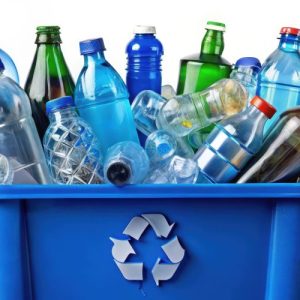
Over the last decade, consumer trust in the recycling system has declined, according to the SPC report. As of 2023, 32 percent of consumers were not confident that the items they recycle are being turned into new materials, let alone new packaging. State regulatory agencies and municipal governments have also pushed back against the idea that local collection programs should shoulder the cost of sending these materials hundreds of miles out of state for
processing. As a result, the study reports that states will require companies to limit recyclable designations to simpler, readily recycled packaging.
Packaging g that is multi-material, has difficult to-separate linings or coatings, has too much product residue, or is damaged during the collection and sortation phases will likely be considered not recyclable. Packaging that can be
collected only through store drop-off programs also may be classified this way.
In addition to recycling, many companies are setting ambitious targets for reducing carbon emissions. Some aim to achieve these goals by the end of this year; others have extended their deadlines to 2030. For example, companies are increasingly switching to more recyclable paperboard materials to meet their emissions goals.
Emerging Research Focuses on Abundant Sources
The use of ocean-based feedstocks, particularly for seaweed packaging, is on the rise. Seaweed is a desirable feedstock for packaging because it’s already grown and harvested for other commercial purposes, and can be turned into
coatings, foams, films and pellets for packaging, states the SPC study.
Meanwhile, researchers at Virginia Tech are making biodegradable packaging stronger. The research team from the College of Agriculture and Life Sciences and the College of Natural Resources and Environment developed a low pressure treatment that improves plant-based packaging materials. The team found a new process that makes cellulose-based packaging materials much stronger and more useful in packaging while using less energy than traditional methods. The project could help companies move away from plastic without
sacrificing strength or durability.
Cellulose, one of the most abundant organic materials on Earth, has long been considered a potential biodegradable packaging alternative. However, its poor structural properties have made large-scale industrial applications impractical. The Virginia Tech team set out to change that by using a physical, rather than
chemical, treatment to strengthen the material. Researchers were surprised to find that multiple cycles of low-pressure treatment outperformed conventional high-pressure methods. In fact, the material not only became more functional, but it also suffered less damage, making it a more viable option for packaging applications.
- Rebecca Marquez is the director of custom research at PMMI,
The Association for Packaging and Processing Technologies,
based in Herndon, Virginia. Packaging materials and sustainability
will be key topics at PACK EXPO Las Vegas (PELV), taking place
September 29 to October 1 at the Las Vegas Convention Center.
For more in formation on PELV, visit packexpo.com.