The EU PPWR Looms: What is the Impact on Coffee & Tea?
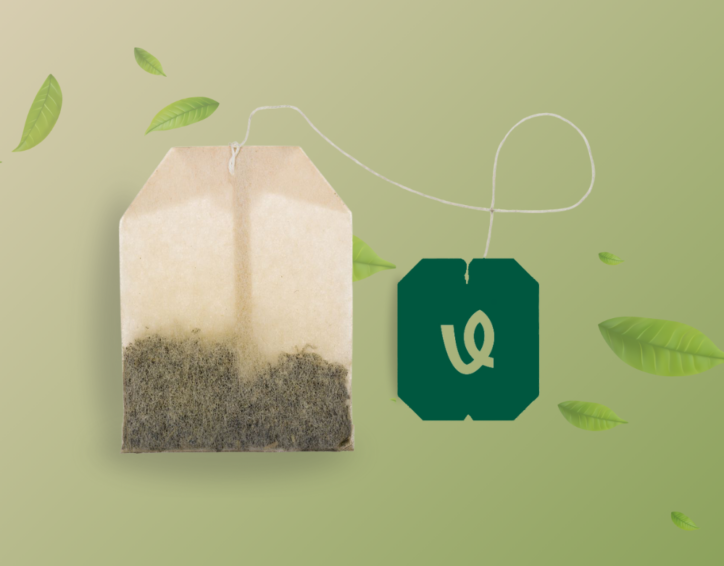
Image: Taghleef Industries
The new European Union (EU) Packaging and Packaging Waste Regulation (PPWR) that takes effect on 12 August 2026 features important requirements concerning tea and coffee packaging, including tea bags, particularly on compostability and recyclability. “The PPWR aims to prevent and reduce packaging waste across the EU, improve sustainability of packaging, and promote a circular economy,” a European Commission spokesperson told Tea & Coffee Trade Journal.
“Today, every European throws away half a kilo of packaging every single day – ranging from takeaway coffee cups and beverage cans to plastic wrapping or aluminum, foil, and e-commerce cardboard parcels.” This is why the EU has implemented new rules that include, from 2030 onwards, restrictions on certain single-use packaging formats and requirements to make all packaging recyclable,” she said.
Dr Sharon Hall, chief executive of the UK Tea & Infusions Association (UKTIA) and president of the Hamburg, Germany-based Tea and Herbal Infusions Europe (THIE) explained, “For the first time, the PPWR classifies teabags as packaging, triggering new obligations under article 9.1, requiring them [and coffee bags and soft single-serve units — coffee pads and pouches] to be compatible with industrial composting [by February 2028] and, where required by member states, with home composting standards.”
Dr Hall stressed that manufacturers understanding and implementing teabags certified to the European standard EN 13432 on packaging composting and biodegradability “should, by default, be accepted in biowaste streams across all EU member states” and hence be compliant. She emphasised that “industrial compostability must remain the baseline requirement, even if an EU-wide home composting standard is established. No such standard exists currently, and several member states rely on private criteria.”
Mandating home compostability could disrupt well-functioning waste systems, and from a technology perspective, heat-sealable, home compostable formats suitable for existing high-throughput machines are not currently available. “Such a solution may require EU factories to invest in new teabag packaging machinery and could cost millions of euros,” Dr Hall explained.
Without a harmonised EU standard, companies will find it hard to “invest in reformatting teabags for home composting, which is expected to require five to 10 years of technical development,” noted Dr Hall, adding that it was “unlikely to deliver consistent environmental benefits.” She said that the industry has invested significantly in the innovation, design and development of industrially compatible formats (to standard EN 13432 )that can enter the biowaste stream and therefore be safely included in food waste bags.
Examples include Dubai, United Arab Emirates-based sustainable film specialists Taghleef Industries’ Nativia’s bio-based and compostable films for tea tag lamination, including a compostable bag and string, and China-based BioPack’s 100 percent compostable tea bags and biodegradable coffee packaging.
“Modern teabags are primarily made from biodegradable plant fibre papers and compostable plant-based biopolymers like PLA, are already EN 13432 certified,” added Dr Hall. “Importantly over 95 percent of a teabag is tea, which is 100 percent biodegradable.”
Iva Werbynská, managing director of the Czech & Slovak Packaging Institute SYBA (Obalový institut SYBA) and general secretary of the Prague-based European Packaging Institutes Consortium (EPIC), said the new PPWR has cleared up the compostability debate, but the assumption that ‘compostable’ automatically equals ‘better’ is still confusing.
“Compostability only delivers real benefit where there is a functional collection and treatment route and the consumer gets clear, correct disposal instructions,” she explained. “Another persistent misconception is that compostability is a blanket requirement for all coffee portion formats; in practice, it depends on the specific format, how it’s used and disposed of and the applicable national framework where PPWR allows some national choices.”
World Packaging Organisation (WPO) vice president for Sustainability & Save Food, Nerida Kelton, said the EU mandates compostability as tea and coffee bags “are typically contaminated with organic waste (coffee grounds/tea leaves), making material recycling (like plastic or paper recycling) difficult and leading to contamination of these streams.
“A common confusion was whether rigid capsules (plastic or aluminium pods) must be compostable. The final text allows member states some flexibility to decide on compostability for rigid units, but soft ones must be compostable.”
Recyclability is Imperative
Under the new PPWR, the tea and coffee sectors must ensure all packaging is recyclable by 1 January 2030 – from that deadline, “packaging rated below Grade C (less than 70 percent recyclable) will be banned,” Kelton said. This threshold rises to B (80-95 percent recyclable) in 2038, with Grade A being ≥95 percent recyclable.
“As some tea packaging uses composite laminates to maintain freshness and improve durability, they will need to be redesigned,” THIE’s Dr Hall, who also chairs the THIE plastic and packaging working group, made clear. Plastic packaging must also meet PCR (post-consumer recycled, which is minimum recycled content) targets by 2030 under the law. For ‘contact sensitive’ plastic, such as coffee pouches or lids, the target is 10 percent if not PET (polyethylene terephthalate) or 30 percent if PET, shifting to 25 percent and 50 percent for both categories respectively by 2040. “Overwraps will require material changes and industry is already working towards phasing these out.
“Ultimately, companies will need to move away from composite or difficult to recycle materials to avoid higher extended producer responsibility (EPR) fees,” said Dr Hall. “Simpler, more uniform packaging designs will become essential for recyclability and management of costs.”
The THIE wants the European Commission to clarify the calculation method to determine EPR fees for teabags, ensuring they are based on the weight of dry packaging material and exclude tea contents. A specific understanding should be made reflecting the benefits tea and coffee make to biowaste recovery, so that EPR fees for the sector are minimised, said the THIE.
The THIE also says the Commission must ensure EPR fees support investments in collection and sorting infrastructure; and organise an exchange of information between everyone involved in EPR schemes for the “smooth functioning of the internal market.”
Companies have been preparing for these new requirements, with the Zurich, Switzerland-based global packaging provider Amcor pledging in 2018 to develop reusable or recyclable packaging by 2025, such as its AmPrime Plus Recycle Ready range for coffee.
Luxury Packaging
Rules are also tightening on over-packaging, impacting luxury lines. “Manufacturers and importers must ensure that by 1 January 2030, packaging is designed so its weight and volume are reduced to the minimum necessary to maintain its functionality,” said Sévrine Pereira Teixeira, senior policy manager at the European Organisation for Packaging and the Environment (EUROPEN). “Features existing solely to increase the perceived volume of a product, such as double walls, false bottoms or unnecessary layers, will no longer be permitted,” she noted, adding that these are common in luxury gift sets, unless they are protected by a specific trademark or design right.
The WPO’s Kelton added that by 2030, grouped and transport packaging must have a maximum empty space ratio of 50 percent while empty space ratios for the most commonly used packaging types and formats will be set by 2027.
The tea industry is innovating to ensure that luxury does not mean over-packaging, said Kelton, highlighting a “beautiful Dilmah tea gift in a reusable bamboo box with tea bags in aluminum tins,” sold in Sri Lanka.
For SYBA/EPIC’s Werbynská, “The message is not premium is banned…but premium design must be achieved with recyclability-compatible finishing choices and evidence to support design decisions.” In general, she said, “Films, foils and special coating are now assessed far more closely for recyclability, and optimisation of valves, zippers, closures and reduction of problematic mixed components.”
Labelling and Other Issues
EU experts are also urging the EU Executive Commission to give more clarity on the new recycling label requirements, as, “Any changes will require a packaging redesign, incur costs and take time,” stressed Dr Hall.
Article 12 on labelling requires packaging to carry a sorting label indicating that the material is compostable, not suitable for home composting and must not be discarded in nature, said Pereira Teixeira, adding, “several PPWR obligations apply across all packaging types, including on reuse (Article 29), minimisation (Article 10) and restrictions on substances in packaging (Article 5).”
Tea and coffee companies will also have to compile a technical file — a comprehensive dossier proving packaging meets all PPWR requirements (including substance limits, weight optimisation and recyclability) and a declaration of conformity that states packaging is PPWR compliant. It must reference the technical file and be kept for five years (single use) or 10 years (reusable) packaging.
Help is at Hand
With tea bags not even covered by previous EU packaging legislation, understandably, meeting the new rules will be challenging. Industry help includes EUROPEN’s PPWR Guidebook and Survival Guide.
The WPO has published a Global Packaging Design for Recycling Guide and Kelton recommended Germany’s packaging industry alliance Forum Rezyklat’s template for the PPWR declaration of conformity. Belgium’s packaging recovery organisation Fost Plus offers PPWR Insights, with the latest issue covering compostable packaging.
In addition, the Commission is expected to publish FAQs in the coming weeks to clarify aspects of the regulation and to address recurring questions, said EUROPEN’s Pereira Teixeira.
“There remains considerable uncertainty in several key areas, particularly regarding the practical sorting and recycling pathways for single-serve units in the different member states, as well as the conditions under which compostable single-serve units may be accepted within national bio-waste streams,” said Eileen Gordon-Laity, secretary general of the European Coffee Federation. “We will continue to work with relevant stakeholders to seek further clarity.”
Liz Newmark is a British/Belgian multilingual freelance journalist and editor. She went to Brussels in 1996 ‘for a couple of years’ and has been there ever since. Passionate about Brussels, Belgium, cycling, cinema, travel and architecture, she works for myriad European Union environment, business and Belgian publications and is the Brussels correspondent for International News Services.
Topics
Packaging Packaging and Packaging Waste Regulation standards
PeopleDr Sharon Hall Eileen Gordon-Laity Iva Werbynská Liz Newmark Nerida Kelton Sévrine Pereira Teixeira
OrganisationsAmcor BioPack European Coffee Federation European Organisation for Packaging and the Environment European Packaging Institutes Consortium Obalový institut SYBA Taghleef Industries Tea and Herbal Infusions Europe World Packaging Organisation
Regions