Fertiliser shortage could trigger a dire global F&B crisis in 2027
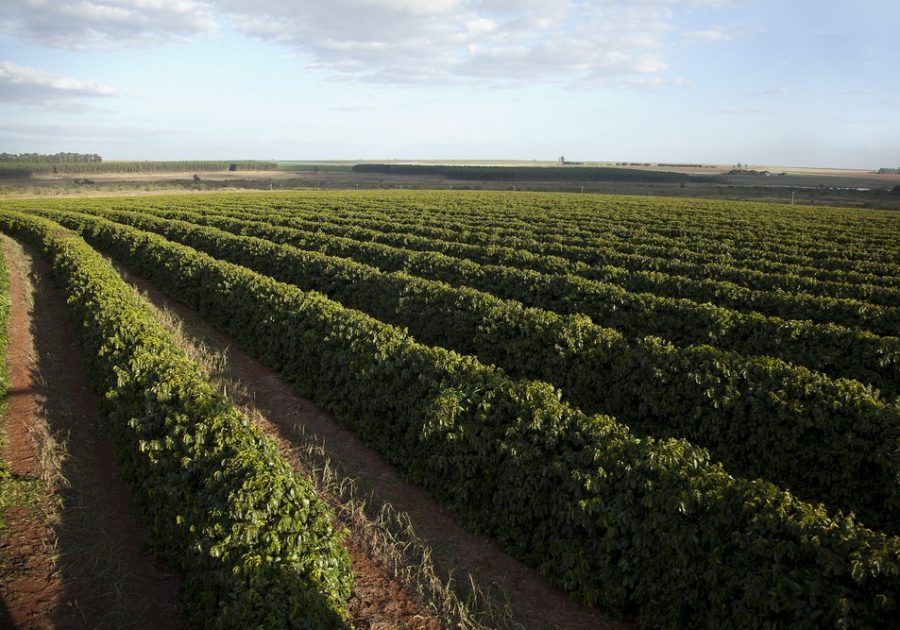
Image credit: Cerrado Coffee Growers Federation
Six months after the closure of the Strait of Hormuz, the global fertiliser supply chain has collapsed in key regions, creating a dual crisis of physical shortages and soaring costs. Since March, commodity intelligence platform CropGPT has directly surveyed thousands of farmers every month, across eight countries to measure the impacts of the crisis. The data shows a potentially catastrophic impact on global food and beverage – coffee included – supplies and prices in 2027.
CropGPT’s findings reveal that only 43% of farmers surveyed got everything they needed, with farmers in India – which feeds more people than any other country in the world – reporting they have been short of fertiliser for six months. In the Ivory Coast only 6% of coffee farmers were fully supplied in August, while 40% could not get any fertiliser at all. El Nino is forecast to peak just as the effects of fertiliser shortages and thinner harvests come in, multiplying the threat to global agriculture.
CropGPT’s data also unveils a stark economic divide. Where crop prices are strong, such as coffee, farmers have paid more and carried on. Where they are weak, farmers have cut back or stopped buying fertiliser. Farmers who cannot obtain fertiliser face yield loses of up to 50%.
Now, with survey data finding that growers are actively cutting planting areas, abandoning crops, and substituting inputs, CropGPT is warning of a potentially massive impact in 2027, with inflated food prices and global food shortages.
To demonstrate this threat to global food security, CropGPT has used its data to calculate a country risk index providing a score from zero to 100, based on supply access, price pressure and farmer behaviour. The methodology applies the heaviest weighting to farmers receiving no fertiliser because of the devastating 40 to 50% yield loss this causes.
According to the data, the most immediate threat to supply is in Africa, where across every survey wave, no more than 12% of farmers received all their required fertiliser. In the Ivory Coast, the risk index has reached the maximum severity score of 100. A survey of coffee farmers showed just 6% got everything they needed, while 40% could not get any fertiliser at all. Heavy rain damages crops while higher input costs and weaker global commodity prices have left farmers with no money to spend.
In Ethiopia, the risk index for coffee farmers climbed to 72.1 in August. Driven by foreign currency shortages and import constraints, the share of farmers unable to get any fertiliser spiked to 17% in August, with only 11% of farmers reporting they got everything they needed.
Farmers in Asia are also at great risk. India, for example, faces entrenched supply problems alongside severe weather, guaranteeing lower harvests. Across five survey waves from March to August, only 8 to 21% of farmers were fully supplied. In August, 38% had not yet purchased fertiliser and 48% reported drought. Per CropGPT data, farmers are cutting use and going without, guaranteeing lower crop yields for the world population.
According to data, supply chains are functioning better in South America and Southeast Asia, but margins continue to be squeezed by rising costs and adverse weather, threatening future production. Around two thirds of farmers surveyed in Brazil and Colombia are paying more for their inputs.
In Colombia, a survey of coffee farmers showed 55% received all required fertiliser, but 63% are paying more than last year. These farmers are also battling severe weather, with 44% reporting drought and 36% extreme heat.
Brazil saw its risk index rise to 45 in August. CropGPT’s survey of coffee farmers found 50% fully supplied, but 65% said fertiliser cost more than last year while facing mixed heat and rainfall stress.
Vietnam holds the strongest position with a low risk profile. An August survey showed 87% got everything they needed. In addition, the high global coffee prices are currently helping farmers absorb costs. However, with 48% of respondents now reporting drought, future supplies remain under threat.
Commenting on the findings, Rob Weston, founder and CEO of CropGPT, said, “The market is fundamentally mispricing the sheer scale of this crisis. Traders are understandably watching the forecasts to understand the impact of El Niño, but the real catastrophe is already happening on the ground.” He explained that when 57% of farmers across key agricultural regions are reporting they cannot access or afford the fertiliser they need, “we are not just looking at thinner margins, we are facing a global food crisis. Global food systems cannot absorb a shock of this magnitude without supermarket prices exploding and people starving.”
A full copy of the report can be found at: Fertiliser Crisis Dashboard, Farmer Survey 2026 | CropGPT.
- Vanessa L Facenda is editor of Tea & Coffee Trade Journal. She may be reached at: [email protected].
Topics
coffee farming global fertiliser supply chain inflation market analysis
PeopleOrganisationsRegions