Sana’s new programme improves wellbeing for women coffee farmers
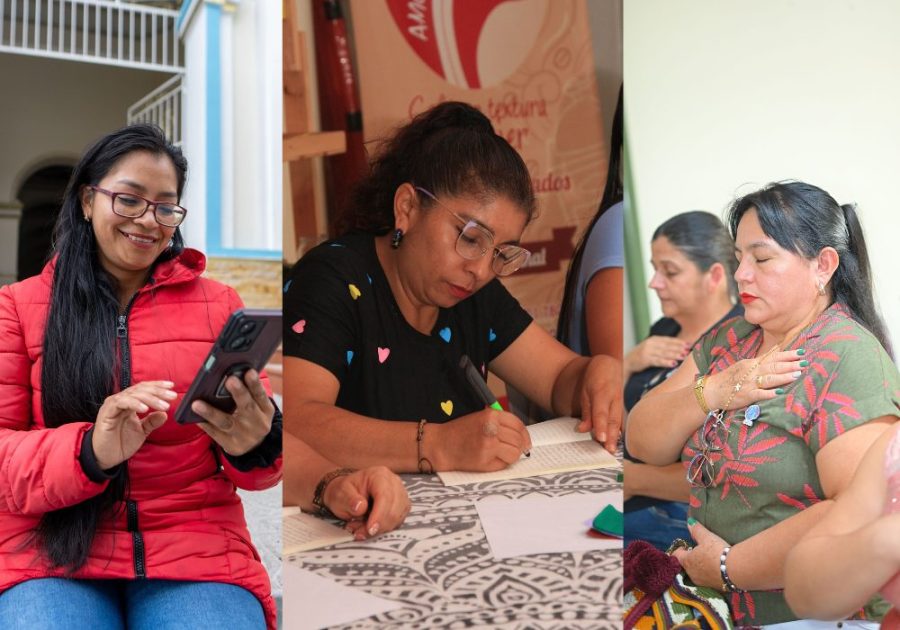
Image credit: Sana
Sana, a non-profit dedicated to advancing mental health care and wellness for women coffee farmers, released its 2025 Impact Report, presenting the first-ever formal measurement of mental health states and changes for women coffee farmers in Colombia.
According to the report, women who participated in Sana’s five-month integrative mental health care and wellness programme experienced a 42% reduction in stress, a 49% increase in self-care awareness, and a 44% increase in confidence in expressing themselves, as measured by the proprietary Sana Index, a tool designed to evaluate well-being, agency, assertive communication, and emotional awareness.
Despite growing investment in coffee sustainability programmes, outcomes are generally difficult to measure and mental health outcomes have never been formally measured. Existing frameworks do not track whether farmers are mentally and emotionally able to navigate the pressures of the industry. Farmers face escalating challenges, including climate stress, price volatility, rising input costs, and crop disease. For women, these challenges are compounded by multiple systemic inequities. Sana’s programme fills this gap by equipping women with tools to manage stress, navigate uncertainty, and strengthen their sense of agency. As a result, they are more motivated to continue farming, better able to cope with life’s challenges, and more confident in making decisions for their farms, families, and communities.
In 2025, Sana reached 66 women coffee farmers across six regions of Colombia, with 100% of participants completing the programme and demonstrating measurable improvement across all 10 mental health indicators measured.
“These results matter because women are approximately 60% more likely than men to develop mental health conditions, largely due to systemic gender inequities such as the triple burden of household, caregiving, and farm responsibilities and higher exposure to gender-based violence,” said Lucia Bawot, founder and CEO of Sana. “The coffee industry cannot sustain itself if farmers are burning out under constant uncertainty. Mental health is not a side issue; it is a core sustainability metric we’ve been missing.”
The report also highlights that 60% of participants had never spoken with a psychologist before joining Sana; this underscores the severe lack of mental health care access in rural communities. While certification schemes track yields, income, and environmental indicators, mental health remains largely absent from how sustainability is defined and evaluated in coffee — particularly for women farmers.
Sana’s programme delivers integrative care by combining tele-counselling with licensed psychologists, group workshops, a WhatsApp-based psychoeducational curriculum, and community-based support to bring care directly to women in their communities. In post-programme feedback, 100% of participants reported experiencing positive changes and stated that they would recommend the programme to others.
“The programme gave me tools to connect better with my community. I learned to value and love myself, accept my mistakes, and recognize my strengths,” said Sindy, a Sana participant.
Looking ahead, Sana is expanding the programme in 2026, with a goal of reaching 200 women coffee farmers across multiple regions in Colombia, while continuing to develop the Sana Index as a benchmarking tool for mental health interventions in agriculture.