Blending 120 Years of Tradition with Modern Practices and a Forward-Thinking Mindset
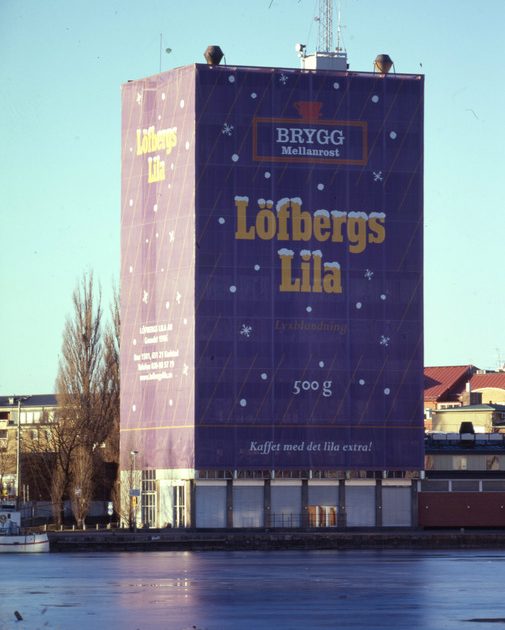
Löfbergs created the world’s biggest coffee packaging (encasing the Löfberg building), per Guinness World Records in 2000.
For much of the coffee industry, sustainability has shifted from a branding exercise to a business imperative. Climate volatility, rising green coffee prices, increasing regulatory scrutiny, and growing consumer awareness are forcing companies across the supply chain to rethink how coffee is sourced, traded, and produced. For one Sweden-based coffee leader, Löfbergs, that reckoning has been decades in the making.
Still family-owned after four generations, Löfbergs enters its 120th anniversary year as one of the Nordic region’s largest coffee roasters and Sweden’s most exported coffee brand.
Headquartered in Karlstad, Löfbergs operates across Europe, with business conducted in Sweden, Norway, Denmark, Finland, Estonia, Latvia, Lithuania, Poland and the United Kingdom. Every day, Löfbergs produces the equivalent of 10.5 million cups of coffee while sourcing beans from roughly 45,000 farmers worldwide.
Acting with Concern About the Future
Yet, despite the company’s scale and international reach, Löfbergs remains tied to the values established by its three founding brothers – Anders, Josef, and John Löfberg – who established the company in 1906.
“We celebrate 120 years this year,” said Kathrine Löfberg, chair of the board of Löfbergs. “We were founded in 1906 by my great-grandfather and his two brothers, and we always had a very strong commitment to great tasting coffee but also sustainability and coffee know-how. I think ‘sustainability’ was not named that way in the beginning of [the 1900s], but there’s always been a concern about people and the surroundings.”
That long-term, future-oriented mindset remains central to the company’s identity.
“I can say that we are a very value-driven company, and we are very committed as owners, very present, and very visible,” explained Löfberg.
Coffee today faces major challenges: climate disruption, economic instability for farmers, and growing consumer demands for transparency. For Löfbergs, those pressures reinforce a philosophy that has guided the company for decades.
“When we talk about future generations, it’s not only our generations,” said Löfberg. “It is, of course, the next generation of employers, next generation of customers, coffee farmers, and their families, and so on… we act with concern about the future.”
That philosophy has shaped operational decisions throughout the company’s history. In the 1980s, Löfbergs invested in environmental initiatives and sustainable packaging innovation. In 1992, it became the first company in Europe to introduce aluminium-free coffee packaging. In 1995, it imported Sweden’s first container of organic coffee. More recently, the company transitioned its whole bean range to recyclable mono-material packaging while investing in fossil-free freight and lower emission operations.
“We had an environmental policy very early,” shared Löfberg, “and we were working a lot with packaging materials already in the 1980s, taking away the aluminium then, recycling, and so on.”
According to Löfbergs’ latest sustainability report, development initiatives have reached more than 195,000 smallholder coffee farmers globally. In 2025 alone, the company’s Fairtrade-certified coffee purchases generated an additional SEK (Swedish krona) 42 million (circa USD 4.5 million) in premiums for farmers and cooperatives. Löfbergs has also invested in regenerative agriculture initiatives in Brazil designed to improve biodiversity, strengthen soil health and increase farm resilience.
“For us, sustainability is really integrated in everything we do,” shared Löfberg. “As a family business, we don›t take shortcuts… and this is really critical for our business and the future: to really work in the entire value chain.”
Respect for Farmers and Coffee Quality
For Löfbergs, that value chain perspective includes direct engagement with coffee farmers and a focus on fair trade.
“The ‘fairness’ part is a very good point,” said Löfberg, “because I think you also have to be present [in the producing countries]. You have to talk to the coffee farmers. We cannot only sit here in Sweden and buy the green coffee that we need for our products. You have to really meet the farmers, talk to them, and listen to them. Then you really learn what is the fairness of things.”
That approach has informed the company’s participation in International Coffee Partners.
“We work in something called International Coffee Partners,” said Löfberg, “which are seven family-owned coffee companies in Europe, and we’ve been working on projects since 2001. We try to focus on the livelihood for the coffee farmers, increase productivity, increase quality, but also help them to become better to sell their coffee.”
International Coffee Partners was co-founded by Löfbergs to improve livelihoods and resilience for smallholder coffee farmers, especially by encouraging crop diversification.
“Coffee farmers need to not only grow coffee, they [need to] grow other crops where they also can earn money, especially if coffee prices are low,” said Löfberg. “We’re trying to empower them to continue development even when a project is finalised.” During an interview with T&CTJ, Löfberg repeatedly returned to the importance of respect – for coffee, for producers, and for the complexity behind every cup.
“There’s so much to learn about coffee – the growing part of it, the coffee farmers’ work, the origin countries, the entire process,” she said. “You can really dig deep into coffee knowledge… so, it’s kind of a never-ending learning.”
Transparency, Technology and Growth
Asked how Löfbergs balances tradition with innovation, Löfberg emphasised the importance of tradition, know-how, and curiosity.
“We try to observe what’s happening now and in the present,” said Löfberg. “…it’s always a risk with an old company that you get stuck in history,” she said, “so, it’s more of a learning platform to look ahead. But, really, stay curious about the future all the time. It’s important.”
That frame of mind is increasingly visible in Löfbergs’ technology and traceability investments. In 2025, Löfbergs earned the Sustainability Innovation Award by Food Folk, McDonald’s licensee for the Nordics, for the coffee company’s work with Era of We. Era of We is an innovative digital platform that ensures full traceability of coffee from farm to cup, and it plays a crucial role in meeting the European Deforestation Regulation (EUDR) requirements, thus positioning Löfbergs as a leader in sustainable coffee production.
“We can trace all of our coffee and show consumers that this coffee comes from here, from this person, and so on,” said Löfberg. “We also like to have long-term relationships when it comes to who we buy from. So you kind of develop a way of having transparency. You know exactly what’s going on back to the root.”
Löfbergs has published annual sustainability reports since 2010. “For a very long time, we’ve tried to be really transparent with our goals, ” said Löfberg. “What has been done but also what has not been done, and what we did we not reach, and so on – to be very transparent.”
That transparency matters because sustainability itself has become more complicated.
“It’s very important for companies to really get involved in what are the certifications really doing and what kind of work are they doing, because there are a lot of certifications, ” Löfberg explained. “You really have to know yourself to choose one, and to have the knowledge about it.”
At the same time, Löfberg cautioned against viewing certification as a complete solution.
“And it’s also important that you go for certification and then think that you don’t have to do anything else,” noted Löfberg. “You still have to be very close to what’s going on in the coffee origin and do other things when it comes to sustainability. Because, otherwise, it’s just an easy way to just have a label on your packaging.”
Even as sustainability remains central to the company’s identity, Löfbergs is equally focused on growth. About half of the company’s business currently comes from markets outside Sweden.
“We really want to grow internationally,” revealed Löfberg. “Already, half of our business is outside of Sweden, but we have big ambitions to really grow further on the international arena.”
While traditional filter coffee still dominates in Sweden, younger consumers are driving new habits and growth around the world. Löfberg pointed to ready-to-drink (RTD) coffee as one of the most significant trends shaping the market. “In the United States, it’s been there for a longer time than in our country, ” she said. “And, especially iced coffee, which you also have in the States and is much more present and has been for a long time.”
Sweden, Löfberg noted, has historically maintained a hot-coffee culture.
“But now it’s really taking off here,” said Löfberg about RTD in Sweden. “The ready-to-drink segment, especially cold coffee, I would say – for us – is very interesting.”
At the same time, another trend continues to build in the opposite direction, as younger consumers embrace do-it-yourself (DIY) coffee and beverage culture, especially on TikTok.
“It’s kind of two different trends,” said Löfberg. “One is this ready-to-drink and it’s fast and it’s already prepared. And then there is another trend where you go very deep into all the details that you can – it’s very much concerned about what beans are ground, the temperature, what kind of water is it, what kind of minerals are in the water that you use for the coffee, and what are the different origins and the different blends, and the different single origins and the single state.”
Löfberg added, “You can really spend an hour to create the best cup of coffee on a Saturday morning but you can, at the same time, take an iced coffee on the way to work on a Monday morning.”
The Future of Coffee
Underlying these conversations is a broader question facing the coffee sector: who will grow coffee in the future?
“To get interest from the next generation farmers, is really a challenge I think, for all agriculture products,” said Löfberg. “To get the next generation to see a positive future working in coffee is crucial.”
For Löfbergs, the solution depends on making coffee farming economically sustainable over the long term. “I think you get a great respect for the great work that is done in coffee farming countries,” said Löfberg. “We try to also to educate the consumers about it.”
Consumer education is a key focus for the company. “We try to really educate consumers because we think also that the consumers will have a greater respect for coffee if they know a lot more about it and where it comes from,” shared Löfberg, who remains optimistic about younger generations in particular.
“I’m very positive for the future since the younger generation is more concerned about these things,” she said.
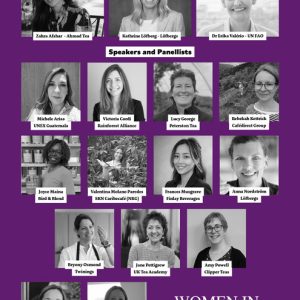
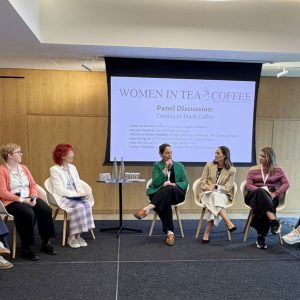
During the recent Women in Tea & Coffee Conference in London, Löfberg pointed out that discussions around gender equality and women farmers – another hot topic – left a lasting impression.
“There was something that I wrote down,” she recalled. “It came up a lot during the conference, with a lot of interesting thoughts from all the great people who were present: ‘When you empower a woman, you empower a community’.”
As Löfbergs marks 120 years in business, the company remains independent enough to make long-term decisions without shareholder pressure. “We’ve always had a great passion for coffee, for great tasting coffee,” said Löfberg. “It’s also one of the products that you consume that affects a lot of people in the world. It’s like 30 million people working directly with coffee in some way. So, it’s really a global product. It’s different.”
In the end, the company’s vision remains simple despite the complexity surrounding modern coffee production. “We work for a world where coffee and people can grow together,” Löfberg summarised.
Aaron Kiel is an award-winning journalist with more than 20 years of experience covering the beverage, tea, coffee, hospitality, and technology sectors. He also works as a PR and communications consultant. Visit akprgroup.com for more information.
Topics
120th anniversary Changing consumer behaviour and coffee trends Climate change impacts on coffee production Fair trade and farmer livelihoods Regenerative agriculture and biodiversity Sustainability in the coffee supply chain Sustainable packaging and low‑emission operations Traceability and transparency in sourcing Women in Tea & Coffee Conference
PeopleOrganisationsEra of We Fairtrade International Coffee Partners Löfbergs
Regions