The Power of Flavour

Image credit: Starbucks
Integrating flavour into tea and coffee has been done for decades, providing consumers with diverse ways to experience these beverages. However, flavour does more than alter a product’s taste profile. If done intentionally and strategically, flavour can increase interest in a product, elevate its value, and provide a solution to address supply and cost challenges.
“Flavour has become an important tool for futureproofing. As agricultural volatility, regulatory shifts, and consumer expectations intensify, brands need solutions that can flex and perform across changing conditions,” said William Kelly, vice president, beverage taste, Kerry North America. Enhancing beverages with flavour can be a powerful strategy to address challenges that the industry is facing, including inconsistent supply chain, rising ingredient costs, and staying relevant to the increasingly experimental consumer. Enhancing tea and coffee with flavour is not something that should be taken lightly.
The Ever-Evolving Consumer Palate
Flavours provide an opportunity to foster connections with the consumer by customising their beverages that respond to their values. For tea and coffee, it provides manufacturers with an opportunity to expand beyond the morning cup by using flavours to develop experiences that can be enjoyed throughout the day. “People are choosing beverages for comfort, routine, emotional connection and wellness cues, so brands are looking for flavours that feel familiar but bring something fresh to the experience,” said Kelly.
Indulgence remains a key driver for coffee, with vanilla, caramel, and hazelnut as flavour staples; however, consumers are becoming more experimental, especially in the iced beverage segment. “Caramelised biscuit – a flavour that just keeps on giving in sweet bakery – is an interesting crossover in coffee,” said Briony Rideout, beverage innovation specialist at Flavour House, ITS. “We are also seeing brand extensions too with Dunkin’s flavoured coffees available in the US in Butter Pecan or French Vanilla flavours, and even Brownie Batter Donut as good examples.”
There is accelerated growth in layered versions of the core flavours, shared Kelly, including salted caramel mocha, honey vanilla, horchata, sweet cream, and seasonal spice profiles. “We are seeing more adventurous combinations like coconut ube, chocolate strawberry and smoky vanilla,” said Kelly. “These pairings add depth and intrigue, making them ideal for limited-time offers that keep menus fresh and drive repeat visits.”
Indulgent, dessert-inspired flavours are now expanding into the tea category. In fact, one of the top-trending flavours in the UK is biscuit tea, shared Frances Musgrave, tea sourcing manager, Finlay Beverages, which in turn provides space for other experiential flavours, including jam doughnut and jam and toast.
“Flavours are very emotive, and I think a reason why the biscuit teas work so well is the British consumer already habitually associates the flavour of biscuits with drinking tea, so it’s the perfect pairing,” said Mason Alvalle, coffee sourcing manager, Finlay Beverages. In addition, these rich-tasting flavours provide consumers with a low-calorie indulgent experience, [which is] ideal for those who have wellness and weight loss top of mind.
“Using products like [our] SweetLITE™, a range of 100 percent plant-based natural flavourings, allows brands to cut added sugar by up to 50 percent, while maintaining the same sweetness, mouthfeel and overall flavour,” said Rideout.
“You’re seeing a lot of breakout drinks, especially in the out-of-home coffee segment, like matcha, ube or yuzu,” said Alvalle. “These are really big flavours in the out-of-home coffee market, which are typically mixed in an iced beverage.” These products can create brightly hued drinks, particularly when iced, providing consumers with a product that both looks and tastes good.
In cold brew, said Alvalle, the main differentiator is the type of coffee that you extract. “Classic, nutty, chocolatey rich tones, with a little bit of sweetness and fruitiness, but not overly overpowering, work really well in a cold brew,” said Alvalle. Fruity flavours also pair well with brewed iced tea.
These flavour notes, said Musgrave, provide a fresh experience for the end user.
The Continued Push for Wellness
Wellness has always been a driver for tea, but the elevated interest in GLP-s has increased the demand for food and beverage products that do more. “Individuals are demanding more from the food they do eat. Products that are nutrient-dense, protein-rich, and, importantly, flavour-packed are being chosen over other products which consumers may see as ‘wasted calories’,” said Rideout. In the world of tea and coffee, this translates to beverages with added benefits, including protein, adaptogens and vitamins.
The infusion of flavour into these products can help make these functional ingredients more palatable. “The existing health benefits of leaf tea can be enhanced with natural flavours to create a tea to target every requirement, whether it’s mood boosting, supporting digestive health, aiding sleep or a feeling of calmness,” said Rideout. Natural flavours are used to enhance the tea or tisane’s flavour notes, for example, pairing matcha with strawberry and chamomile with mint.
“People want naturalness, clarity and simplicity from ingredient statements, so brands need flavour solutions that support clean label expectations without compromising on taste,” said Kelly.
Authenticity, traceability and quality remain critical factors that a core group of consumers are demanding across their products. “These consumers want real ingredient cues, credible sourcing stories and flavour solutions that support rather than overshadow the base,” said Kelly. “Flavour plays a critical role in reinforcing these origin and craft cues while giving brands room to innovate.”
Intentional Flavour Construction
Flavour integration is a complex process that requires a detailed understanding of the desired flavour profile and the tea/coffee bases that best deliver this experience. When choosing a flavour, Musgrave emphasised, companies need to understand the base flavour to help determine which will work best with the selected flavour compound. Biscuit flavouring, she said, provides tea with a buttery, malty flavour, and tends to work well with bases that have these buttery malty notes. Choosing this type of base will help ensure that the flavour accentuates its taste profile rather than competing with it.
Although still in its infancy, integrating AI data could help better determine trends and the types of bases best suited to certain flavour profiles. “Moving forward, AI data and a lot of the work that the Specialty Coffee Association is doing with their new coffee value assessment, will alter the way that we both assess the flavour of coffee and the quality,” said Alvalle. These tools could deepen the understanding of the flavour notes in the coffee base helping ensure that the flavour enhances the user’s experience.
“When we are coming up with a blend, we need to understand how the company would like to market the product and work backwards,” said Musgrave. Labelling regulations, including the wording and images on packaging, will directly affect the type of flavouring used and the source from which it is extracted. For example, in the UK, she said that if an image of a fruit is on the package, there are rules on the percentage of the flavouring that must come from the actual fruit itself, and these considerations need to be made when sourcing the flavouring.
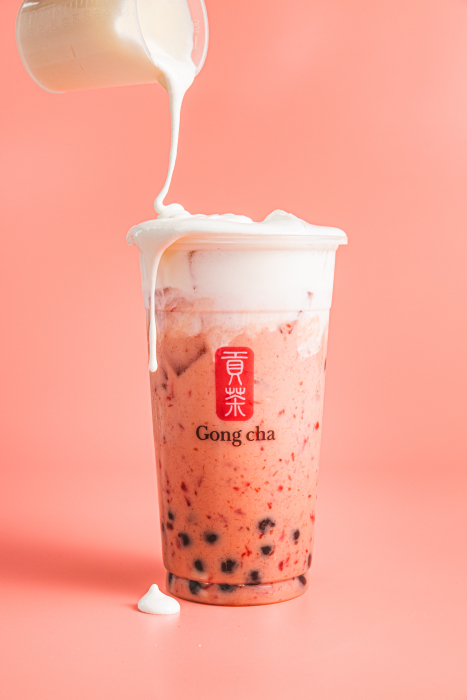
Consumers are often willing to pay more for flavoured products. Image credit: Jayna Cropas/Gong cha
The type of processing used can also have a direct impact on the flavour’s performance. For example, the heat used in UHT (ultra-high temperature) processing alters the structure and stability of flavour and aroma chemicals, stated Rideout, which, in turn, affects the flavour characteristics and profiles in the finished product. To respond to this challenge, ITS has a UHT pilot plant that provides manufacturers with the ability to batch test flavours to ensure they meet the desired profile after UHT treatment. “Our expert flavourists can then adapt and make subtle changes to flavour profiles on-site as the products are being tested, to ensure they can withstand the intense heat of milk processing,” said Rideout.
Integrating flavours into tea and coffee, when done purposefully, can also help mitigate some of the risks associated with supply shortages and shifting costs. “Flavour can help buffer natural swings in raw materials, support reformulation when sourcing changes or reinforce a sense of richness when economic pressures tighten,” said Kelly.
Rideout agreed, emphasising that natural flavours can be added to a base to boost the flavour profile of the ingredient, in a variety of situations, including when the cost or the availability of a raw product is impacted.
As an added benefit, consumers are often willing to pay more for flavoured products, providing manufacturers with an opportunity to increase prices to buffer rising raw ingredient costs. “Flavour provides an opportunity to increase the price that you charge for the end product, particularly in the out-of-home market where a lot of flavour discovery happens,” said Alvalle.
Enhancing tea and coffee with flavour is not something that should be taken lightly. “In today’s landscape, flavour is more than taste,” said Kelly. “It is a strategic choice that supports innovation, resilience, sustainability and long-term growth across tea and coffee.” Used strategically, flavour can be a tool to buffer ingredient challenges, build brand recognition and strengthen connections with your end consumer.
“The concept of flavoured tea isn’t new,” said Musgrave. “But today, everybody’s a bit more experiential and a little bit more adventurous, so it gives us a much broader creative playground when it comes to flavour combinations.”
The challenge is determining which trends are here to stay, which are seasonal, and which ones are best left on the sidelines. Brands will benefit from investing time to understand their end consumers’ needs and wants, so their flavoured products respond to the beverage experiences they seek.
Anne-Marie Hardie is a freelance writer, professor and speaker based in Barrie, Ontario. She may be reached at: [email protected]
TopicsPeople
Anne-Marie Hardie Briony Rideout Frances Musgrave Mason Alvalle William Kelly
OrganisationsFinlay Beverages Flavour House ITS Kerry Specialty Coffee Association
Regions