Better Sustainability in Single Serve Coffee Gains Steam

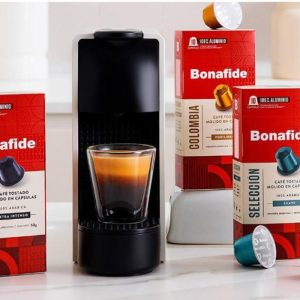
Single serve coffee brands are meeting consumer demand for sustainable options with innovative solutions. Image credit: JRP Studio-stock. adobe.com
Convenience may be driving consumers’ use of single serve coffee products, but as concerns about the segment’s impact on the environment increase, sustainability and hygiene are playing important roles in the category’s continued growth. By Vladislav Vorotnikov.
As the popularity of single-serve coffee continues to rise, so does consumer awareness about the waste problem. Different competing concepts of tackling this issue have emerged on the market, each with its benefits and promises.
The single-serve coffee segment has largely evolved over the last decade, moving beyond “quick caffeine” toward premium, planet-friendly, and pathogen-free brews, explained Nandini Roy Choudhury, principal consultant, food & beverages at Future Market Insights. “Shoppers now expect café-level crema, iced options, and micro-foamed milk from a one-button pod, so brands roll out higher-pressure pumps and barcode-guided extraction adjusting grind, temperature, and volume,” Roy explained. However, sustainability remains the loudest demand: plastic-heavy capsules are swapped for compostable PLA, paper, or thin aluminum shells, backed by take-back schemes and Keurig‘s plastic-free K-Rounds, Choudhury added.
Quite a few different trends shape up the single-service coffee segment, commented Kev Lewis, a popular coffee blogger and the creator of the YouTube channel Coffee Kev. “There’s a growing demand for fresh coffee: freshly roasted, freshly ground and freshly brewed. There is also a growing demand for environmental friendliness and sustainability,” Lewis said.
There is a noticeable increase in demand in the single-serve market, driven by emerging trends such as cold brewing. “With the growth of cold brew and iced coffee beverages overall, as well as espresso-based drinks, there’s been an influx of single-serve brewers to address both of those trends. And at the high end of the market, you have entrants like Cumulus focused exclusively on cold brewing,” Kathleen Tompsett, a spokesperson for Bruvi, a US-based single-serve coffee maker that uses its own proprietary “B-Pods” to brew various coffee.
Single-serve coffee continues to grow in the US because of its convenience and the wide range of brands and roasts available to meet each family’s needs, said Ann Hutson, co-founder of Cambio Roasters, a US-based coffee brand. “As contrasted with a decade ago, concerns around single-use plastics are exploding, so the big trend is consumers are looking for alternatives without having to throw away their Keurig brewer,” Hutson shared. She noted that investments in sustainability are required in situations where customers become more price-sensitive, and due to cost pressures, the overall coffee quality of single-serve products on the market is declining.
Different Paths
There is currently a diverse range of solutions in the industry, each with its own approach to improving sustainability in the single-serve coffee segment. Manufacturers are attacking the waste problem on three fronts, Choudhury said. “First, they are ditching hard-to-recycle plastic pods. Keurig’s new K-Rounds and Nespresso‘s upcoming paper-based capsules swap multi-layer plastics for plant-fiber shells that can go straight into home compost or paper streams.” The second path is redesigning the pod itself out of existence, Choudhury said, citing Migros‘ Coffee B system, which presses coffee into a condensed ball wrapped in a thin seaweed film, as an example. In addition, several US startups are launching fully water-soluble pods made from edible plant starch.
Third, according to Choudhury, is closing the loop for unavoidable materials. “Aluminum capsules are now 80-90 percent lighter and come with prepaid “pod-back” mailers; machines scan a QR code to prompt users to collect spent capsules for pick-up. Energy-smart brewers that sleep between cups and heat water on-demand round out the eco gains by cutting standby power in half,” she shared.
The number of various solutions aimed at improving sustainability has grown significantly in recent years, making it challenging for both consumers and experts to determine which ones offer the strongest benefits. “When it comes to pods, we’re seeing various developments: refillable, compostable, and fully recyclable, all of which are interesting,” Lewis said. “In many cases, though, I think it’s tricky to work out if these kinds of things are actually better for the environment or just better for marketing. ‘Compostable’, for example, sounds great for pods, but are they home-compostable or commercially compostable? Two very different things,” he explained.
“Also, how many people will misunderstand and chuck them in the home compost, and if they do, what’s the impact? What’s the impact when people misunderstand and throw compostable pods in the recycling? For example, is it that entire batches of recycling can’t be recycled as a result? When you get answers to all of these questions, it becomes obvious just how tricky this kind of stuff really is,” Lewis added.
Sustainability in the single-serve coffee segment is not limited to the pods issue and has several dimensions, said Bruvi’s Tompsett. “Another aspect of single-serve coffee that doesn’t get a lot of attention is that it offers sustainability benefits against batch brewing in terms of resource use – in other words, less coffee waste, water waste, and energy usage. Particularly as climate challenges increase for coffee production, the ability to use coffee more efficiently is a real benefit,” she remarked.

The Migros Coffee B system presses coffee into a condensed ball wrapped in a thin seaweed film. Image credit: Migros Coffee
Recyclability Under Question
One of the reasons why numerous new solutions aimed at making the single-serve segment more sustainable emerge on the market is that the concept of sustainability, long considered the key to the problem, is not working as the industry had hoped.
“Despite efforts by some companies to create recyclable plastic pods, it’s just not that effective,” commented Tompsett. “Many local recycling facilities don’t accept them, and because of their small size, coffee pods are especially difficult to recycle properly, so most of those wind up in landfills. And we see more introductions of compostable pods, but the US still lacks an industrial composting infrastructure, so even those are more often trashed,” she added.
Besides, if you do try to recycle, you have to empty and wash out the pods and in the case of Nespresso aluminum pods, mail them in, Tompsett pointed out. “So, we decided to go another way. Bruvi B-Pods are made of bio-enzyme-infused PP5. They’re designed to degrade faster and more substantially in the landfill — without leaving microplastics behind. Where untreated plastic takes hundreds of years to degrade, B-Pods degrade in just a handful of years,” she said.
Bruvi claims that it’s the first company to bring this new enzyme technology to coffee pods, and that it’s something that could also be used in other products, such as yoghurt and applesauce cups. “We hope to see other manufacturers use it as well. We believe this is a smarter and more responsible solution that takes advantage of the current waste infrastructure in the US,” Tompsett noted.
US coffee drinkers will consume 20 billion plastic K-Cups® this year, which means over 50 million/day end up in oceans and landfills, Hutson shared, adding that this is the single biggest sustainability problem facing the coffee pod market. “This is why Cambio Roasters introduced an all-aluminum K-Cup® style pod for use in the 43.5 million Keurig® brewers in the US.”
According to Hutson, aluminum is exciting because, whereas only 3 percent of plastic is recycled, aluminum is recycled over 95 percent of the time in the US. And coffee loves it because it has such a low oxygen transfer rate, which means it’s better for the planet and coffee, and consumers love it.
In addition, the concept of a coffee pod without a pod is increasingly getting consumer attention.
In 2022, Swiss company Coffee B rolled out what was considered to be the first fully compostable coffee pod. The concept was quite simple: once roasted and ground, the coffee is first compressed into balls and then coated with a protective layer with an algae base. This preserves its durability and keeps the aroma contained while perfectly protecting the coffee. Over the past three years, several companies have explored opportunities offered by this approach to the coffee pod problem, but it remains to be seen whether such pods can satisfy customers in other ways.
“We are seeing some interesting developments with pods that have a plant-based wrapping rather than a capsule, and we’ll be watching how consumers react from a taste and freshness perspective,” Tompsett shared.
Hygiene in the Spotlight
In recent years, hygiene has also become an increasingly important factor for customers, particularly in the hospitality industry.
“Hygiene is the rising differentiator [in the single serve segment], especially in hotels; sealed brew paths, UV-C self-sterilising lines, and automatic purge cycles reassure guests. Convenience, taste, eco-impact, and cleanliness now outrank price. Smartphone control and subscription bundles deepen loyalty,” Choudhury said.
Pod machines in hotel rooms and Airbnb’s are certainly practical, and the commercial options tend to have bigger internal used-pod bins and drip trays, Lewis said. “When it comes to hygiene, though, I’d assume that not having milk systems is mainly where the hygiene benefit is coming from.”
In general, Choudhury explained, hygiene has shifted from a background box-tick to a front-of-house selling point, especially in hotels where many guests share the same brewer. New single-serve units seal the entire brew path and purge it after every cup. Keurig’s K-Suite, for instance, drains the tank so no standing water can breed bacteria, she said. “Nespresso’s Momento line auto-rinses several times a day and even offers touch-free brewing via proximity sensors or a phone. Suppliers are also integrating UV-C LEDs in water lines and cup shelves to kill pathogens in seconds. With ‘self-cleaning’ now appearing on hotel RFP checklists, adoption is accelerating and should be baseline within the next two equipment cycles,” she added.
In a world fuelled by convenience, single-use coffee pods have gained immense popularity among coffee enthusiasts. However, as it becomes clear that convenience comes at a certain environmental cost, companies believe that sustainability and hygiene – trends that largely go hand-in-hand – will continue to drive industry development down the road.
Vladislav Vorotnikov is a Batumi, Georgia-based multimedia B2B freelance journalist writing about the tea and coffee industries since 2012.