Farm Outputs Impact the Availability of Côte d’Ivoire’s Soluble Coffee

Worker inspecting Nescafé products at a Nestlé distribution centre. Image credit: Nestlé
Although coffee production in Côte d’Ivoire has been unstable for the last few years, a recent positive performance along with a plan to replant old coffee farms has generated optimism that the fourth largest coffee producer in Africa is reversing declines, and will return to its position as Africa’s leading soluble coffee producer. By Shem Oirere.
Coffee production in Côte d’Ivoire has been unsteady for the last five years, which has impacted the volumes available for the manufacturing of soluble coffee, a key export product for the West African country.
Côte d’Ivoire, formerly Ivory Coast, with an estimated population of 30 million and ranked the fourth and 14th largest coffee producer in Africa and world respectively, reported its first major dip in output in 2020. The country’s industry regulator, the Coffee-Cocoa Council, reported a 25.6 percent fall in coffee production to slightly more than 61,300 tonnes, a trend that has continued for nearly four years due to factors such as ageing coffee farms, climate change, the Covid-19 pandemic, and the shift to cultivate alternative crops, especially cocoa and cashew nuts.
Côte d’Ivoire’s coffee production volumes tumbled to 82,400 tonnes and 61,300 tonnes in 2020 and 2021, respectively. Production reportedly increased in 2022 to 95,000 tonnes due to the favourable weather conditions during that year, hence boosting the green coffee available for making soluble coffee volumes both for domestic and export consumption. However, the trend was reversed in 2023 when the production fell again, to 45,000 tonnes.
Estimates by the US Department of Agriculture (USDA) projected a likelihood of further increase in production to 79,800 tonnes in 2023/2024, although no actual figures have been released for the year yet, and a potential to surge to 84,000 tonnes for the 2024/2025 coffee marketing year.
The manufacturing and supply of instant coffee and espresso blends in Côte d’Ivoire has been dominated for decades by the Swiss food group Nestlé Group, through its 88 percent owned subsidiary Nestlé Côte d’Ivoire SA. The company sources the 100 percent natural processed green coffee from the more than 3,500 coffee cooperatives and directly from farmers.
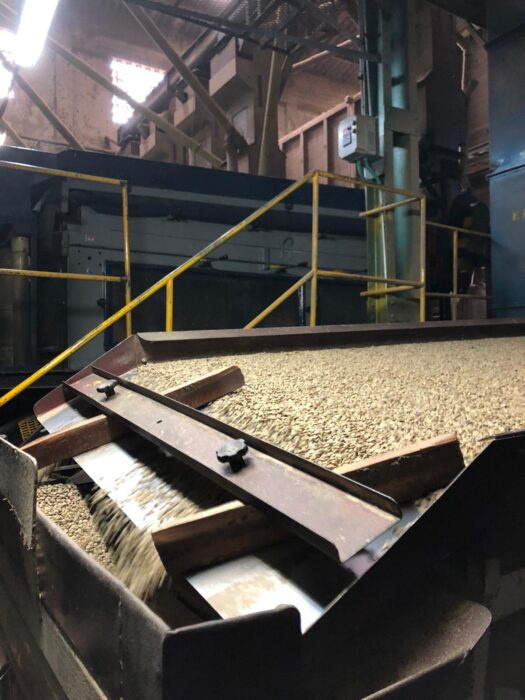
Nestlé Côte d’Ivoire SA (Nescafé brand), which processes Robusta beans into soluble coffee using the freeze-dry method at its 9,000 tonne capacity processing plant in Abidjan, collects the coffee delivered to company-approved collection centres across the country such as Abidjan, Daloa, Duekoue, and Abengourou.
Nestlé, which recently announced achieving a 53 percent reduction in direct water withdrawal per metric tonne of soluble coffee, exports more than 53 percent of this form of coffee to African markets, especially West Africa, 33 percent to Europe, while an estimated 14 percent is consumed within Côte d’Ivoire.
Even at the global level, the International Coffee Organization (ICO) reported there was a 11.3 percent decline in the global total exports of soluble coffee decreased in May 2024 to 0.95 million bags from 1.07 million bags in May 2023.
Olam Food Ingredients, also known as ofi, and Carré d’Or Group are the other active players in Côte d’Ivoire’s soluble coffee market. ofi buys approximately 120,000 tonnes of Robust a coffee either directly from Côte d’Ivoire’s estimated 100,000-150,000 coffee growers or through the more than 3,500 coffee cooperatives every year.
These private companies, working with Coffee Cocoa Council, are implementing strategies to ensure increased coffee production at the farm level, hence a constant feedstock supply for Côte d’Ivoire’s soluble manufacturing plants.
For Nestlé Côte d’Ivoire SA, and ofi, catalysing coffee product ion has involved financing and promoting a coffee farm regeneration plan to enhance coffee yield per hectare, currently estimated at a low 300-350kg, and improve the quality of coffee in the cup through measures such as availing credit facilities to producers and distributing high-yielding coffee seedlings.
Nestlé has ensured farmers who supply coffee to the company’s soluble manufacturing plant have access to a conditional cash incentive scheme to support them in regenerating their coffee farms including use of organic composite to enrich soil content . “We will support farmers to conduct soil assessments and implement sound and optimised fertilisation approaches,” Nestlé said in a statement. The company lists Côte d’Ivoire as one of the countries that has “showed significant farmer satisfaction, increased adopt ion of regenerative agricultural practices and efficient distribution of incentives.”
Initiatives Spur Optimism
In nearly all coffee-growing areas in Côte d’Ivoire such as the country’s low, hot and humid regions to the west, east, lower Sassandra, and Middle Cavally, which are dominated by coffee, production ends to be on monoculture farms ranging in size between 0.5ha to 10ha. The regeneration programme is ongoing and could determine whether or not Côte d’Ivoire can quadruple its overall coffee output in the next five years as envisaged in the country’s 2021-2025 National Development Plan.
Meanwhile, the government, through the Coffee Cocoa Council ‘s own initiative, has remained active in the country’s coffee industry recovery plan with programmes that support the training, equipping, and establishing young coffee roasters that also benefit from new coffee roaster units. The Council , as its objective, wants to increase coffee consumption levels in Côte d’Ivoire in West African market to at least 25 percent of t he coffee produced.
Côte d’Ivoire’s farmers, credited for producing coffee that is inexpensive, strong, with full bodied taste and high caffeine content, also benefit from training on how to diversify their sources of income, including with the production of coffee-based honey as well as other coffee productivity improvement actions such as the uprooting of old plantations and the distribution of improved seeds.
Overall coffee output trends in Côte d’Ivoire, a country with an estimated GDP of USD $72.2 billion and currently the world’s top producer of cocoa beans, have not only impacted the volumes available for soluble coffee manufacturing but also the amount available for the export market. For instance, green coffee exports for the period between October 2023 and March 2024 were 343,000 bags (60kgs) out of which 82 percent was sold on the African market.
The Inter-African Coffee Organisation (IACO) , an intergovernmental organisation comprising 25 African coffee-producing countries, said in a recent statement that the dominance of the African market in absorbing Côte d’Ivoire’s green coffee is an indication of “strong regional trade ties and possibly a high demand for coffee within the continent.”
Furthermore, “the volume suggests that Côte d’Ivoire benefits from regional proximity, potentially lower transportation costs, and favourable trade agreements within Africa,” IACO stated.
Moreover, Côte d’Ivoire sold a large share of its soluble coffee to African markets including Burkina Faso (31.4 percent) , Senegal (29.8 percent) , Nigeria (14.2 percent) with smaller amounts of the soluble exports going to Mali, Niger, Cameroon, Ghana, and Gabon, and selected European markets.
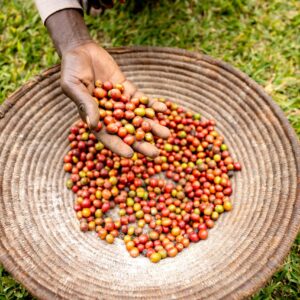
Meanwhile, the rate of processing coffee cherries from farmers in Côte d’Ivoire remains a point of interest for the more than 32 leading roasters in the country. The rate of processing of cherry is likely to reflect on the final flavour profile of the country’s Robusta. According to the Coffee-Cocoa Council, the rate of processing coffee in Côte d’Ivoire increased to 33.65 percent for the 2022/2023 year after a decline in 2021/2022 when it was estimated at 27.43 percent compared to the previous year’s 27.43 percent.
However, due to the sporadic contraction of the production volumes by farmers, the amount of green available for processing shrunk by 16.3 percent to 15,795 tonnes in 2023 compared with 18,870 tonnes in 2022.
Trickle-Down Effects
The coffee industry’s performance, which contributes an estimated USD $14 billion to Côte d’Ivoire’s gross domestic product (GDP), depends not only on the country’s economic activity but on that of the other West African states as well. Despite Côte d’Ivoire’s strong economic performance since 2015, with its GDP growth averaging 6.4 percent, and an inflation rate averaging 2.2 percent, coffee exporters such as private firms like Nestlé have reported notable adverse trickle-down effects from the slow economic performance of neighbouring countries such as Nigeria and Ghana. The company posted a 1.5 percent decline in its overall sales volumes in 2023 “mainly impacted by exports due to the slowdown in demand caused by general inflation in Nigeria and in Ghana, and the political situation in Burkina Faso and Niger.”
Although Nestlé Côte d’Ivoire SA reported in its 2023 fiscal year a recovery of demand of its products in the country for the year, especially in the last quarter, it still posted a 0.4 percent dip in net profit in 2023 to 16.6 billion FCFA versus 2022.
Côte d’Ivoire’s coffee industry outlook, including the soluble coffee market, is likely to shaped by the domestic socioeconomic and political trends as well as the evolving global geopolitics that have a direct bearing especially on its green coffee export trade. Currently, Côte d’Ivoire exports nearly 80 percent of its green coffee to Algeria while Spain accounts for approximately 14 percent and smaller amounts to France and Italy.
According to the International Monetary Fund (IMF), Côte d’Ivoire’s strong economic performance in the recent past could be “jeopardised by a deterioration of the security situation in the north, worsened by high youth unemployment, the impact of Russia’s invasion of Ukraine, tighter international financial conditions, and climate hazards.”
Surmounting these risks, the IMF said, would require Côte d’Ivoire to be deliberate in “strengthening macroeconomic stability, the inclusiveness and sustainability of growth, and security and institutional stability.”
According to the IACO, Côte d’Ivoire is one of the countries in Africa with “a clear opportunity to explore ways to increase their value, possibly through quality improvements or certifications” mainly because of their lower export prices. The country offered the lowest and most stable export price at USD $1.50 per kilogramme of green coffee for the 2023/2024 period. “Côte d’Ivoire’s strategy of exporting both green and soluble coffee illustrates a value addition approach that other countries might emulate to enhance revenue streams,” stated the IACO.
Globally, the ICO said soluble coffee exports an increased by nearly 11 percent for the first 11 months of the coffee year 2023/24, when an estimated 11.79 million bags of soluble coffee were exported compared to the 10.66 million bags similar period the previous year. The global coffee agency added that total soluble coffee exports for the 2024/25 year to January 2025 surged by 10.4 percent compared to 9.4 percent in 2023/24.
This global performance in soluble coffee exports has triggered optimism in Côte d’Ivoire. The government’s ambitious plan to replant at least 400,000 hectares of old coffee farms would most likely ensure the country’s dominant position as Africa’s leading soluble coffee producer is assured, despite the anticipated shocks from changing weather patterns and a volatile global coffee market.
Shem Oirere is a freelance business journalist based in Nairobi, Kenya. He has spent more than 25 years covering various sectors of Africa’s economy including the region’s agribusiness. He holds BA in International Relations and Diplomacy from the University of South Africa and earned a higher degree in journalism from the London School of Journalism and is also a member of the Association of Business Executives (ABE).