Brazil to host global coffee leaders as production reaches record levels
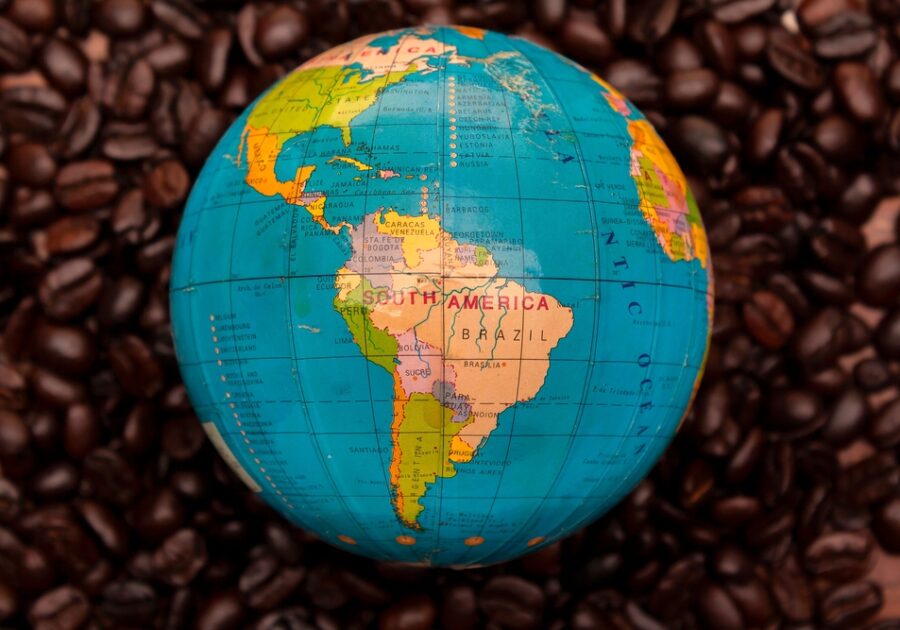
Image credit: Pexels.com | Arturo A
With global coffee production, consumption and exports all projected to reach record levels, Brazil, the world’s largest coffee producer and exporter, will bring together international leaders from across the coffee industry to discuss the challenges and opportunities shaping a rapidly changing market. From 11-13 November, Belo Horizonte, the capital of Minas Gerais, Brazil’s leading coffee-producing state, will host International Coffee Week 2026 (ICW), bringing together producers, buyers, researchers, industry experts and business leaders to discuss the issues shaping the future of the global coffee industry.
The scale of the global coffee market underscores the importance of the event. According to projections released in July by the United States Department of Agriculture (USDA), global coffee production is expected to reach a record 189.7 million 60-kilogram bags in the 2026/27 crop year, approximately 6% above the previous season. Worldwide consumption is estimated at 179.7 million bags, while global coffee bean exports are projected to reach 131.4 million bags, about 10% higher than the estimated volume for 2025/26.
Against a backdrop of expanding supply and international trade, alongside mounting climate pressures, stricter environmental requirements and technological transformation, ICW 2026 will serve as a platform for business opportunities and knowledge exchange. Under the theme On the Eve of 300 Years of Coffee in Brazil: Building the Next Global Agenda, the event will also kick off celebrations marking three centuries since coffee was introduced to Brazil in 1727. The commemorative programme will culminate at the 2027 edition.
As a major contributor to global coffee supply, Brazil is expected to produce a record 67.6 million bags in 2026, a 19.6% increase compared with 2025, according to an estimate released in September by the National Supply Company (Conab). The growth reflects a recovery in productivity, an expansion of cultivated areas and a favourable phase in the biennial production cycle of Arabica coffee.
Minas Gerais, Brazil’s leading coffee-producing state and a major contributor to the country’s Arabica output, is also expected to record a strong harvest. According to an estimate by Sistema Faemg Senar, coffee production in the state could reach 33.4 million bags in 2026.
International trade figures also point to significant changes. Data from the International Coffee Organization (ICO) show that global coffee exports reached 12.58 million bags in August 2026, up 14.9% from the same month a year earlier. Between October 2025 and August 2026, shipments totalled 130.81 million bags, a 1.1% increase compared with the same period in the previous year.
The transformation is also affecting other coffee-producing countries. The USDA projects record harvests in markets such as Vietnam, Ethiopia and Uganda in the 2026/27 season, highlighting the importance of international cooperation, productivity gains and adaptation strategies.
The event’s international outlook will be reflected from its opening day, which will feature a keynote address by Vanusia Nogueira, Executive Director of the International Coffee Organization. Her presentation will explore changes in the global coffee industry, Brazil’s role in the market and opportunities for cooperation among producing countries, companies and international institutions.
Although global coffee production is expanding, the industry faces challenges that go beyond productivity, including extreme weather events, rising costs and increasingly stringent environmental requirements. At ICW 2026, experts will discuss how science and technology can strengthen the sector’s competitiveness, with topics including genetic improvement, biotechnology, artificial intelligence and digitalization. The programme will also explore opportunities related to the bioeconomy, biodiversity conservation and income diversification for coffee growers.
Production growth is taking place alongside changes in international trade rules and market requirements. Traceability, proof of origin, environmental standards, trade tariffs and logistics costs are increasingly influencing decisions made by producers, exporters and buyers.
One of the key issues is the European Union Deforestation Regulation (EUDR), which establishes due diligence requirements for placing products such as coffee on the European market. Meeting these requirements makes traceability systems and supply chain data management increasingly important.
At the same time, Asian markets, specialty coffees, differentiated products and new consumer experiences are creating opportunities for commercial diversification.
In Brazil, one notable trend is the growth in exports of canephora coffee varieties. According to the Brazilian Coffee Exporters Council (Cecafé), shipments of conilon and robusta coffee increased by 68.6% between January and August 2026 compared with the same period a year earlier, reaching 4.34 million bags. Overall, Brazil exported 25.07 million bags to 119 countries in the first eight months of the year, generating US$8.79 billion in revenue.
Beyond market discussions, ICW 2026 will serve as a business platform connecting different segments of the international coffee supply chain. The programme will include a trade show, business meetings with Brazilian and international buyers, technology showcases, professional coffee cupping sessions and competitions highlighting quality and innovation. Among the event’s highlights is Coffee of the Year, an award recognizing outstanding Brazilian coffees and showcasing the diversity of the country’s coffee-producing regions.
The programme will also feature the Women’s Summit, aligned with the United Nations’ 2026 International Year of the Woman Farmer, with discussions on women’s leadership, farm succession, entrepreneurship, science and sustainability across the coffee supply chain. Other highlights include DNA Café, the Sustainable Coffee Farming Forum, the Brazilian Barista Championship and awards such as Florada Premiada, Espresso Design and Roaster of the Year.