
The 2026 Global Tea Report
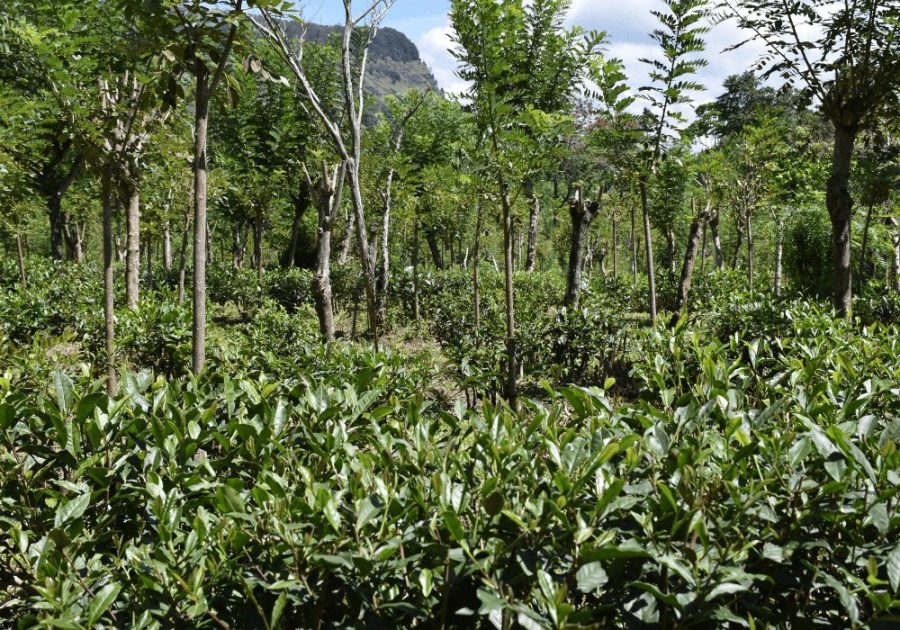
Tea field on Amba Estate in Sri Lanka. Image credit: Yumi Nakatsugawa
When taking stock of the past 25 years, the developments to note appear significant, especially the huge increase in global tea production: from 2.931 million metric tons (mt) in 2000 to 7.266 million mt in 2025, per the International Tea Committee’s Annual Bulletin of Statistics*, more than doubling.
Based on this continued global growth year after year, tea overtook coffee in 2008/2009 by numbers of billions of cups brewed per year, thus becoming the world’s number one drink consumed after water. A complex calculation carried out by specialists, and which takes into account a set of established yield rates, from the green coffee bean to the roast and ground coffee with 5-7gr per cup, compared to an average of 2.5gr of dry tea leaf per cup.
Furthermore, this continued global growth of tea output is mainly due to China’s steady enlargement of tea cultivation areas in its four main tea regions, which has seen China’s share of the global tea production grow from 23 percent in 2000 to 54 percent in 2025, giving it a highly monopolistic position within the world’s traded food crops.
Production has thus become even more concentrated, and the five top producers out of 41 who were harvesting 75 percent of the global tea volume in 2000 (ranked in order) – India, China, Sri Lanka, Kenya and Türkiye – have seen their share grown to 87.5 percent in 2025, with their ranking as follows: China, India, Kenya, Türkiye and Sri Lanka.
Another important pattern change concerns the share out between exported/traded teas and tea retained for domestic consumption. The amount of cups gobbled up in the home markets has hugely increased from around 55 percent of the global volume in year 2000 to 72.5 percent in 2025; consequently, the share of the export tonnage has been decreasing in proportion from about 45 percent in 2000 down to a mere 28 percent in 2025, ie, a trade volume of two million mt.
Considering these important developments that have reshaped the global tea market into a mature pattern with little apparent dynamics, the overall robust production growth continues to be led by China, although global demand continues to lag behind. Black tea continues to dominate the Western markets, mainly because of the convenience of the traditional teabag brewing, whilst green tea production improves its share, with most of it retained for domestic consumption.
Tea production is reportedly resilient but climate change, erratic weather patterns, the inroads created by the Covid confinements, and the political conflicts spreading over the past years all generate disruptions and hamper the supply chain. At the end of the day, tea appears to remain a staple and a daily necessity for many who will not go without their cups and an attractive multi-faceted drink for more affluent Western consumers, who alternate between tea and coffee. The assessed low-price elasticity continues to keep tea affordable for the end consumer, although not always fairly priced and remunerative for the growers.
In recent years, more efforts seemed to converge towards getting the cup into the headlines and to attract some limelight. In 2019, United Nations General Assembly (UNGA) approved International Tea Day to take place on 21st May, with the UN FAO IGG Tea promoting the annual event. Follow up has suffered badly from the Covid confinement followed by major political conflicts, and warfare with all their unfavourable economic conditions.
In that context, ElMamoun Amrouk, senior economist with the UN FAO and associated with the IGG Tea for many years, said that one important structural factor is that tea is far more domestically consumed than traded internationally, which naturally results in less sustained high level attention than given to commodities such as coffee. This also affects the incentives and availability of senior industry experts who can champion key issues such as the share of the smallholders’ revenue in the supply chain and can highlight tea’s many health benefits. A closer look at the markets may spur new trends and novelties.
Black Teas vs Green Teas
Black tea in teabags has been the Western staple cup for decades, and this has not yet significantly changed in spite of all the praise of green tea’s important health benefits. However, consumer awareness of green teas is growing, particularly the fine origin green teas from Japan, South Korea, and China, which today, are more accessible in Western retail and online. Also, tea literature is abundant, with several tea books published every year in Europe and North America. Premium green teas remain the more complex brewing process because of the specific water temperature and brewing time — these cups cannot be rushed.
Some insiders, who do not wish to be quoted, report the forthcoming launch of a premium green teabag. The green tea has good colour and delicate fragrance and still easy to brew. This launch could create a breakthrough followed by some shifting towards green tea in the traditional black tea drinking markets.
The global green tea production in 2024 amounted to 2.297 million mt, which represents 32 percent of the global output and of which 420,000 mt. Furthermore, white, dark and oolong/wulong teas are becoming more available as tea education is pursued in many Western markets, but they remain premium niche segments for educated tea lovers.
Brewed Leaf vs RTD
The consumer’s ever-growing preference for convenience and fast cups remains a priority and the quality of the available choice continues to improve. Sugar-free options and ready-to-drink (RTD) premium teas are expensive, but demand is growing in the West. There are newcomers that market bottled sparkling and super premium teas for out-of-home consumption, for a zero/low alcohol segment, which the newly appointed tea sommeliers promote in bars and luxury food places, where such competent storytelling staff can find room on the pay roll. These niche markets will need some time to grow, with consumer spending power under threat with the ongoing wars.
The “Matcha Craze”
The lush green powder made from premium ground tea leaf in Japan since ancient times has been heavily promoted and has rapidly prospered in the West in recent years. It is widely attractive as an exotic, healthy, and convenient cup. As a must-have, the craze for matcha has boosted demand in North America and Europe, putting producers under pressure to follow up demand for export from Japan first and also from China and South Korea. The genuine premium product, from spring leaf grown on shaded bushes of specific plant varietals is quite expensive and in practice, not really convenient because it needs special cups, whisks, spatulas, and strainers, as well as whisking skills. However, consumption mainly drives the more popular matcha latte powders, which just needs some water or milk to be whisked into savoury light green cups. They do however also contain sugar and often milk powder to keep the mix stable and to lower the sales price, a good deal for both sides.
Dr Mao Limin, former CEO of Zhejiang Tea Group, and currently the director of the China Matcha Committee of the China Tea Marketing Association (CTMA) shared some insight on matcha, noting that the core value of matcha lies in its unique flavour heritage and precise craftsmanship. “The current global matcha market urgently needs clearer standards to differentiate premium matcha from ordinary green tea powder. As both a traditional consumer and an emerging producer of matcha, China is actively exploring a path from scale expansion to refined quality,” he said. “With the abundant tea plantation resources and the improved cutting technologies in the modern matcha industry China can build production capacity to meet the demanding surge from every corner of the world.”
According to preliminary statistics released by Japan’s Ministry of Food, the production of matcha amounted to about 5,500 mt in 2024 whilst China announced a matcha production of around 11,000 mt for that same year. Some insiders are wondering about a possible comparison between the easy cup of green leaf powder, premium or not, and the soluble coffee brewed by just stirring the brown coffee granules with hot water. By pairing convenience and novelty could the matcha craze lead to a further green tea consumption rush?
Fostering Consumption Growth in the Export Markets
Whilst tea’s health benefits are widely recognised and regularly mentioned in the media, the science supporting these many health benefits of tea is not easy to access given that the many existing research papers are not yet compiled nor listed. The work group in charge within the FAO IGG regularly reports on the issue, but so far there is little progress in making the wealth of existing material available in laymen’s terms for better promoting tea.
Targeted efforts for creating an expert platform with the purpose of expanding communication on the wide range of tea’s health benefits could enhance consumer awareness and attract new tea drinkers, as all age groups have their set of motivating cup qualities: fluid intake, energy boosting, improving endurance, enhancing cognitive functions, focus, alertness, and antiaging, among others.
Although tea is today a mature market the cup continues to attract new fans for its intrinsic healthy and stimulating qualities. With its immense cultural heritage, the training, and the mastering of premium cups are goals for many tea professionals. The concern remains ensuring equitable income for the millions of smallholders, a matter for further discussions whilst working on improving consumer awareness about the goodness of tea.
Barbara Dufrêne is the former Secretary General of the European Tea Committee and editor of La Nouvelle du Thé. She may be reached at: b-dufrê[email protected]
Topics
china tea production global beverage consumption global tea market market report tea industry trends tea production growth tea supply and demand tea vs coffee consumption
PeopleBarbara Dufrêne Dr Mao Limin ElMamoun Amrouk
OrganisationsChina Matcha Committee China Tea Marketing Committee European Tea Committee IGG Tea International Tea Committee Japan's Ministry of Food UN FAO United Nations General Assembly Zhejiang Tea Group
Regions