Can coffee chains’ success help other dining concepts?
Credit: 7 Brew Coffee
Coffee has been one of this year’s strongest dining performers despite soaring coffee prices. Can coffee’s success help restaurants? Apparently so, according to findings in a new white paper from Placer.ai. (Placer.ai is a location intelligence platform that uses anonymised mobile device data, AI, and machine learning to provide detailed food traffic analytics, and consumer behaviour insights for businesses, real estate, and local governments.)
Coffee is one of the most resilient and innovative sectors of the US food and beverage industry. The paper explains that “even as consumers wrestle with higher prices and trim discretionary spending, they continue to show up for cold foam, caffeinated boosts, and treat-worthy daily indulgences.”
Placer.ai reports that coffee chains saw steady year-over-year (YoY) quarterly visit growth, as brands such as 7 Brew and Bad Ass Coffee of Hawaii expanded their footprints. Location wise, category-wide traffic also remained close to 2024 levels throughout most of the year before trending upward heading into the holiday season — showing that this expansion has not diluted demand at existing coffee shop locations.
Placer.ai’s research indicates that coffee’s success in 2025 offers key lessons for dining operators across categories:
- Strategic expansion into under-penetrated regions can supercharge growth. YoY visits to coffee chains are growing fastest in areas of the Southeast and Sunbelt where the category still accounts for a relatively low share of dining visits.
- Pairing craveable products with genuinely human, personalised service can build durable loyalty. Aroma Joe’s proves that when standout offerings are combined with warm, consistent personal touches, brands can create habit loops that drive repeat visits even in crowded markets.
- Prioritising hyper-efficient convenience models can unlock meaningful growth. Scooter’s Coffee demonstrates that fast, reliable, frictionless experiences can materially increase traffic while supporting rapid expansion.
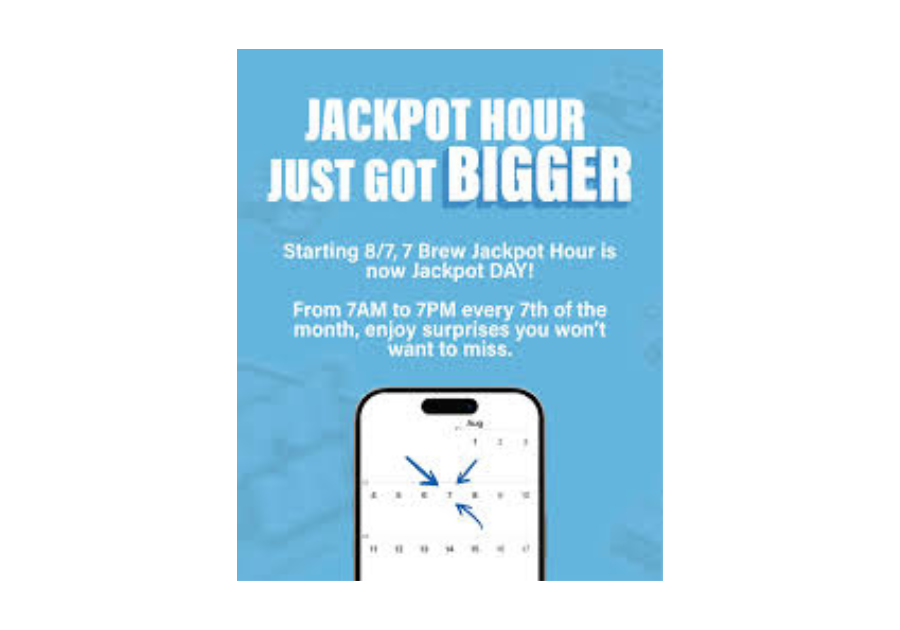
- Building recurring limited-time rituals can create predictable demand spikes and deepen engagement. From the annual Pumpkin Spice Latte launch to Jackpot Day (special promotional events at 7 Brew Coffee that take place on the 7th of each month), coffee chains show that ritualised promotions can ‘own the calendar’, generating predictable traffic spikes and deepening emotional engagement. Beginning in August 2025, Jackpot Day shifted from a limited “Jackpot Hour” to an all-day activation. The annual return of the Pumpkin Spice Latte at Starbucks has become a cultural milestone that marks the unofficial start of fall for millions, driving double-digit visit spikes and shaping seasonal traffic patterns. And the importance of the event only continues to grow, per Placer.ai, On August 26th, 2025, PSL day drove a 19.5% spike in traffic compared to the prior ten-week average – a higher relative spike than that seen in 2024 or 2023.
- Using scarce, hype-driven offerings can generate high-impact moments that shift behaviour. Starbucks’ Bearista cup drop this past November illustrates how limited, buzzworthy merchandise or products can not only spike visits but also shift customer behaviour, driving traffic outside typical dayparts.
- Leveraging cultural collaborations can create excitement without relying on discounts. Dunkin’s Wicked and Sabrina Carpenter partnerships show that tapping into moments in pop culture can deliver multi-day visit lifts comparable to major promotions — often without relying on giveaways.
Placer.ai shares that the coffee sector’s 2025 performance offers a blueprint for dining success: chains are expanding smartly into underpenetrated regions, successfully implementing both hyper-efficient and hyper-personal service models, using recurring LTOs to build seasonal and monthly rituals, and leveraging merch and pop culture partnerships to reshape demand. “Together, these strategies provide a practical playbook for dining brands to increase visit frequency, deepen customer commitment, and capture new growth opportunities in 2026 and beyond.”
Topics