Single Serve Machines Strive to Retain Quality & Improve Sustainability
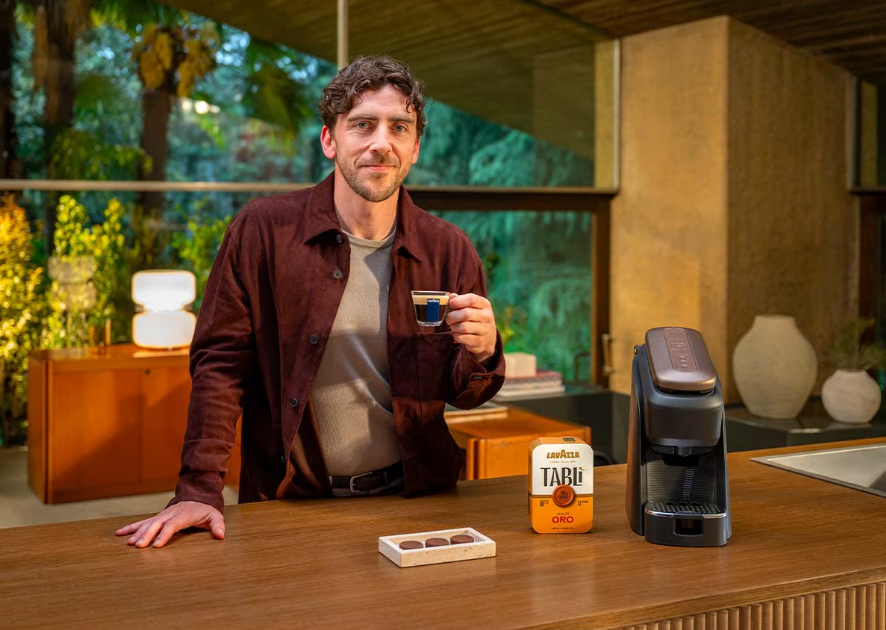
Lavazza Tabli is being positioned as a sustainable, capsule-free option. Image credit: Lavazza
The demand for modern capsule coffee machines in the global market is steadily growing, motivating manufacturers to consider more product innovations to prepare better coffee at reasonable price. Presently, coffee capsule machines occupy a significant share among the various methods of coffee preparation, while their sales continue to grow in most markets.
In Western European markets, while only around 13 percent of coffee drinkers owned a capsule machine seven years ago, today that figure is over 30 percent. For example, in Germany, capsule coffee accounts for one in three consumed coffee drinks. This is equivalent to almost 3.4 billion capsules consumed annually in Germany. Similar situations are observed in other mature Western European markets, where the demand for modern coffee capsule machines remains strong.
The current high demand for coffee capsule machines leads to further rising competition in the market, where producers are focusing on the development of modern machines, which are equipped with advanced technologies that can better serve the needs of their customers.
Price remains one of the key factors for customers – primarily in Europe – when choosing a capsule coffee machines, which is also due to maintaining high level of inflation in most of EU countries.
According to an earlier report in the German Roast Market Magazin, despite the undeniable advantages of capsule coffee machines, there are criticisms, particularly regarding their cost and environmental impact. With prices per cup between €0.30 and €0.50 (USD $0.35 and $0.58) capsule preparation is more expensive compared to methods like fully automatic coffee machines. For frequent coffee drinkers, fully automatic machines are therefore more economical, while capsule machines can be a worthwhile investment for occasional users despite the higher initial cost.
Quality Trumps Sustainability
Most global manufacturers are aware of the current market trends, paying a particular focus to the production of cost-efficient machines and equipment with minimum environmental impacts, without compromising on the quality of a final product.
In recent years some important launches in this field have taken place. For example, Keurig Dr Pepper in 2024 presented its K-Rounds™ plastic-free pods, which work in the new Keurig Alta™ brewer as part of a reimagined Keurig system that allows consumers to make a variety of hot and cold barista-style beverages.
Cama Group, an Italy-based automated packaging machine manufacturer, launched a recycled aluminium coffee capsule line in October 2025. Sergio Cornago, regional manager at Cama said the project demonstrates that it is possible to combine technology, sustainability and design.
“By combining mechanical innovation, intelligent automation and eco-design, Cama is asserting its role as a key partner for brands wishing to innovate in line with ecological standards,” he said.
According to Dr Boris Haefele, a well-known German coffee expert, a major problem associated with the use of some types of capsule machines and capsules is the large amount of generated waste. He also added, for example, in Germany alone around 5,000 tons of capsule waste is generated annually in the country. Unlike filter paper, the plastic and aluminium capsules are not biodegradable, which sparks criticism from some customers in Germany and some other EU states. Still, despite this, sales of such capsules in the German market remain generally high.
It is the same in France, which is also experiencing a boom in capsule coffee. Per the French magazine Restaurant-Lentreport, data shows the ever-growing demand for capsule coffee in France, with 16 capsules sold every second, representing 500 million units annually. As in Germany, in recent years, the demand for modern capsule coffee machines with low environmental impact among customers has significantly increased.
However, there were numerous complaints of customers from Germany and other European states that the use of some biodegradable aluminium-free capsules led to serious technical problems during the preparation of their coffee. Some customers complained that the water doesn’t flow properly through the capsule, negatively affecting the quality of the final product. In this regard, there is an acute need for new, environmentally friendly products, without added technical problems.
In terms of market structure, the well-known capsules and corresponding machines from Nespresso® still hold the largest share, but competition is intensifying. Coffee capsules from supermarkets, and often those from traditional roasters as well, are not only more competitive in terms of price, but also offer greater availability and purchasing options than the market leader.
Sustainability Remains a Factor
Most independent market analysts T&CTJ spoke with discussed the overall importance of advances in equipment and packaging technology for single serve coffee sector, with quality and sustainability remaining at the forefront. As packaging regulations in the EU, UK and North America are pushing the industry toward demonstrably recyclable designs, accelerating investment in more advanced processing and packaging solutions remains an important goal for equipment manufacturers.
Ismail Sutaria, packaging domain senior consultant with international research agency Future Market Insights, said that advances in equipment and packaging technology are reshaping single-serve coffee in two clear ways: improving quality consistency at scale and reducing the environmental burden of the format. “On quality, capsule production has become far more process-controlled than a decade ago. Roasting is increasingly driven by precise profiling, sensors, and automation, enabling tighter control over development, colour, and batch-to-batch repeatability,” he said, adding, “grinding and dosing systems have also improved, with narrower particle-size distributions and more accurate filling and tamping before sealing. This matters because capsules allow little margin for error.”
Sutaria also explained that in terms of sustainability, the focus has shifted from material choice alone to system compatibility. “Manufacturers are increasingly designing capsules that align with existing recycling infrastructure, such as mono-material plastics or aluminium formats with established collection pathways, alongside ongoing lightweighting efforts.” In the UK, he said that dedicated take-back and recycling schemes are improving recovery rates. Compostable capsules are also evolving, but their impact remains dependent on access to industrial composting and effective collection.
Sutaria expects demand for these advances to grow in the coming years, as consumers will continue to seek café-quality experiences at home, while brands will be using quality and sustainability as levers for premiumisation.
Tristan Höver, global insight manager for hot drinks at Euromonitor International believes a lot of the progress in single-serve coffee quality is coming from making the whole process more precise and repeatable. “Better control in roasting, more consistent grinding, and improved protection from oxygen all help preserve freshness and flavour, so consumers can get a reliably good cup without having to master barista skills but get café-quality in their home,” he said.
Höver shared that on the machine side, convenience and personalisation are clearly accelerating adoption. “Neo SmartBrew personalisation (including a paper-based, home-compostable pod concept), Melitta’s app-led customisation, and Keurig’s pod recognition via BrewID are good examples of how technology is translating into ‘the right cup, every time’ for different preferences.” He said that compared to more manual brewing methods (like pour-over), automated and connected machines result in more consistent quality by controlling dose, temperature and extraction. Several newer systems are also designed to reduce packaging waste or make formats easier to recycle or compost.
However, a further progress in sustainability might be complicated by the current economic circumstances. According to analysts, in periods of high prices, many shoppers trade down and de-prioritise ethical attributes. Also, several surveys show that sustainability claims slipping as a primary purchase driver under economic pressure/high prices.
“So, selling the consumer only sustainability is tricky, usually it needs to be connected to some other improvement in quality/flavour/ user experience,” said Höver. “That said, there is a smaller, very committed consumer group that still does actively seek lower-waste options and brands are increasingly designing for them with more credible materials and end-of-life routes. Also, because sustainability still leaves room for innovation by simply reducing waste or improving the experience.”
Still, Höver expects sales for these advances to keep growing because new releases in the coffee machine space in mid-price to premium range have sustainable ideas included anyway.
Analysts note that as the café experience at-home trend is currently dominating, the next wave of innovation will be about delivering clear, tangible improvements in taste and ease-of-use while making sustainability simpler and more provable, not just a claim. That’s also why we’re seeing new format innovation like Lavazza’s Tablí being positioned as a more sustainable, capsulefree option – the ‘sustainable story’ is easy to understand for the consumer. On the other hand, simple launches of recycled capsules/ pods with zero improvement in flavour or experience that only cost the consumer more will struggle to succeed.
Analysts believe coffee machines will soon be launched in the market that are equipped with new technologies for quality assurance, including both sensory and chemical analyses. There is also a trend toward multi-functional and customisable drinks, while future developments will also likely focus on creating more energy-efficient machines that meet global environmental standards while maintaining the rich flavour profiles. A particular attention will be paid to the development of those coffee machines where capsules are optimised for faster extraction times without diluting flavour.
Eugene Gerden is an international freelance writer who specialises in covering the global coffee, tea and agricultural industries. He works for several industry titles and may be reached at [email protected].