Cold Brew Coffee: From a Historically Niche Category to Global Phenomenon
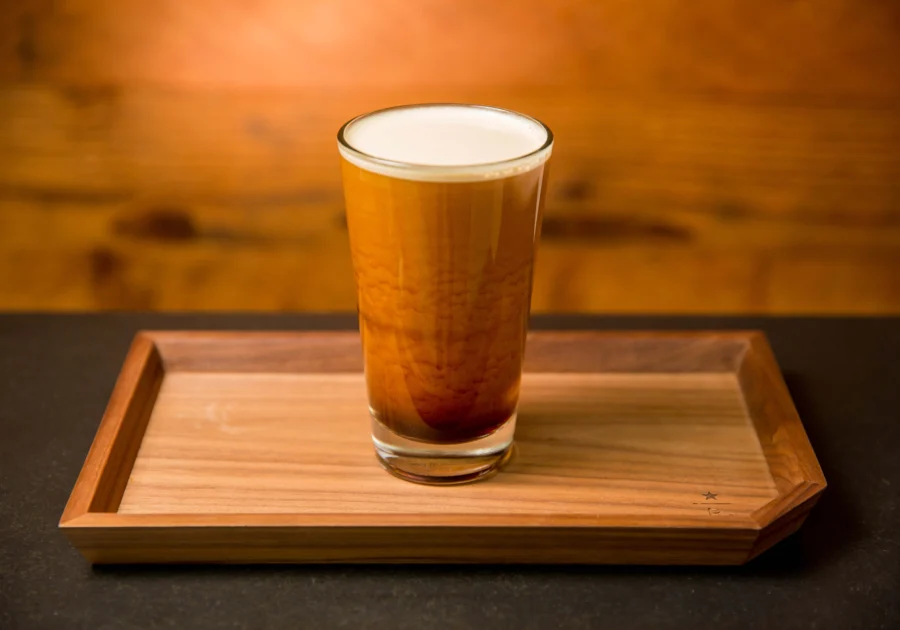
Between 2011 and 2016, cold-brew coffee sales in the US surged 580 percent. Image credit: Starbucks
Cold brew coffee has evolved from niche category with a storied history to a global sensation. In this new five-part series on cold brew coffee, Dr Steffen Schwarz, the founder and director of Coffee Consulate, examines the history of cold brew coffee, the science of cold brew extraction, the chemical and sensory profile, hygiene and food safety challenges, and practical recommendations for coffee professionals. Part One focuses on the centuries-old history of cold brew and the various preparation methods.
On a humid summer day in Kyoto, Japan, centuries ago, Dutch traders introduced a peculiar way of making coffee: using only cold water and time. Little did they know this method would spark a quiet revolution in the coffee world. Today, cold brew coffee – brewed slow and cold instead of quick and hot – has evolved from an esoteric tradition into a global phenomenon found in artisanal coffeehouses and international café chains. Its journey from 17th-century experimentation to 21st-century trend is a tale steeped in history, science, and cultural exchange.
A Long History
The story of cold brew coffee traces back over three centuries. In the 1600s, Dutch merchants navigating Asian trade routes faced a dilemma: how to enjoy coffee without fire for boiling water on wooden ships. Their solution was to steep coffee grounds in cold water, producing a concentrated extract that could be mixed with hot water or enjoyed cold. This method landed in Japan, where it captivated locals. The Japanese called it ‘Dutch coffee’, and in Kyoto, brewers refined the technique into an art form – slowly dripping cold water through ground coffee in elegant glass towers. This ‘Kyoto style’ cold drip became one of the earliest documented cold brew methods, a cultural exchange brewed one drop at a time.
Cold brew remained a niche tradition until the 20th century. In 1964, an American chemical engineer named Todd Simpson encountered cold coffee concentrate during his travels (legend says it was in Peru) and was inspired to create a simple brewing system for it. He developed the Toddy® Cold Brew system, a plastic brewing bucket with a filter, which became one of the first commercial cold brew devices. The Toddy system brought cold brew into American cafés and homes, emphasising its low-acid, smooth taste as a gentler alternative to hot coffee. Yet for decades, cold brew stayed on the fringes of coffee culture, overshadowed by April 2025 its flashier iced coffee cousin (which is just hot coffee served over ice).
In the 21st century, cold brew experienced a meteoric rise. What was once a quirky method suddenly became the ‘hottest’ (or rather, coolest) new trend in speciality coffee. By 2010, cold brew had gained mainstream popularity in the United States. Major coffee chains jumped on board – it is no coincidence Starbucks introduced cold brew nationwide in 2015, bringing the product to millions of consumers. Between 2011 and 2016, cold-brew sales in the US sky rocketed by an astonishing 580 percent. Cold brew reached the United Kingdom during this period and made inroads in continental Europe (notably Germany by 2016).
Why the sudden enthusiasm? Part of it was quality and consistency. Iced coffee in many establishments had earned a bad reputation: often brewed hot hours in advance, oxidised and bitter, or even made from leftover coffee or concentrates that tasted stale. Cold brew offered a fresh, sweet, full-bodied alternative. One industry report noted that consumers had grown tired of iced coffee “using old, bitter tasting brewed coffee as the base” – or worse, artificial coffee extracts – and were drawn to the smoother profile of true cold brew. As the third wave coffee movement focused on craft and flavour, cold brew fit right in: it was novel yet rooted in tradition, low-tech yet requiring know how, and it produced a distinctly different cup profile that intrigued coffee drinkers.
It is important to clarify what cold brew is not. Unlike iced coffee, which is simply hot brewed coffee chilled or poured over ice, cold brew is prepared with water that is cold or room temperature from the start. The entire extraction happens without heat. This key difference gives cold brew its unique character and also its name – it is about the brewing method, not the serving temperature. In fact, cold brew concentrate can be served over ice or heated up without losing its identity, whereas iced coffee always starts with a hot extraction.
Sometimes, large-scale coffee manufacturers have tried to shortcut the process by brewing coffee hot (hot bloom) and then cooling it to sell as cold brew. Coffee experts consider this a misleading practice – essentially a fake cold brew. Most consumers can tell the difference: a recent survey in Germany found that 70 percent of respondents expect cold brew coffee to be made by pouring cold water over ground coffee, steeping for hours with occasional stirring, and then filtering – and they reject the use of any hot-brewed coffee in a product marketed as cold brew. In other words, both tradition and public expectation insist that cold brew must be truly cold brewed. (No sneaky shortcuts allowed!)
By the late 2010s, the cold brew wave was cresting globally. It was not just a summer drink anymore – cafés offered it year-round, bottled versions appeared in supermarkets, and variations like nitro cold brew (infused with nitrogen gas to give a creamy stout-like texture) became popular. Yet even as cold brew went mainstream, formal definitions lagged. There is still no international standard or legal definition of ‘cold brew coffee’, which raises interesting questions for regulators and entrepreneurs alike. In absence of formal rules, the coffee community generally abides by the principle that if the water is below about 30°C/86°F (certainly below body temperature ~37°C/98.6°F), it counts as a cold brew extraction. This flexibility means cold brew recipes can vary widely – some brew at room temperature (~20°C/68°F), others in the refrigerator (~4–8°C/39.2–46. 4°F), and some even with ice water (~0°C/62°F). All yield different results but fall under the cold brew umbrella.
From its birth as a pragmatic solution for travelling traders to its renaissance as a hip beverage for millennials, cold brew’s journey is a rich blend of cultural history and innovation. Next, we will explore how this method actually works, and the multiple ways to achieve a perfect cold brew.
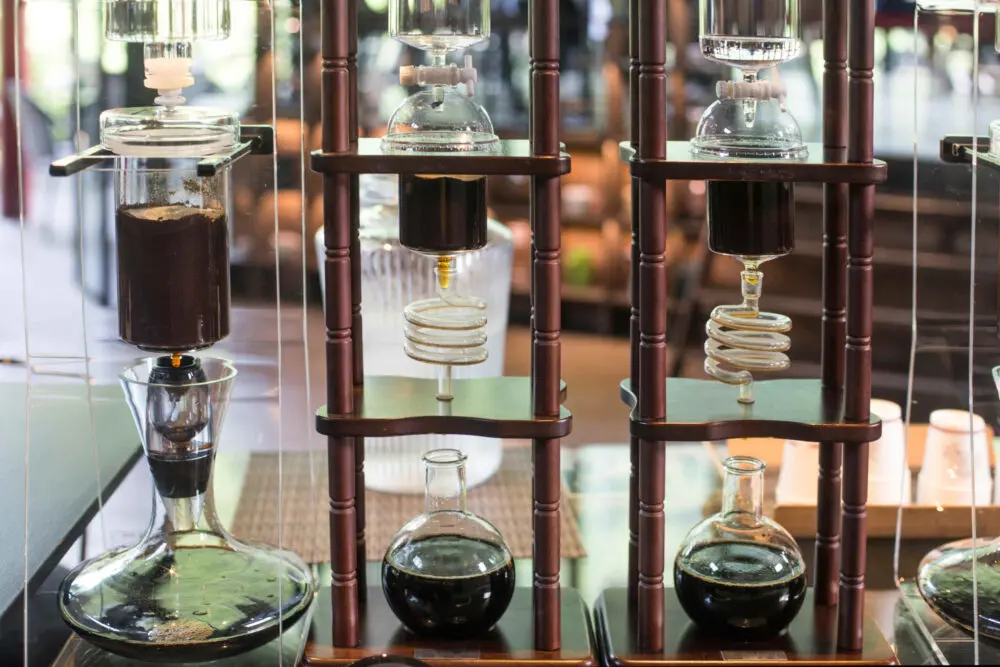
Kyoto drip, also known as Dutch drip or cold drip method, uses a device that allows ice-cold water to drip through a bed of coffee grounds, one drop at a time over many hours. Image credit: Bong stock.adobe.com
Cold Brew Methods: Immersion, Drip, and Press
Brewing coffee with cold water sounds straightforward, but there are several distinct methods to do it. Just as hot coffee can be brewed with a French press, drip filter, or espresso machine, cold brew can likewise be prepared by immersion, by drip filtration, or by pressure assisted techniques. Each method has its own heritage and influences the cup in subtle ways. Let’s look at the three major cold brew extraction methods – often termed ‘cold leach’, ‘cold drip’, and ‘cold press’ – and how they differ.
- Cold Leach (Immersion): Cold leach is the simplest and perhaps most common method: it involves immersing coarsely ground coffee in cold or room-temperature water for an extended period (usually many hours), then filtering out the grounds. It’s essentially a prolonged steep, akin to making a giant batch of French press coffee with cold water. This category includes the Toddy-style brewers and DIY jar methods. In a typical immersion recipe, ground coffee (often a coarse grind) is combined with water in a large container or pitcher, stirred to ensure all grounds are wet, and then left to extract slowly – anywhere from four hours to 24 hours, depending on temperature and taste preference. After steeping, the mixture is strained (using a paper filter, fine metal sieve, or cloth bag) to yield the final liquid.
Immersion cold brew is popular for its ease and scalability. A coffee shop can start a batch in the evening and have it ready to serve the next day with minimal effort. According to a survey of cold-brew practices, there is a slight preference for immersion-style brewing among practitioners – about 34 percent of surveyed users steep grounds in containers (often followed by filtration) as their chosen method. One reason is consistency: with immersion, all the coffee grounds contact the water for the same long duration, leading to a relatively even extraction. Immersion also tends to emphasise the heavy, chocolaty or nutty flavours of coffee and yields a fuller body in the cup.
Historically, immersion was how cold brew was first done (the Dutch method was essentially a cold ‘tea’ steep). The Toddy system institutionalised it: users would add about 500g of coffee to two litres of cold water, let it sit for 12–24 hours, then drain a concentrated brew. Many modern café recipes are similar, often using brew ratios of around 1:10 to 1:15 (coffee to water), which translates to about 60–100g of coffee per litre. In fact, surveys show a majority of cold brew aficionados prefer dosages in the range of 80–100 grams/litre for their brews. This produces a strong concentrate that can be diluted with water or milk when served. Immersion brewing is quite forgiving: you can brew in a mason jar or bucket, and minor variations in time or grind won’t drastically ruin the batch. However, its convenience also invites the temptation to over brew – leaving the coffee too long can extract unwanted bitter compounds or give microbes time to grow (more on that later).
- Cold Drip (Filtration): If immersion is the ‘tea steep’ approach to cold brew, ‘cold drip’ is more like a slow-motion pour-over. This method, also known as ‘Dutch drip’ or ‘Kyoto drip’, uses a device that allows ice-cold water to drip through a bed of coffee grounds, one drop at a time over many hours. The apparatus is often a striking tower of glass and wood: an upper chamber holds water and ice, a valve controls the drip rate (often set around 1 drip per second or slower), the middle chamber contains coffee grounds on a filter bed, and a bottom vessel collects the brewed coffee. Each drop of water picks up coffee solubles as it passes through the grounds, gradually ‘percolating’ a concentrate into the server below.
Cold drip towers have been used in Japan for centuries, and their graceful design reflects that heritage. They produce a brew that is typically lighter in body and clarity compared to immersion cold brew. Because the water is constantly flowing (albeit very slowly) rather than all the grounds soaking simultaneously, some parts of the coffee bed extract sooner than others. Drip brewers often grind their coffee slightly finer than for immersion to slow the flow and increase extraction, since contact time per drop is short. The brew that results can be quite concentrated and flavourful, sometimes described as more aromatic or complex than immersion brew, though direct comparisons vary and are somewhat subjective.
One study examining cold drip versus cold immersion found differences in the chemical. Anecdotally, cold drip coffee tends to have a more delicate, tea-like texture and can emphasise bright, floral or fruity notes of a coffee, whereas immersion emphasises deeper bass notes. In a flavour profiling experiment using the same coffee for both methods, the cold drip (filter) brew showed stronger floral and citrus notes (eg, lemon balm, cucumber), while the immersion brew had a bit more in the stone fruit and spice notes. Both were less acidic and less bitter than a hot brew of the same coffee.
For baristas, cold drip is as much a showpiece as a brewing method. The theatrical aspect of a dripping tower over eight to twelve hours can draw customer interest. However, managing consistency can be tricky – factors like room temperature (affecting drip rate as ice melts) and even slight channelling in the coffee bed can impact the result. Still, many speciality cafés swear by Kyoto-style drippers for the clean, complex cold brews they produce. Cold drip is also efficient in terms of yield: since little water is absorbed or left with the grounds (unlike immersion where grounds soak and retain some liquid), most of the water ends up as drinkable coffee. The downside is you can typically only brew one relatively small batch at a time per tower (often yielding 500ml to one litre), so scaling up means using multiple drippers or doing multiple sessions.
- Cold Press (Pressure Based Extraction): The newest frontier in cold brewing is what we will call ‘cold press’ – methods that employ pressure or vacuum to speed up or modify extraction. While not as widespread as immersion or drip, these techniques are gaining attention in both commercial and experimental settings. Cold press methods include anything done by overpressure (applying pressure above atmospheric) or under pressure (vacuum) conditions to brew coffee at low temperature.
One example is using a vacuum chamber or siphon to assist cold brewing. In 2024, researchers demonstrated a negative-pressure (vacuum) cold brewing system that drastically cut down the required brewing time. By pulling a partial vacuum on the brewing chamber (which lowers the boiling point of water and can draw more solubles out of the coffee), they brewed at 6°C/42.8°F for as little as one to five hours and achieved a brew with enhanced aromatics. They found that around five hours under vacuum produced an optimal sensory profile, compared with eight-plus hours for a standard atmospheric cold brew. The vacuum-extracted cold brew had a stronger aroma intensity, likely because the reduced pressure encourages volatile compounds to leave the grounds and enter the brew liquid despite the low temperature.
Other innovators have tried using devices like the Aeropress (a small hand plunger normally for hot coffee) to do quick cold extractions by pressing cold water through fine grounds. Some baristas also experiment with pumping systems that recirculate cold water through grounds under mild pressure or even using centrifugal force to improve extraction. These pressure-based approaches are not yet common in everyday cafés, but specialised equipment is emerging. For instance, one commercial machine uses vacuum cycles to make a cold brew in minutes, targeting restaurant and cocktail bar use. The term ‘cold press’ can also refer to brewing in a whipped cream keg or mini-keg under nitrogen or air pressure. Although that’s usually more about storing and serving (as with ‘nitro cold brew on tap’) than extraction, a pressurised environment might slightly alter the extraction by forcing water through the coffee bed. The key idea of cold press methods is to accelerate extraction without heat, by physical means. While heat is the most straightforward way to speed up brewing, pressure can be an effective alternative. As one report noted, “increasing pressure or using vacuum can reduce the cold brew time significantly while potentially capturing more of the coffee’s aroma.”
From a sensory standpoint, cold brews made under pressure or vacuum are reported to be similar to regular cold brews – smooth, sweet, low in bitterness – but with possibly a bit more aroma or clarity. By altering the physics of extraction, these methods aim to solve cold brew’s biggest inconvenience (the long wait)while maintaining its coveted flavour profile.
However, professionals must be cautious: rapid extraction can also mean less control, and it is easy to overshoot into bitterness if all other parameters are not dialled in. As research into cold press techniques grows, we may see more barista tools for ‘fast cold brew’ that still qualify as true cold brew (brewed cold) but deliver a cup in a fraction of the time.
Comparing the Methods
No matter the method – immersion, drip, or press – the goal is the same: extract the desirable flavours of coffee using water well below boiling point. Each method achieves this with a different balance of time, contact, and concentration. Immersion soaks everything evenly but slowly; drip provides a constant replenishment of solvent (water) through the grounds; pressure/vacuum tweaks the physics to hurry things along. Interestingly, a broad scientific study confirmed that all three methods can produce what we recognise as ‘cold brew’: a distinct chemical profile different from hot coffee, characterised by certain aromatic and flavour qualities.
When chemists analysed cold brews versus hot brews, they found no singular compound that exists only in cold brew; rather, the differences lie in concentrations of many compounds. In practical terms, this means a talented brewer can tune any of the methods to yield a delicious cold brew – it is more about technique and parameters than an inherently superior method. Many cafés choose their method based on practical needs: immersion for big batches, drip for presentation and nuance, or newer press systems for speed. Some even blend methods (eg, start immersion, finish under vacuum to pull out the last bit of flavour).
Having surveyed the ‘how’ of cold brewing, from timeless drips to modern gadgetry, we turn now to the science of extraction itself. What exactly happens during those cool, dark hours while coffee grounds mingle with water? And how do factors like grind or roast influence the
final brew?
In the next installment, we will dissect the chemistry and variables of cold brew, grounding our discussion in research findings. The cold leach or immersion method for cold brewing is the simplest and most common style.
Dr Steffen Schwarz is the director of the Mannheim, Germany-based Coffee Consulate, which he founded in 2005 to meet the increasing demand for training. In addition to extensive workshop programmes, the company is engaged in research and product development, and manufactures barista tools, teaching, and analytical materials.