Instant coffee makes consumers’ ‘doomsday prepping’ shopping lists
Credit: Adobe Stock
Consumers around the world have been stocking up on emergency supplies in recent weeks, but what is driving this behaviour? According to a new report from RBC Capital Markets, convergence of government action and social media anxiety has pushed ‘doomsday prepping’ into mainstream consumer behaviour over the past several months.
On 30 September, the Pentagon unveiled FORTRESS America, a military readiness directive requiring US bases to operate self-sufficiently for 90 days in the event of a cyberattack or infrastructure disruption. The plan, which is organised around five pillars – energy independence; supply-chain and defense-industrial base resilience; a strategic defense reserve; installation hardening and cyber resilience; and resilience in space and spectrum – was designed entirely for military preparedness, but RBC Capital noted that TikTok amplified a misreading of it as a coming nationwide ‘90-day blackout’, prompting shoppers across parts of the Southeastern US to stock up on goods like bottled water, dehydrated food, and ammunition.
The growing anxiety among consumers is not confined to the US. The UK launched its “Be Ready” campaign on 22 October, a three-year public information drive urging households to prepare for up to three days (72 hours) of disruption to everyday services. Similar campaigns have been issued or refreshed by countries including Norway, Japan, Germany, and Sweden. RBC’s report stated that social media spread the message globally, with South Korean users posting survival bags costing up to 4M won (~ USD $3K) per family and Google searches for ‘prepping’ surging over +500% YOY in the UK for the week ended 31 October. Per the report, Axios quoted a University of Kent researcher who has studied doomsday prepping for over a decade, who describes the current mindset as “an overall reaction to uncertainty,” with modern preppers worried about geopolitical instability, cyberattacks, climate risk, and financial insecurity in equal measure.
How significant is the retail read-through, and what do the numbers actually show? RBC further reports that the clearest hard data comes from the UK, where Worldpanel by Numerator tracked the 10 days following the Be Ready launch: hand sanitiser sales rose +83% Y/Y, bottled water +67%, and tinned/jarred goods +37%, with the equivalent of an extra 400K people per day buying tinned meat. Electronics retailer Maplin reported torch (flashlight) sales up +284%, radios +92%, and power banks +106% within days, while Robert Dyas saw radio sales up +160% and at least seven wind-up models sold out across multiple outlets, according to Al Jazeera. Worldpanel characterised the response as measured rather than panicked, noting that “growth came from more people adding the recommended items on the government’s checklist to their weekly shop, not from shoppers piling their trolleys high.”
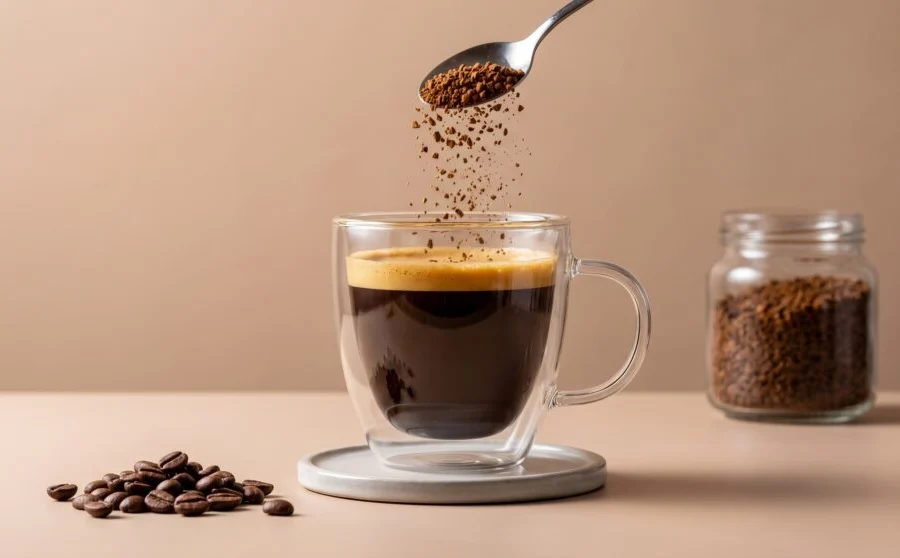
In the US, RBC said scanner data from Circana found that for the four-week period ending 1 November, among common emergency prep staples, water germicidal tablets sales were up +154% volume YOY from the prior four weeks that capture September. Other key items consumers purchased included disinfecting wipes volume is +72%, moist towelettes +20%, first aid treatment +16%, canned/shelf stable seafood +7%, bulk still water +8%, bottled still water +4%, and instant coffee +6%.
Instant coffee? Not whole bean or ground coffee, but instant coffee made the list, which I could understand if it were in preparation for a hurricane or other climatic weather event that might impact power/electricity (but water could still be boiled), but that is not the case – at least not yet – so I do find it a bit surprising. Furthermore, tea was not on any list, which is also a bit perplexing (it cannot be just coffee drinkers who are ‘doomsday prepping’). During Covid-19 lockdowns, both industries remained dynamic as consumers experimented with their coffee and tea purchases (at retail and online), often stepping up to more specialty and premium purchases, including higher-end brewing equipment.
According to RBC, all these categories also show a material sequential acceleration in the underlying two-year average volume growth trend, confirming the step-change goes beyond easy comps. “That said, categories one would expect to surge in a full-blown panic, scenario such as canned goods, rice, pasta, matches, and firelogs/firestarters remain largely subdued, which is consistent with orderly, checklist driven restocking rather than acute panic buying.”
RBC reported that Google Trends data shows US searches for “prepping” currently tracking at all-time highs for the week ending 21 November, up over +200% YOY, well above even Covid-era peaks. Circana data currently does not have visibility beyond 1 November, which only captures the beginning of the FORTRESS America viral wave. Thus, upcoming scanner releases could show considerably more pronounced behavioural effects across a broader set of categories.
In just the last week, we have seen outages globally in Microsoft 365 and Apple, and in the US, major banks (such as Wells Fargo and JPMorgan Chase) and the National Security Agency (NSA), which has likely added to general angst and doomsday concerns.
Could ‘doomsday prepping’ become a more meaningful demand event? RBC finds that at current magnitudes, the stockpiling trend is a modest tailwind for a narrow set of categories: shelf-stable proteins, water purification, disinfecting hygiene formats, and a handful of dry pantry staples. “The more important question is what the demand curve looks like if the environment escalates. The existing prep wave is government-encouraged and largely calm, characterised by orderly restocking rather than the kind of panic buying that stripped shelves globally in early 2020.”
However, according to RBC Capital, that could change quickly given what we view as a heightened state of anxiety for the general population. “A renewed geopolitical shock, a cyberattack on critical infrastructure, or a step-up in government messaging urgency could shift behaviour from deliberate accumulation to true panic buying in a matter of days. For companies with meaningful exposure to these categories, that would represent a significant, if episodic, volume tailwind, though one that historically tends to pull forward demand and strain supply chains rather than create lasting category expansion.”
The report has motivated me to do some shopping of my own, not in preparation for any doomsday event, rather, I want to buy my favourite holiday blends – coffee and tea – while they are still plentiful.
Vanessa L Facenda is editor of Tea & Coffee Trade Journal. She may be reached at: [email protected].