Vale Matcha develops Vale Farms to grow tea plants on Whidbey Island
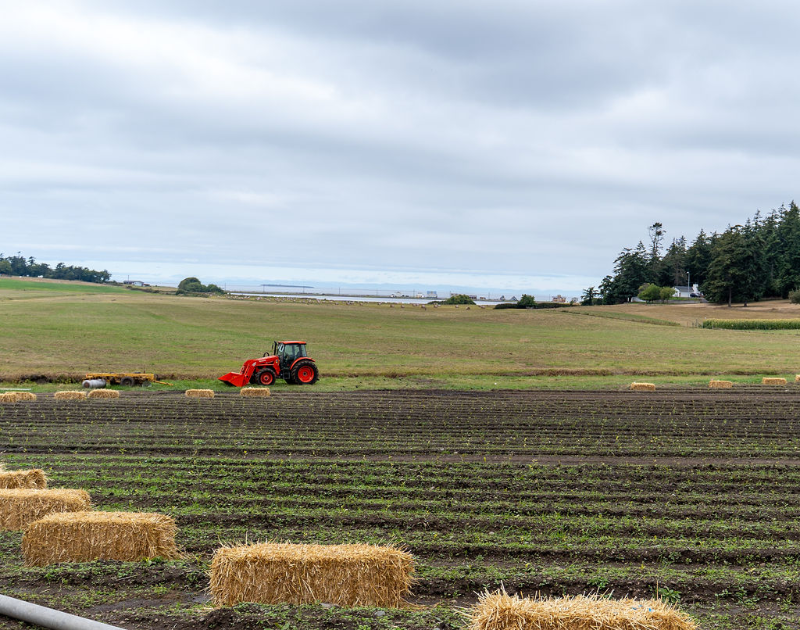
Image credit: Vale Farms
Vale Matcha has established Vale Farms, a 365-acre property on Whidbey Island. The company has now planted its first 12,000 tea plants as part of a significant investment in Pacific Northwest tea agriculture.
This marks the start of Seattle, Washington-based Vale Farms’ long-term plan to cultivate approximately 200 acres of tea, or roughly one million plants as well as to build a production facility.
Based on the company’s research, Vale Farms represents the first effort to build an integrated, commercial-scale matcha-growing and production operation in the United States, bringing together domestic tea cultivation, tencha production and milling tencha into matcha.
A desire to better understand the nuances of matcha from cultivation to cup is at the heart of Vale Farms. When Vale opened its first café in Seattle in 2025, a global matcha shortage made it difficult to secure enough high-quality matcha to meet its needs. That experience took the Vale team to Japan, where they began building relationships with tea growers and producers and developing a deeper understanding of the intricacies of tea cultivation, processing and milling.
“We went to Japan looking for exceptional matcha and came away with a much deeper appreciation for everything that has to happen before matcha ever reaches the cup,” said Luke Larson, founder and CEO of Vale. “We’re not here to solve the matcha shortage. We’re thinking much longer term. Think about wine in Napa Valley. A generation of growers helped demonstrate what that region was capable of, and eventually Napa became synonymous with American wine. We believe the Pacific Northwest has the potential to become a great tea-growing region and, one day, to be known for its exceptional matcha. Tea takes years to establish and decades to truly understand. Vale Farms is our commitment to that future.”
Vale currently sources all the matcha it sells and serves from producers in Japan and is committed to continuing those relationships independent of what Vale Farms ultimately produces. Vale Farms represents a significant long-term investment in expanding tea-growing capacity in the US and developing a distinctly Pacific Northwest expression of matcha.
From Hawaii to Whidbey
The first plants at Vale Farms were sourced from the Big Island of Hawaiʻi and trace their origins to Japan — home to storied cultivars like Yabukita and Yamatomidori. Tea growers Eva Lee and Chiu Leong, co-founders and owners of Tea Hawaii & Company provided the stemstock for Vale Farms’ first planting and have become agricultural partners, sharing the knowledge and experience they have gained over decades of growing tea in Hawaii.
“Growing tea in the United States has always been a collaborative effort, with growers, researchers and agricultural partners sharing what they learn along the way,” said Lee. “After 25 years of growing tea in Hawaii, I’m excited to bring some of that experience to Vale Farms and help establish this next growing region. The scale of what Vale is building creates a unique opportunity to learn, experiment and contribute new knowledge to the future of American tea agriculture.”
Research exploring the potential for tea cultivation in the Pacific Northwest is already underway. “Our research at Washington State University has shown that tea can be successfully grown in the Pacific Northwest,” said Carol Miles, professor, Department of Horticulture, Washington State University. “Through field trials and propagation research, we’ve found that multiple tea varieties are thriving in this region, making Washington an exciting place to continue exploring tea as an agricultural crop.”
Whidbey Island’s maritime climate, acidic soils and agricultural history made the property a compelling location for Vale to cultivate tea at greater scale. Fife Symington, president of Vale Farms, brings more than three decades of experience developing and operating large-scale greenhouse and agricultural operations throughout North America. “We’re at the beginning of this process. Everything we learn, from how individual plants respond to winter conditions to how the soil, climate, pruning and shading influence the leaf, will shape how the farm develops. We’re ambitious about what this could become, but we’re humble about what we still have to learn.”
Building Tea-Processing Capabilities in Oak Harbor
Vale’s investment extends beyond the farm. The company will also build a 30,000-square-foot tea-processing facility in nearby Oak Harbor to process future harvests from Vale Farms. Once operational, freshly harvested tea leaves will travel from Vale Farms to Oak Harbor, where they will be steamed, dried and processed into tencha.
The tencha will then travel to Vale’s manufacturing facility in Seattle’s SODO neighbourhood, where Vale already mills imported Japanese tencha into matcha. In the future, the facility will also mill tencha produced from Vale Farms. Together, the farm and processing facilities will give Vale the ability to manage the journey from cultivation to cup.
“That’s our hope for Vale Farms. We’re not simply trying to build one great tea farm,” said Larson. “We want to help demonstrate what this region might become and inspire others to grow tea and produce matcha here, in the Pacific Northwest.”