Consumer recognition of aluminum’s sustainability is surprisingly low
It may be ‘infinity recyclable’ but many consumers do not seem to be aware of the benefits of aluminum. Despite more and more brands using aluminum packaging to bottle their beverages, companies must do a better job of promoting the material’s sustainability.
As societal and regulatory momentum towards promoting sustainability and the creation of effective circular economies continues to grow, the aluminum packaging industry has some distinct advantages, not least the effectively infinite recyclability of aluminum itself. However, according to market intelligence firm, GlobalData, significant number of consumers globally do not see aluminum/metal packaging as highly sustainable (per a GlobalData 2025 Q3 global consumer survey, 21,000 respondents across 42 countries), highlighting the need for aluminum packaging producers to promote the material’s sustainability.
Aluminum’s recyclability stands alongside other advantages such as light weight, durability, and convenience, making the metal highly relevant in modern packaging, despite the attention so often focused on recycled/recyclable plastics and sustainably sourced and managed paper and board products.
Richard Parker, principal consumer analyst at GlobalData, said, “However, while consumers globally are favourable to aluminum packaging, especially when they understand its infinite recyclability, a key problem is that a sizeable minority of them are unfamiliar with this recyclability and still hold negative preconceptions about aluminum’s sustainability.”
In its latest Hot Topic Case Study, Aluminum Packaging Trends, GlobalData reveals that aluminum ranks second globally in beverage pack units sold, with this expected to solidify over the next five years based on consistent growth of more than 2%, compared to slowing glass growth. Rigid plastics still lead the market, at double the size of rigid metal by unit volume, with this set to remain the case through 2030, despite slowing growth. The overall picture reflects changing beverage consumption behaviours (reducing consumption of soft drinks affecting cans and plastic bottles, alongside alcohol moderation).
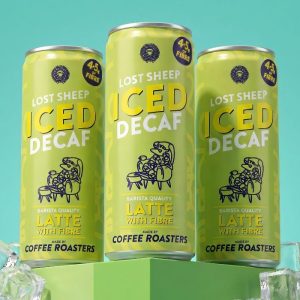
A bonus for the can market in both alcoholic and non-alcoholic drinks sectors is the demand among younger consumers for ready-to-drink (RTD) solutions, and smaller format cans in categories such as hard seltzers, pre-mixed spirits/cocktails and mocktails, and functional on-the-go beverages. While glass and plastic remain the leading forms of packaging for RTD coffee and tea, we are starting to see more brands opting for aluminum cans and bottles. Additionally, many brands package their ground coffee – and some whole beans – in aluminum cans (which predominantly found in grocery stores/mass retailers).
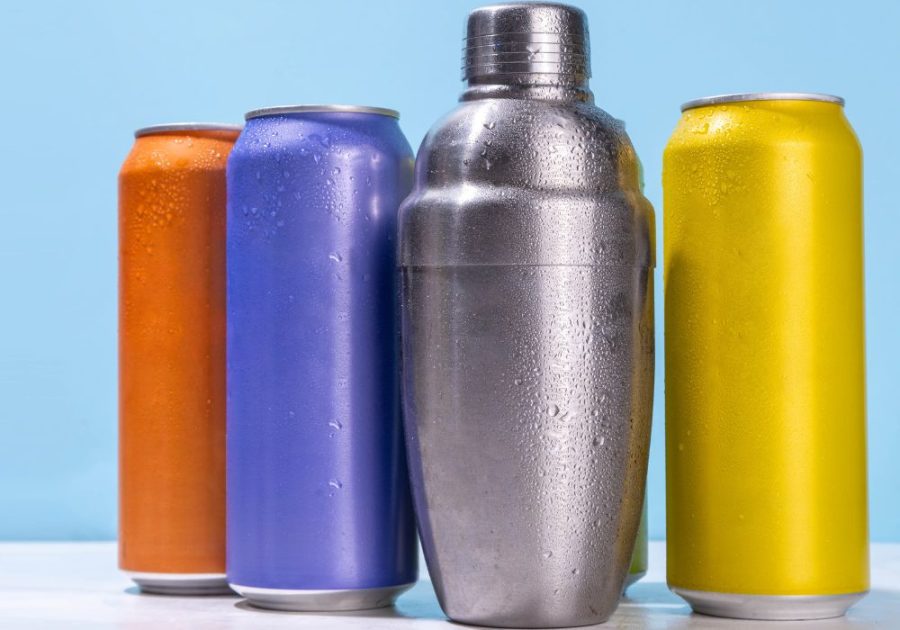
“The visual language associated with design and branding on cans is important in an Instagram-friendly world. Cans also have a resonance with younger consumers as a recyclable choice,” said Parker. “The single-use nature of opened cans does, however, create a convenience disadvantage versus plastic resealable bottles; the mid-ground has been the rise in popularity of reusable aluminum bottles as a desirable, sustainable accessory as well as a practical solution for on-the-go hydration.”
GlobalData reports that with circular economies increasingly promoted by regulation around the world, deposit return schemes (DRS) have emerged as one of the key strategies for executing circularity. Aluminum beverage cans are, alongside recyclable PET bottles, central to DRS with their infinite recyclability giving them the sustainability edge over recyclable plastics, which generally reduce in quality over multiple cycles leading to changes in material usage and earlier end-of-life disposal.
The can industry, however, needs to ensure that its products are locally compliant with DRS requirements; in the UK for example, with DRS implementation scheduled in 2027, cans between 150ml and 3L will require a bar code and approved logo, and must be able to be compacted by 75% to be compatible with reverse vending machines (RVMs).
Despite what may seem obvious to many – aluminum’s recyclability – GlobalData survey findings show that a significant minority of consumers globally do not actually see aluminum/metal packaging as highly sustainable. In its Q3 2025 survey, consumers were asked if it was reasonable to see packaging as sustainable if it was made from a range of materials; only 21% and 22% of consumers answered positively for metals used in alcoholic and non-alcoholic beverage packaging, respectively. This was on a par with plastics, and well behind paperboard and the leader glass (50%). This diminishes the reality of aluminum’s infinite recyclability and suggests consumers have a greater grasp of glass’ and paperboard’s lifecycles.
Furthermore, level-pegging with plastics suggests both a weak understanding of metal’s benefits and/or growing awareness of the increasing recyclability of modern plastic beverage containers. The lesson is that consumer education is still needed, something that can potentially be delivered in combination with DRS implementation.
GlobalData’s report finds that the Iran conflict poses challenges for aluminum. What is unknown at the moment, is how significant the impact of the Middle East/Iran conflict will be on 2026 and beyond as real-world impacts are only just starting to be quantified.
According to GlobalData, aluminum faces a direct impact given that Gulf-based primary producers account for 9% of global output, and over a fifth of aluminum imported into the US is from the UAE and Bahrain (per Exiger, “Iran Strikes Gulf Aluminum Smelters, Disrupting Global Supply”, April 2026). Iranian strikes on key production facilities have created potential long-term systemic difficulties for the industry and sent prices globally spiralling upwards.
GlobalData noted that a market where virgin feedstocks are facing scarcity is likely to result in the maximization of recycled content use (both for aluminum and plastic packaging). Furthermore, efficiency in approach to recycled materials will be key, although price rises are also likely to be a factor here too as demand grows. The think tank also pointed out that regional variations in reclamation capability and efficiency will be a factor, leading to widening supply-demand gaps.
“With the present geopolitical backdrop and its very real impacts, resilient supply chains for a more uncertain world must be built, with continuity of supply stress-tested and shorter chains implemented to mitigate present and future disruptions,” said Parker. “Also, packaging producers and their customers must evaluate the inconsistencies in consumers’ understanding of the material’s recyclability and educate them on its comparative advantages. This will be critical as DRS becomes a baseline internationally to limit consumers’ material switching.”