
Sri Lankan coastal tea: where ancient meets modern
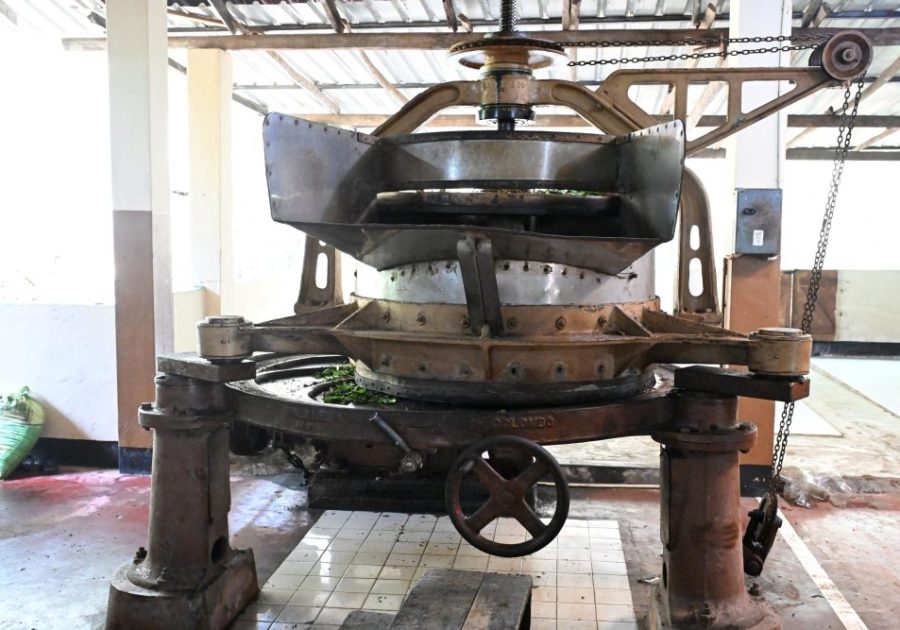
Vintage Sirocco tea rolling machine Image credit: Sarah McRitchie
A mile down a dusty track 140km south of Colombo, near the coastal town of Ahangama, you come across the saffron yellow buildings of the Handunugoda tea estate.
Located in the lowest growing tea region of the country, Handunugoda is the only coastal tea plantation in Sri Lanka. The resulting brew is stronger, bolder, and more robust than the high grown teas of areas like Uva and Nuwara Eliya.
The 200-acre estate is proud of its biodiversity, producing cinnamon, cocoa, pepper, and hand-pollinated vanilla, as well as tea. Its eco-friendly credentials include the use of solar power and planting of native trees like albizia amara to provide shade, while wildlife populations have tripled in recent years.
Around 300kg of tea is picked daily and brought to the processing factory, where some of the oldest tea processing machinery is still in use, so much so that the factory resembles a living museum. The leaves are withered to remove moisture, then rolled using 145-year-old machines. After sifting and a two-hour fermentation, the tea is dried using Sirocco tea drying machines manufactured by Davidson & Co in Belfast, Northern Ireland in the 1880s.
In the dry heat of a March day, there is quiet peacefulness on the tea estate, punctuated only by bird song. Even inside the processing rooms the ancient machinery is not terribly noisy. Tea tasting takes place in a separate yellow bungalow where visitors can taste and purchase the 12 different types of tea made under the estate’s tea brand, Herman.
This is the name of the three generations of family who have owned the plantation, once part of a much bigger estate. The current owner, octogenarian Malinga Herman Gunaratne, is a renowned tea expert who is a member of the Sri Lanka Tea Council (formerly the Ceylon Tea Board).
Herman teas range from Wiry Pekoe and Sapphire Oolong to English Breakfast and Silver Needle white tea. Special blends such as Elephant Tea are sold to support elephant conservation, while Ceylon Souchong is smoked over cinnamon wood from the estate’s pesticide-free plantations, infusing the large leaves with a warm aromatic essence alongside gentle smokiness.
The most famous product to emerge from Handunugoda is probably the Virgin White tea. The legend tells that in 5th and 6th century China, only virgins were allowed to harvest this white tea, using golden scissors and a golden bowl. The tea was presented to the emperor, and the story goes that the only part of any human body to touch the tea were the lips of the emperors.
Today, the pickers trusted with picking the rare tips wear gloves and use small scissors, to prevent any sweat or aromas from their fingers to mar the flavour. The low caffeine tea contains more than 10% natural antioxidants – claimed by Herman to be highest in any beverage. It also commands a hefty price premium, selling at USD $26 for just 15g – though each 3g of tea per cup can be infused four times. Water just below boiling point is used to infuse the tea for five minutes, rising to seven, 10 and 15 minutes for the subsequent infusions.
This coastal estate successfully manages to combine the peace and tranquillity of rural Sri Lanka with forward-thinking biodiversity and technology that supports eco-friendly cultivation – while producing tea using machinery dating back more than 140 years.
Sarah McRitchie is Bell Publishing’s editorial director. She may be reached at: [email protected].
