NCA reports US daily coffee consumption up 5% over 2016 to 62%
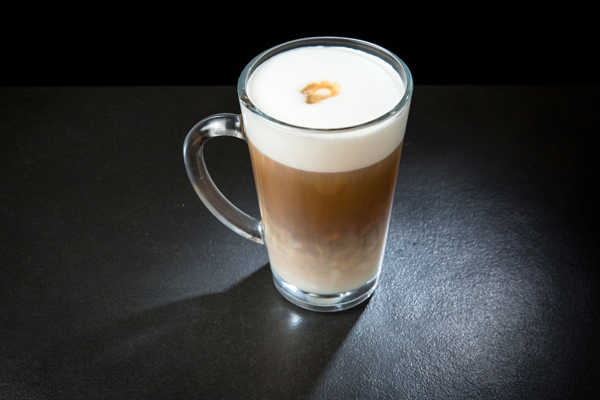
Latte Macchiato
The percentage of Americans drinking coffee on a daily basis increased to 62% this year, up from 57% in 2016, according to the National Coffee Association. The increase brings past-day overall coffee consumption back above 2014 levels, reversing slow declines since 2013. The findings from the NCA’s 2017 National Coffee Drinking Trends (NCDT) consumption tracking report were released during the New York-based association’s annual convention, which was held in Austin, Texas, this year (23-25 March).
Among the drivers behind the increase was soaring consumer enthusiasm for gourmet coffee varieties across most demographics. Another key driver was a robust increase in past-day coffee drinking among younger consumers, whose consumption data is being debuted in this year’s NCDT and detailed in a separate report, Generational Report: Coffee Through the Ages. “More of us are drinking coffee, and younger consumers appear to be leading the charge,” said Bill Murray, NCA president and CEO. “A steadily growing taste for gourmet varieties is also driving a wider trend toward specialty beverages.”
While the frequency of daily consumption continued to grow for all age groups, the most robust increase occurred among those ages 13-18, whose daily consumption rose to 37% in 2017, from 31% in 2016, capping a 14-point increase over 2014’s 23%. The 40-59 group showed an 11-point uptick over last year, jumping to 64% in 2017, from 53% in 2016, which essentially restored levels seen in 2014. Those aged 60+ grew to 68% in 2017, from 64% last year, while 25-39 year olds increased from 60%, to 63%, and the 18-24 cohort edged up to 50% from 2016’s 48%.
However, when gourmet coffee beverages are singled out, the changes were even more dramatic. Compared with last year, daily consumption among those 40-59 jumped to 39% in 2017 versus 24% in 2016. Consumption increases among the other age groups were: 36% to 39% for those 18-24, 41% to 50% for the 25-39 year olds, and 24% to 34% among the 60+ cohort. And among 13-18 year olds, 29% drank a gourmet coffee beverage yesterday, compared with 19% for traditional coffee, and a 70% share of the cups they drank were gourmet versus 30% non-gourmet.
Consumer enthusiasm for gourmet varieties also drove the year’s overall consumption increase. The 2017 results show the largest one-year increase in past-day espresso-based beverages in NCDT history, up 24% from 18%. In fact, more than half of all cups of coffee consumed in the past-day were gourmet – 59% in 2017 versus 46% in 2012.
The NCDT study introduced a new category in 2017, “Non-Espresso-Based Beverages,” which consists of non-espresso, gourmet coffee-based beverages, made a strong debut in past-week consumption: Frozen Blended, 14%; Cold Brew, 11%; and Nitrogen-infused, 3%.
Single-cup brewing continues to grow exponentially in 2017. Data shows that nearly one-third of American households (33%) now own a single-cup brewer, up from 29% in 2016. That means since 2012, ownership has grown nearly five-fold. Thirteen to 18-year olds reported that single-cup ownership in their households jumped from 23%, to 31% over the last two years. Purchase intent also increased, which those who would “definitely or probably buy” a single-cup brewer jumping to 17% in 2017, up from 10% in 2016.
The NCDT has been conducted annually by the NCA since 1950. It is the longest available statistical series tracking consumer attitudes and behaviors, and has become an industry- standard reference tool. The study engages a nationally representative sample of about 3,000 people aged 13 and older. Respondents are selected from an online panel with ethnic breakouts aligned proportionately with the makeup of the US population. Respondents complete the survey online in English or Spanish at their choosing.
This year’s NCDT study introduced the Generational Report – Coffee Through the Ages, which compares and contrasts consumer behaviors and attitudes across generational lines and, for the first time, presents data on Generation Z, those 13 to 18 years of age.