Premiumisation and Pressure: Belgium’s Two-Speed Market for Coffee and Tea
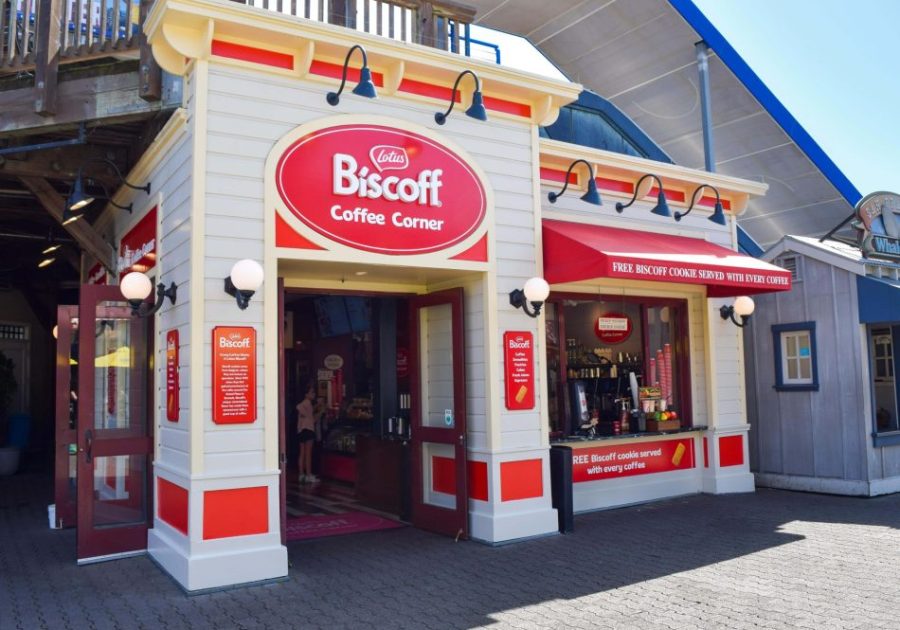
Belgium coffee chains increasingly bet on things like storytelling Photo credit Biscoff Coffee
Belgium’s mature coffee market is being pulled in two directions at once as inflation reinforces price sensitivity while consumers continue to trade up to premium and convenience-led formats. Tea, though smaller, follows a similar pattern of premiumisation driven by wellness and lifestyle trends, creating a broader two-speed dynamic across the country’s hot drinks category.
Belgium remains a mature but highly resilient coffee market, with coffee deeply embedded in daily routines, workplace consumption, café culture, and at-home occasions, commented Nandini Roy Choudhury, senior analyst with Future Market Insights, a think tank.
“Volume growth is not especially aggressive, but value growth is being supported by premiumisation, higher retail prices and stronger demand for better-quality formats such as specialty coffee, single-origin blends, fresh beans, capsules and convenient at-home brewing options,” Choudhury said.
On average, each person in Belgium is believed to consume approximately 6.8 kilograms of coffee per year, which places it among the upper tier of coffee-consuming countries in Europe, close to Germany and the Netherlands, but below the Nordic leaders such as Finland, with almost 15 kg of coffee consumed annually.
Per most forecasts, the market is poised for slow but steady growth in the coming years. For example, Precision Business Insights, a market research firm, estimates the Belgian coffee market at USD $1.3 billion and expects this figure to reach $1.65 billion in 2032, growing on average by 3.7 percent over the next seven years.
Despite the value growth, the analysts do not expect Belgians to drink more coffee. “Consumers are becoming more selective,” said Choudhury. “In coffee, the shift is less about drinking significantly more and more about trading into quality, provenance, convenience, and café-style experiences at home.”
Price Remains a Defining Force
Despite the clear premiumisation trend, different pricing strategies can co-exist on the Belgian market.
One of the key developments of 2026 is the market entry by Cotti Coffee, a Chinese coffee chain known for its budget-friendly drinks. In March, the company rolled out plans to open six new stores during the next several months, with drinks starting at EUR €0.99 (USD $1.15 ). Cotti Coffee’s campaign may appear counter-intuitive at first glance, positioning itself around some of the lowest-priced coffee in a relatively affluent market. However, it could prove effective, as analysts highlight pricing as a critical factor, with inflation increasingly reshaping consumer purchasing behaviour.
“Belgium’s food inflation has eased versus the 2022-2023 peak, but food prices remain an important consumer concern,” Choudhury said, adding that this is creating a two-speed market, where value and private-label formats continue to perform well among price-sensitive households, while premium and specialty formats remain attractive to consumers who see coffee and tea as small, affordable indulgences.
In recent years, Belgian coffee chains have been increasingly relying on more than just product quality, with proximity, identity, and storytelling becoming central to their value proposition, according to research by De Morgen, a local publication.
Rather than differentiating solely through the cup, operators have been building stronger local presence and brand narratives that emphasise neighbourhood ties, atmosphere, and experience. In the coming years, analysts expect this formula to pass the test of time as the traditional coffee chains will likely face growing competition from the low-price segment.
Strengthening a Trade Hub Role
Belgium’s role in coffee is larger than its domestic population would suggest. According to Choudhury, the country is a major European coffee import and redistribution hub, with a significant share of green coffee imported into Belgium re-exported to other European markets, especially neighbouring countries such as France and the Netherlands.
“This means Belgium is not only a consumer market but also a strategic trade, logistics, and processing point within the European coffee value chain,” Choudhury said.
In 2024, Belgium exported $827 million of coffee, making it the 17th-largest exporter of coffee in the world, according to data from the Observatory of Economic Complexity.
Belgium’s role as a coffee hub is largely anchored in the Port of Antwerp-Bruges, which functions as one of the most important green coffee entry points in Europe. Interestingly, Belgium’s industrial coffee base is unusually old even by European standards, with key roasters founded in the late 1800s.
Belgium’s coffee-processing industry has attracted renewed investment in recent years. For example, over the last few years, Beyers Koffie, a prominent player in this field, has modernised its Belgian operations through a series of targeted investments, including a €3.5 million (USD $4.073 million) production expansion, a multimillion-euro rollout of compostable coffee pad technology, and more than €10 million(USD $11.638 million) in an all electric roasting line.
Future Market Insights projects that over the next few years, Belgium’s position is likely to strengthen in three areas: certified and traceable coffee flows, specialty and premium coffee, and efficient intra-European distribution. “As European buyers face greater pressure around sustainability, deforestation compliance, origin transparency, and supply chain resilience, Belgium’s trading and logistics role can become even more important,” Choudhury said.
Tea Consumption Grows Quietly
Tea remains a smaller market than coffee in Belgium. Tea consumption is only about 0.4-0.8kg per capita, depending on measurement method and year. However, in recent years, the market has been evolving, transitioning from a traditional black tea category to a more diversified wellness-led beverage segment, Choudhury said.
“Herbal infusions, fruit teas, green tea, functional blends, organic tea, and premium loose-leaf or specialty formats are gaining more attention, particularly among younger and health-conscious consumers,” Choudhury said. She added that the tea market in Belgium is also benefitting from the broader European shift toward low-calorie, non-alcoholic, and naturally positioned beverages.
Analysts expect that Belgium is unlikely to become a volume-led tea market like the UK or Germany, but it can continue to grow as a premium and wellness-oriented niche market. The biggest opportunity, as in previous years, will be in herbal infusions, green tea, functional blends, organic tea, specialty formats, and tea-based café beverages.
“In that sense, Belgium’s future tea market will be shaped less by traditional black tea consumption and more by health, lifestyle, flavour innovation and premium positioning,” Choudhury said.
Vladislav Vorotnikov is a Batumi, Georgia-based multimedia B2B freelance journalist writing about the tea and coffee industries since 2012.
Topics
belgian coffee belgian market belgian tea
PeopleOrganisationsBeyers Koffie Cotti Coffee Future Market Insights
Regions