
What EUDR amendments mean for coffee
Credit: Dimitra
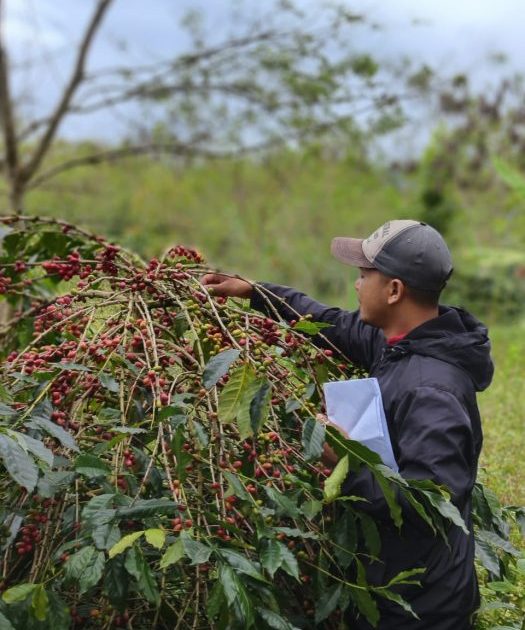
The European Union’s Deforestation Regulation (EUDR) has been hotly debated across industry and governments since its ideation back in 2023, but after months of nail-biting back-and-forth among policymakers and industry stakeholders, enforcement has again been pushed back by a calendar year. For global coffee supply chains, where an estimated 80% of production is driven by smallholder farmers, the stakes have always been high. The regulation’s success in 2026 will hinge on whether the smallholder farmers have clear, accessible pathways to compliance, including the tools, data, and support needed for traceability and due diligence.
Beyond the wider discussion around the regulation, the EU pointed to challenges with its information system, which supports due diligence reporting and compliance validation. The mandatory nature of traceability requirements for compliance with the regulation created rifts between those with the means and access to do so, and those who don’t. Traceability in coffee supply chains often relies on cooperatives, exporters, and intermediaries rather than individual farmers, making these challenges especially pronounced.
The decision to delay the implementation of EUDR means enforcement is now set for 30 December 2026, for large operators and traders, and 30 June 2027, for small and micro traders. The EU also made some changes to the core responsibilities for traders and operators which ‘simplify the compliance process’ and ‘reduce the administrative burdens’ while preserving the regulation’s original ambition. The new implementation rules proposed strike the right balance between continuing to maintain momentum and allowing enough room for trial and error in the path to complete adoption.
Ever since the regulation was originally proposed, farmers, cooperatives, and buyers across the world have invested time, resources and effort towards building and adopting traceability systems, mapping tools, and compliance frameworks. The main challenge has been to find a balance between rewarding early adopters who have already invested heavily in compliance systems and supporting smaller producers who are still catching up. However, the changes put in place feel more like putting a band-aid over a bullet wound than receiving the care and attention it really requires.
While the regulation itself may have changed, the structural issues that led to the changes have not. Many smallholder farmers, particularly those in developing regions, still lack the infrastructure and technical support to ensure a compliance process like this can be adhered to. This is especially true in coffee-producing countries, such as Ethiopia or Indonesia, where farms are often small, informally registered, and historically invisible within digital supply chain systems.
Even with these practical simplifications, a broader implementation challenge remains, ensuring that administrative streamlining does not unintentionally weaken the regulation’s effectiveness. Similar questions have surfaced in other EU sustainability frameworks, including the Corporate Sustainability Due Diligence Directive (CSDDD), where policymakers have sought to balance competitiveness, legal clarity, and implementability.
For companies investing in compliance, evolving requirements and shifting responsibilities can create uncertainty about what ‘good’ looks like and when it will be enforced, which can slow or fragment investment in traceability, monitoring, and supplier enablement. Particularly in coffee, where compliance often depends on shared infrastructure across cooperatives, exporters, and intermediaries, the key will be maintaining clear, consistent safeguards and accountability while providing workable pathways that bring smallholders along, so simplification supports adoption without undermining the regulation’s core intent about practical implementation for smallholder coffee farmers.
The open question now is how to preserve the regulation’s environmental ambition while making compliance workable across highly fragmented supply chains. The challenge that should be addressed by the EU is ensuring that simplification strengthens adoption without weakening the regulation’s core objectives. To deliver measurable impact, the proposed EUDR framework will need clear requirements, reliable implementation infrastructure, support for partners and accountability that is proportionate yet meaningful.
The impact of EUDR will be determined by its implementation and how quickly the supporting infrastructure, guidelines, and quality assurance mechanisms mature to match the regulation’s ambition.
—
Jon Trask is CEO and founder of Dimitra and has been working with blockchain since 2017. Prior to founding Dimitra, he had an extensive career building and developing enterprise software solutions to revolutionise supply chain processes and improve immutable traceability. Trask is also founder and CEO of Blockchain Guru and a partner with the Blockchain Training Alliance. His mission now is to increase farming connectivity, particularly with those disenfranchised across the globe, and to leverage the power of innovative technologies to bridge farming and technology.
